
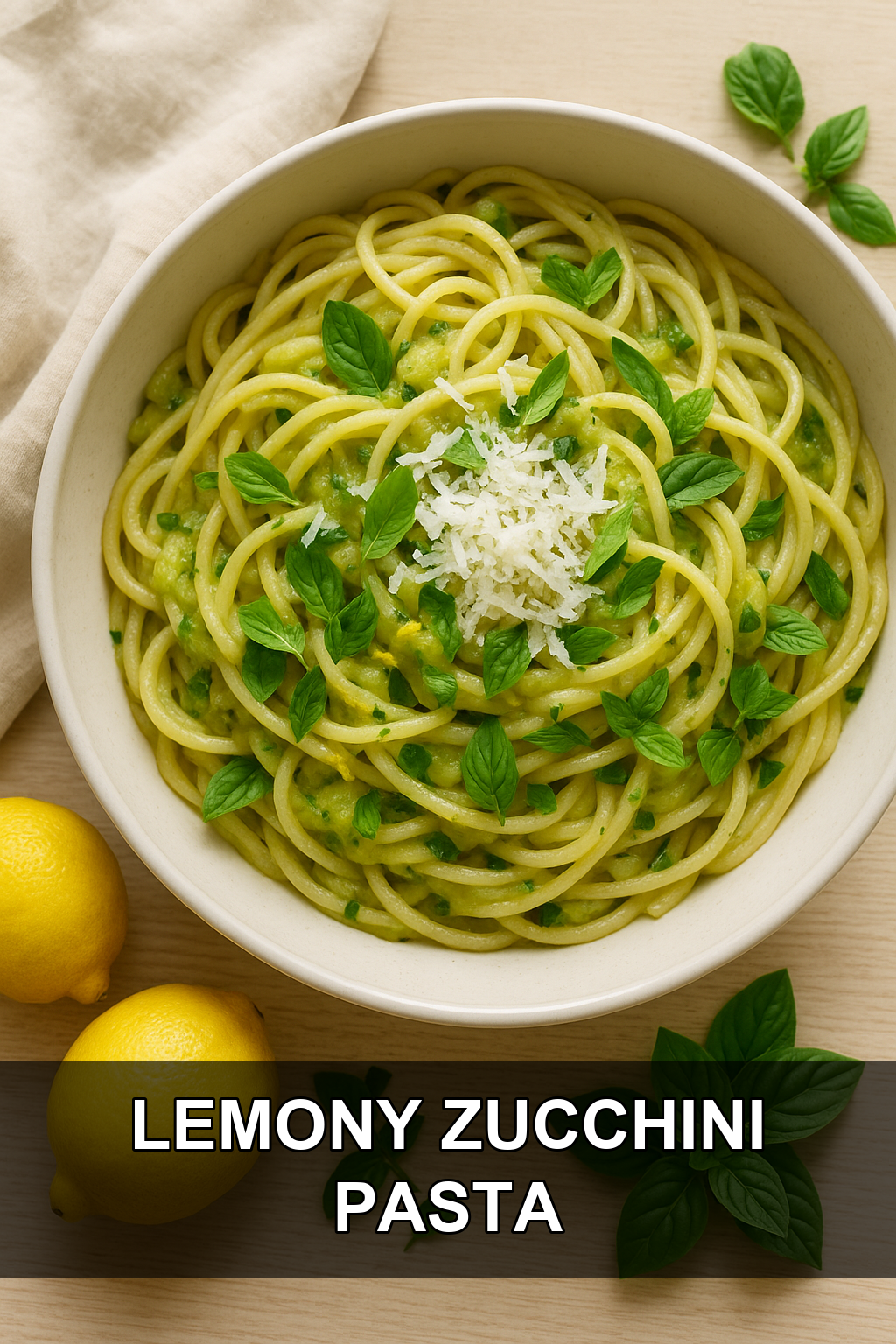
- What Is Zucchini Pasta?
- Tips for Cooking and Prepping
- Recipe Variations and Substitutes
- Serving Suggestions
- Storing and Make-Ahead Tips
- FAQs
- Zucchini Pasta Recipe
When zucchini season hits and your counter is overflowing, this zucchini pasta is the recipe you’ll make on repeat. Grated zucchini cooks down into a jammy, savory sauce that clings to every strand of spaghetti, brightened with lemon and finished with herbs and cheese for a dish that feels both rustic and refined.
What Is Zucchini Pasta?
Zucchini pasta, in this context, isn’t spiralized zucchini noodles standing in for spaghetti — it’s a pasta dish where grated zucchini is slowly cooked down with shallots and garlic until it collapses into a thick, jammy sauce. That sauce, loosened with starchy pasta water and enriched with cheese, coats spaghetti or bucatini the way a good bolognese or carbonara would.
This style of zucchini pasta is popular in Italian home cooking, especially in late summer when zucchini is abundant and cheap. It’s a clever way to use a mild, watery vegetable and coax real depth of flavor out of it with nothing more than olive oil, time, and a bit of patience at the stove.
Tips for Cooking and Prepping
#1: Wring out the zucchini thoroughly
Grated zucchini holds a surprising amount of water, so squeezing it in a clean kitchen towel before cooking helps it caramelize and turn jammy instead of steaming and staying watery.
#2: Don’t rush the cooking time
Give the zucchini a full 15 to 20 minutes in the skillet; this is what transforms it from raw shreds into a thick, savory, almost sauce-like base.
#3: Add garlic near the end
Stirring in the grated garlic after the zucchini has broken down keeps it from burning during the long cook time and preserves its fresh, sharp bite.
#4: Reserve plenty of pasta water
The starchy cooking water is what turns cheese and zucchini into a creamy, cohesive sauce, so scoop out at least a cup before draining the pasta.
#5: Transfer pasta straight from the pot
Moving the noodles directly from the boiling water into the skillet (rather than draining fully first) keeps them slightly wet, which helps the sauce come together quickly.
#6: Zest before you juice the lemon
It’s much easier to zest a whole lemon than one that’s already been squeezed, so zest first, then juice, and set some zest aside for garnish.
Recipe Variations and Substitutes
This dish is easy to adapt: swap in yellow summer squash for some or all of the zucchini, use whole wheat or gluten-free spaghetti, or stir in red pepper flakes generously if you like more heat. For extra protein, add grilled shrimp, shredded rotisserie chicken, or white beans, and if you want a vegan version, use nutritional yeast or a plant-based Parmesan alternative instead of pecorino.
Serving Suggestions
Serve zucchini pasta as a light main course with a simple green salad and crusty bread to soak up any extra sauce. It also pairs beautifully with a glass of crisp white wine and works well as a side dish alongside grilled chicken, fish, or Italian sausage.
Storing and Make-Ahead Tips
Leftovers keep well in an airtight container in the refrigerator for up to 3 days; reheat gently on the stovetop with a splash of water or broth to loosen the sauce. This pasta doesn’t freeze particularly well since the zucchini’s texture can turn mushy, so it’s best enjoyed fresh or within a few days.
FAQs
Can I use a food processor instead of a box grater for the zucchini?
Yes, shredding the zucchini with the grater attachment on a food processor works great and saves time, especially when working with the full 2 pounds.
Why is my zucchini pasta watery instead of jammy?
This usually means the zucchini wasn’t wrung out enough before cooking or wasn’t given enough time in the skillet, so be sure to squeeze out excess moisture and let it cook a full 15 to 20 minutes.
Can I make this dish ahead of time?
You can cook the zucchini sauce up to a day in advance and refrigerate it, then reheat it and toss with freshly cooked pasta and reserved pasta water right before serving.
Is zucchini pasta the same as zucchini noodles (zoodles)?
No, this recipe uses real wheat pasta like spaghetti or bucatini tossed in a sauce made from cooked-down zucchini, rather than raw zucchini spiralized into noodle shapes.
What’s the best cheese to use if I don’t have pecorino?
Parmesan is a great substitute for pecorino and will give a slightly milder, nuttier flavor while still helping create that creamy, lightly cheesy sauce.
Zucchini Pasta Recipe
Prep time: 10 min | Cook time: 20 min | Total time: 30 min | Servings: 4
Ingredients
- 2 pounds zucchini (about 4 medium)
- 3 tablespoons extra-virgin olive oil
- 2 shallots, chopped (⅔ cup)
- 1 teaspoon sea salt
- Pinch of red pepper flakes
- Freshly ground black pepper
- 4 garlic cloves, grated
- 12 ounces spaghetti or bucatini pasta
- ⅓ cup grated pecorino or Parmesan cheese, plus more for serving
- 2 to 3 tablespoons fresh lemon juice
- Zest of 1 lemon, reserve some for garnish
- 1 cup fresh basil and/or mint leaves
Instructions
- Grate the zucchini on the large holes of a box grater. Transfer to a clean kitchen towel and wring out the excess moisture.
- Heat the olive oil in a large skillet or Dutch oven over medium heat. Add the shallot, zucchini, salt, red pepper flakes, and several grinds of black pepper. Cook, stirring occasionally, for 15 to 20 minutes, or until the mixture is thick and jammy. Stir in the garlic.
- Meanwhile, cook the pasta. Bring a large pot of salted water to a boil. Prepare the pasta according to the package instructions, cooking until al dente.
- Scoop the cooked pasta directly from the cooking water into the pan with the zucchini, reserving the pasta cooking water. Add ½ cup of the reserved pasta water and the cheese to the pan with the zucchini. Cook, stirring, for 2 to 3 minutes, or until a lightly creamy sauce coats the pasta, adding more pasta water as needed.
- Stir in 2 tablespoons of lemon juice and the lemon zest. Season to taste, adding more lemon juice if desired.
- Serve topped with the fresh herbs, the reserved lemon zest, and more grated cheese.
For the best texture, use young, firm zucchini rather than large, seedy ones, which tend to be more watery and less flavorful.
Leave a Reply
You must be logged in to post a comment.