
- What Is Bibimbap?
- Tips for Cooking and Prepping
- Recipe Variations and Substitutes
- Serving Suggestions
- Storing, Make-Ahead, and Freezing Tips
- FAQs
- Vegetable Bibimbap with Crispy Sesame Tofu Recipe
There’s something so satisfying about a big bowl of rice piled high with colorful veggies, crispy golden tofu, and a fiery-sweet gochujang sauce tying it all together. This vegetable bibimbap is a weeknight-friendly take on the Korean classic, and it’s the kind of meal that makes you feel good from the inside out.
What Is Bibimbap?
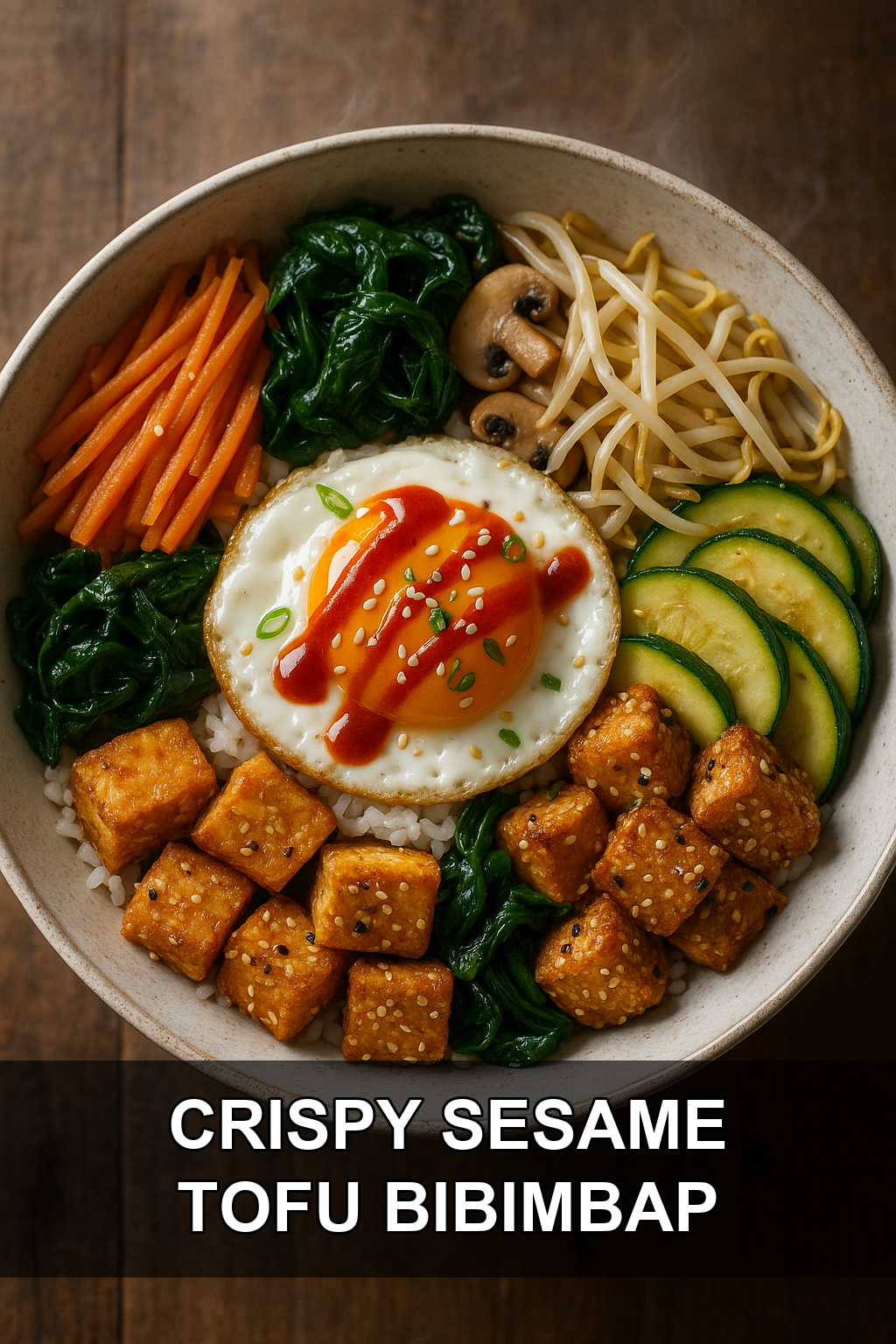
Bibimbap literally translates to “mixed rice” in Korean, and it’s exactly that: a bowl of warm rice topped with an assortment of seasoned vegetables, a protein, and often a fried egg, all brought together with a spoonful of spicy gochujang sauce. Traditionally, the ingredients are arranged in neat little piles around the bowl so you get a beautiful presentation before mixing everything together.
This version swaps in crispy sesame-crusted tofu for the more traditional beef, making it a fully vegetarian (and easily vegan) meal without sacrificing any of the flavor or textural contrast that makes bibimbap so craveable. Every bite gives you something different — crunchy, soft, spicy, savory — and that’s really the whole point of the dish.
Tips for Cooking and Prepping
#1: Press your tofu well
Extra-firm tofu needs a good 15-20 minutes under a weighted press (or wrapped in a towel with something heavy on top) so it crisps up properly instead of steaming in the pan.
#2: Cook each vegetable separately
Bibimbap traditionally features vegetables that are each seasoned and cooked on their own, like spinach, carrots, and mushrooms, so their individual flavors stay distinct rather than blending into a mush.
#3: Get your pan screaming hot for the tofu
A hot pan with just enough oil is key to achieving that shatteringly crisp sesame crust on the tofu without it sticking or turning soggy.
#4: Use day-old rice if you can
Slightly cooled or day-old short-grain rice holds its shape better and won’t turn gummy when you mix in the sauce and toppings.
#5: Balance the gochujang sauce to your taste
Gochujang varies in spice level by brand, so taste your sauce as you mix it and adjust the honey or rice vinegar to dial the heat up or down.
#6: Warm your bowl before assembling
Briefly heating your serving bowl keeps the rice and vegetables warm longer, especially important if you’re going for the sizzling stone-bowl (dolsot) style crispy rice.
Recipe Variations and Substitutes
Swap the tofu for crispy chickpeas, marinated tempeh, or thinly sliced sautéed beef bulgogi if you’re not keeping it vegetarian. You can also switch up the vegetables based on the season — zucchini, bean sprouts, bell peppers, and radish all work beautifully alongside or in place of the carrots, spinach, and mushrooms. For a low-carb option, serve everything over cauliflower rice or a bed of shredded lettuce instead of steamed rice.
Serving Suggestions
Top each bowl with a fried or soft-boiled egg for extra richness, and a sprinkle of toasted sesame seeds and sliced scallions for freshness. Bibimbap pairs well with a side of kimchi, a light cucumber salad, or miso soup to round out the meal.
Storing, Make-Ahead, and Freezing Tips
Store each component separately in airtight containers in the fridge for up to 4 days, and reheat the rice and vegetables gently before assembling so the tofu stays crispy. The gochujang sauce keeps well for up to two weeks refrigerated, making it great for meal prep, though the tofu is best cooked fresh and doesn’t freeze well due to texture changes.
FAQs
Can I make bibimbap vegan?
Yes, simply skip the egg or use a plant-based egg substitute, and double-check that your gochujang doesn’t contain fish sauce or anchovy paste, as some brands do.
What can I use instead of gochujang?
If you can’t find gochujang, mix sriracha or another chili paste with a bit of miso paste and honey to approximate the sweet, savory heat, though the flavor won’t be quite as deep.
How do I get the tofu really crispy?
Press the tofu thoroughly, coat it lightly in cornstarch before adding the sesame seeds, and don’t overcrowd the pan so each piece gets direct contact with the hot oil.
Is bibimbap supposed to be served hot or cold?
Bibimbap is typically served warm, with hot rice and warm cooked vegetables, though some toppings like fresh julienned carrots or cucumber are served raw and cool for textural contrast.
What type of rice works best?
Short-grain white rice, like sushi rice, is traditional because its sticky texture helps everything hold together when mixed, though brown rice or a rice blend works fine for a heartier bowl.
Vegetable Bibimbap with Crispy Sesame Tofu Recipe
Prep time: 25 min | Cook time: 25 min | Total time: 50 min | Servings: 4
Ingredients
For the Crispy Sesame Tofu
- 1 block (14 oz) extra-firm tofu, pressed and cubed
- 2 tbsp cornstarch
- 3 tbsp sesame seeds (mix of white and black if available)
- 2 tbsp neutral oil (avocado or vegetable), for frying
- 1/2 tsp salt
For the Gochujang Sauce
- 3 tbsp gochujang (Korean chili paste)
- 1 tbsp soy sauce
- 1 tbsp rice vinegar
- 1 tbsp honey or maple syrup
- 1 tsp toasted sesame oil
- 1 clove garlic, minced
- 2-3 tbsp water, to thin as needed
For the Bibimbap Bowls
- 2 cups cooked short-grain white rice
- 1 cup baby spinach
- 1 tsp toasted sesame oil, divided
- 1 cup julienned carrots
- 1 cup sliced shiitake or cremini mushrooms
- 1 cup bean sprouts
- 1 cup thinly sliced zucchini
- 2 cloves garlic, minced (divided among vegetables)
- Salt, to taste
- 4 fried eggs (optional)
- Toasted sesame seeds, for garnish
- Sliced scallions, for garnish
Instructions
- Press the tofu for at least 15 minutes to remove excess moisture, then cut into 3/4-inch cubes.
- In a bowl, toss the tofu cubes with cornstarch until lightly coated, then press each piece into the sesame seeds to coat all sides.
- Heat the oil in a large nonstick skillet over medium-high heat. Fry the tofu in batches, turning occasionally, until golden and crispy on all sides, about 6-8 minutes per batch. Season with salt and set aside.
- Whisk together all the gochujang sauce ingredients in a small bowl until smooth, adding water a tablespoon at a time until you reach a pourable consistency. Set aside.
- In the same skillet, quickly sauté the spinach with a little sesame oil and a pinch of salt until just wilted, about 1 minute. Remove and set aside.
- Sauté the carrots with a touch of oil and salt for 2-3 minutes until slightly softened, then set aside separately.
- Sauté the mushrooms with minced garlic until golden and tender, about 4-5 minutes, then set aside.
- Quickly blanch or sauté the bean sprouts for 1-2 minutes until just tender, season lightly, and set aside.
- Sauté the zucchini slices for 2-3 minutes until just tender and lightly golden.
- To assemble, divide the warm rice among four bowls. Arrange the spinach, carrots, mushrooms, bean sprouts, zucchini, and crispy sesame tofu in sections on top of the rice.
- Top each bowl with a fried egg if using, drizzle generously with gochujang sauce, and garnish with toasted sesame seeds and sliced scallions before serving.
- Serve immediately, encouraging everyone to mix everything together thoroughly before digging in.
For an authentic sizzling touch, press the assembled rice and toppings into a hot, oiled cast-iron or stone bowl for a couple of minutes before serving to create a crispy rice crust on the bottom.
Leave a Reply
You must be logged in to post a comment.