
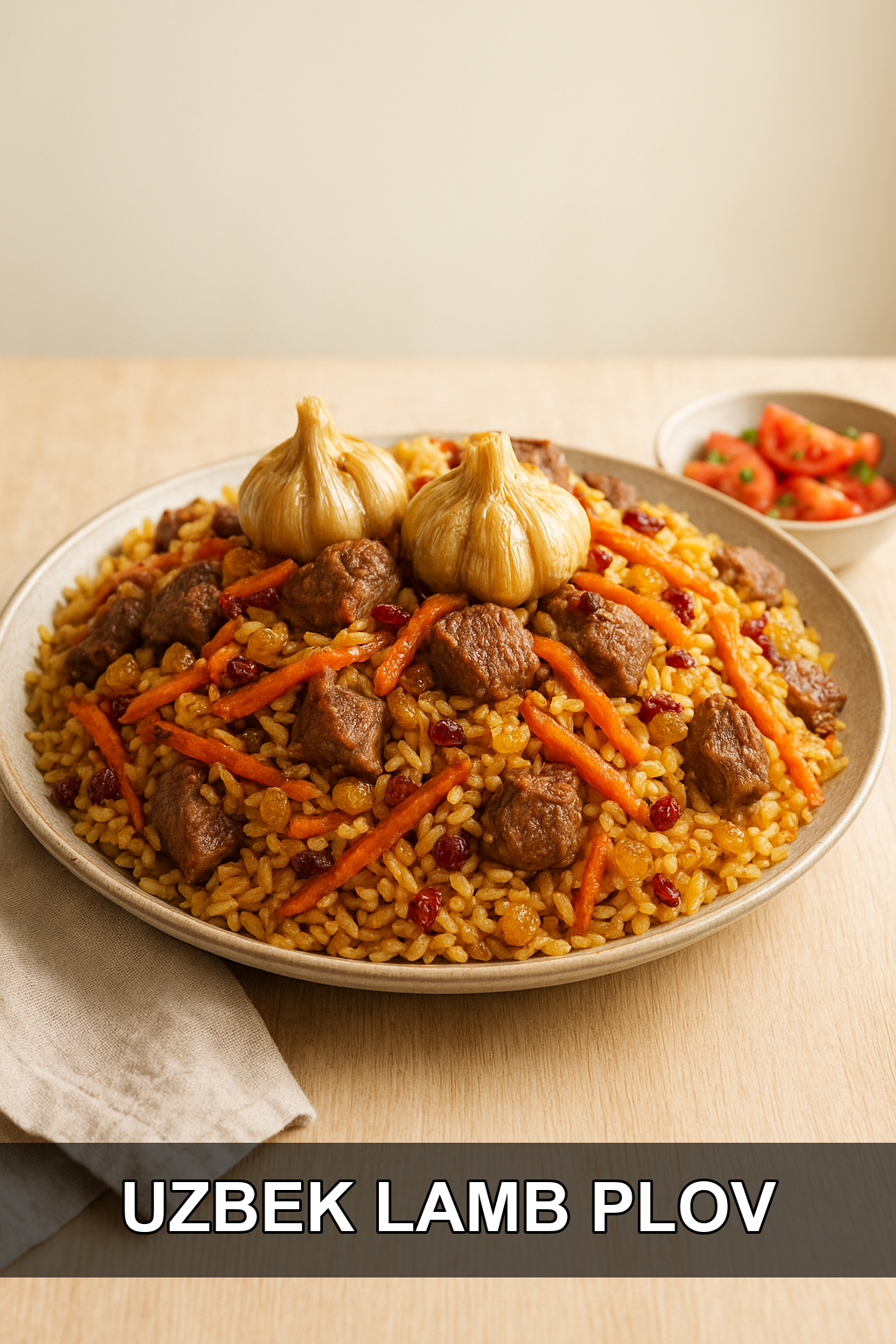
- What Is Uzbek Plov?
- Tips for Cooking and Prepping
- Recipe Variations and Substitutes
- Serving Suggestions
- Storing, Make-Ahead, and Freezing Tips
- FAQs
- Uzbek Plov Recipe
There’s a reason plov is considered the national dish of Uzbekistan — it’s a slow-built masterpiece of caramelized onions, sweet carrots, tender meat, and fluffy, spice-scented rice, all cooked together in one pot. This recipe walks you through every layer, from rendering fat to the final resting period, so you can bring home-style Uzbek flavor straight to your own kitchen.
What Is Uzbek Plov?
Plov (sometimes spelled palov or osh) is a layered rice pilaf found throughout Central Asia, with Uzbekistan often credited as its spiritual home. At its heart, it’s a dish built in stages: meat and fat are seared to build a flavorful base, onions and carrots are caramelized into a rich broth called zirvak, and finally rice is steamed on top, absorbing all the savory, aromatic juices below without ever being stirred in.
Every region and even every family has its own version, but the core techniques remain the same — whole garlic heads and cumin seeds perfume the pot, while barberries and raisins add little bursts of tang and sweetness. It’s traditionally cooked in a heavy, wide pot called a kazan, but a Dutch oven works beautifully at home. More than just a meal, plov is a dish of celebration, often served at weddings, gatherings, and Friday family lunches.
Tips for Cooking and Prepping
#1: Wash and soak your rice thoroughly
Rinsing until the water runs clear removes excess starch that causes gummy, clumped rice, and soaking helps the grains cook evenly once steamed over the zirvak.
#2: Hand-cut the carrots, never grate them
Thick matchstick-cut carrots hold their shape and texture through the long simmer, while grated carrots break down into mush and lose that signature bite.
#3: Don’t rush the onions
Caramelizing the onions for a full 10-15 minutes builds a deep, sweet foundation of flavor that’s essential to a good zirvak — this isn’t a step to skip or shortcut.
#4: Season the zirvak boldly
The broth should taste slightly over-salted before you add the rice, since the rice will absorb much of that seasoning as it steams.
#5: Never stir the rice into the zirvak
Once the rice is layered on top, resist the urge to mix — keeping the layers separate is what allows the rice to steam properly while staying distinct from the meat and vegetables below.
#6: Poke steam holes and let it rest
Poking holes down to the pot’s bottom lets steam rise evenly through the rice, and the final 15-20 minute rest off the heat is what makes every grain fluffy and separate.
Recipe Variations and Substitutes
Plov varies widely by region and household, so feel free to adapt it to what you have on hand. Beef chuck works well in place of lamb for a slightly milder flavor, and if you can’t find lamb tail fat, simply increase the neutral oil. For a Samarkand-style touch, add golden raisins along with the chickpeas in the last 15 minutes of simmering, or leave out the barberries and chili if you prefer a milder, less tart profile. Basmati or Calrose rice are excellent substitutes for traditional Devzira rice and are far easier to find at most grocery stores.
Serving Suggestions
Plov is traditionally served family-style on a large communal platter, with the rice mounded up and the meat, carrots, and whole roasted garlic cloves arranged on top. Pair it with a simple sliced tomato and onion salad (achichuk) dressed with a bit of vinegar to cut through the richness, along with warm flatbread like lepyoshka or naan. A dollop of plain yogurt or a side of pickled vegetables also makes a refreshing contrast to the deeply savory rice.
Storing, Make-Ahead, and Freezing Tips
Leftover plov keeps well in an airtight container in the refrigerator for up to 4 days. Reheat gently in a covered skillet with a splash of water or broth to help revive the rice’s texture, or microwave in short bursts, stirring in between. Plov also freezes nicely for up to 2 months — thaw overnight in the fridge before reheating for best results.
FAQs
What is zirvak in plov?
Zirvak is the flavorful base of meat, onions, carrots, and spices that’s simmered into a rich broth before the rice is added on top — it’s essentially the flavor engine of the whole dish.
Can I make Uzbek plov without a kazan?
Yes, a heavy Dutch oven works great as a substitute for a traditional kazan, since what matters most is even heat distribution and a tight-fitting lid for steaming.
Why is my plov mushy?
Mushy plov is usually caused by not rinsing the rice thoroughly enough, grating instead of hand-cutting the carrots, or stirring the rice into the zirvak instead of letting it steam undisturbed on top.
What rice is best for plov?
Traditional Devzira or Lazar rice are ideal, but Calrose or Basmati rice are widely available substitutes that hold their shape well and won’t turn gummy.
Can I make this dish vegetarian?
While traditional plov relies on meat and fat for flavor, you can substitute extra mushrooms and chickpeas along with vegetable broth for a plant-based version, though the flavor profile will be noticeably lighter.
Uzbek Plov Recipe
Prep time: 40 min | Cook time: 100 min | Total time: 140 min | Servings: 8
Ingredients
For the Meat and Fat
- 2.2 lbs (1 kg) lamb shoulder or leg, or beef chuck, cut into 1.5-inch cubes
- 4 oz (115 g) lamb tail fat (dumba), cut into small cubes (optional)
- 1 cup (240 ml) neutral oil such as sunflower, grapeseed, or canola oil
For the Zirvak (Broth Base)
- 2.2 lbs (1 kg) yellow onions (about 4-5 large), peeled and thinly sliced into half-moons
- 2.2 lbs (1 kg) carrots, peeled and hand-cut into ¼-inch thick matchsticks
- 2 large whole heads of garlic, outer papery layers removed but heads left intact
- 2 tablespoons whole cumin seeds, divided
- 1 tablespoon ground coriander
- 2 tablespoons dried barberries (zereshk), optional
- 1-2 whole hot chili peppers, dried or fresh, optional
- 2 tablespoons salt, plus more to taste
- 1 teaspoon freshly ground black pepper
- 1 can (15 oz / 425 g) chickpeas, rinsed and drained, or 1 cup dried chickpeas soaked overnight
- ½ cup (75 g) golden raisins, optional
- About 6-8 cups boiling water
For the Rice
- 2.2 lbs (1 kg) medium to long-grain rice (about 4.5-5 cups), such as Calrose or Basmati
Instructions
- Place the rice in a large bowl and wash under cold running water, gently swishing with your hands, until the water runs clear. Cover with warm salted water and let it soak while you prepare the rest of the ingredients.
- Cut the meat into uniform cubes, slice the onions, julienne the carrots into thick matchsticks, prepare the garlic heads, and measure out all your spices.
- Heat a kazan or Dutch oven over high heat. If using lamb tail fat, add the cubes and render until crispy and browned, then remove the crispy bits with a slotted spoon, leaving the rendered fat in the pot.
- Add the neutral oil to the rendered fat (or use the full amount of oil if not using lamb fat) and heat until it shimmers.
- Carefully add the meat to the hot oil in a single layer, working in batches if needed. Sear on all sides until deeply golden-brown, then remove and set aside.
- Reduce heat to medium-high and add the sliced onions to the flavored oil. Sauté, stirring frequently, until deeply golden and caramelized, about 10-15 minutes.
- Return the seared meat to the pot and stir it in with the onions.
- Add the julienned carrots on top of the meat and onions. Sauté for 5-7 minutes, gently turning, until they soften slightly and release their color into the oil.
- Pour in enough boiling water to just cover the carrots. Bring to a boil, then reduce to a gentle simmer.
- Add the salt, black pepper, ground coriander, barberries (if using), and 1 tablespoon of the whole cumin seeds. Stir everything together one last time — you will not stir the layers again from this point on.
- Let the zirvak simmer gently, uncovered, for 45-60 minutes until the meat is tender and the broth is rich and aromatic. Add the chickpeas and/or raisins on top during the last 15 minutes of simmering.
- Drain the soaking rice completely.
- Taste the zirvak and adjust seasoning — it should taste slightly over-salted, since the rice will absorb much of the salt.
- Carefully spread the drained rice in an even layer over the top of the zirvak, gently patting it flat with a slotted spoon. Do not mix the rice into the zirvak.
- Nestle the whole garlic heads and optional chili peppers into the top of the rice layer.
- Turn the heat to high and slowly pour more boiling water over the back of a spoon onto the rice, adding enough to cover the rice by about ¾ inch.
- Let the water boil vigorously, keeping the pot uncovered, until most of the surface water has evaporated and little craters form in the rice.
- Use the handle of a wooden spoon to poke several deep holes down to the bottom of the pot to allow steam to rise through the rice.
- Sprinkle the remaining tablespoon of whole cumin seeds over the top of the rice.
- Reduce the heat to the lowest setting possible, using a heat diffuser if you have one.
- Gather the rice from the edges of the pot into a central mound to help with even steaming.
- Cover the pot with a clean kitchen towel, then place the lid on tightly, weighing it down if needed.
- Let the plov steam undisturbed for 25-30 minutes on the lowest heat.
- Turn off the heat completely and let the plov rest, covered and undisturbed, for another 15-20 minutes before serving.
For an authentic presentation, mound the rice on a large platter, top with the meat and carrots, and place the whole steamed garlic heads and chili on top for guests to pull apart at the table.
Leave a Reply
You must be logged in to post a comment.