
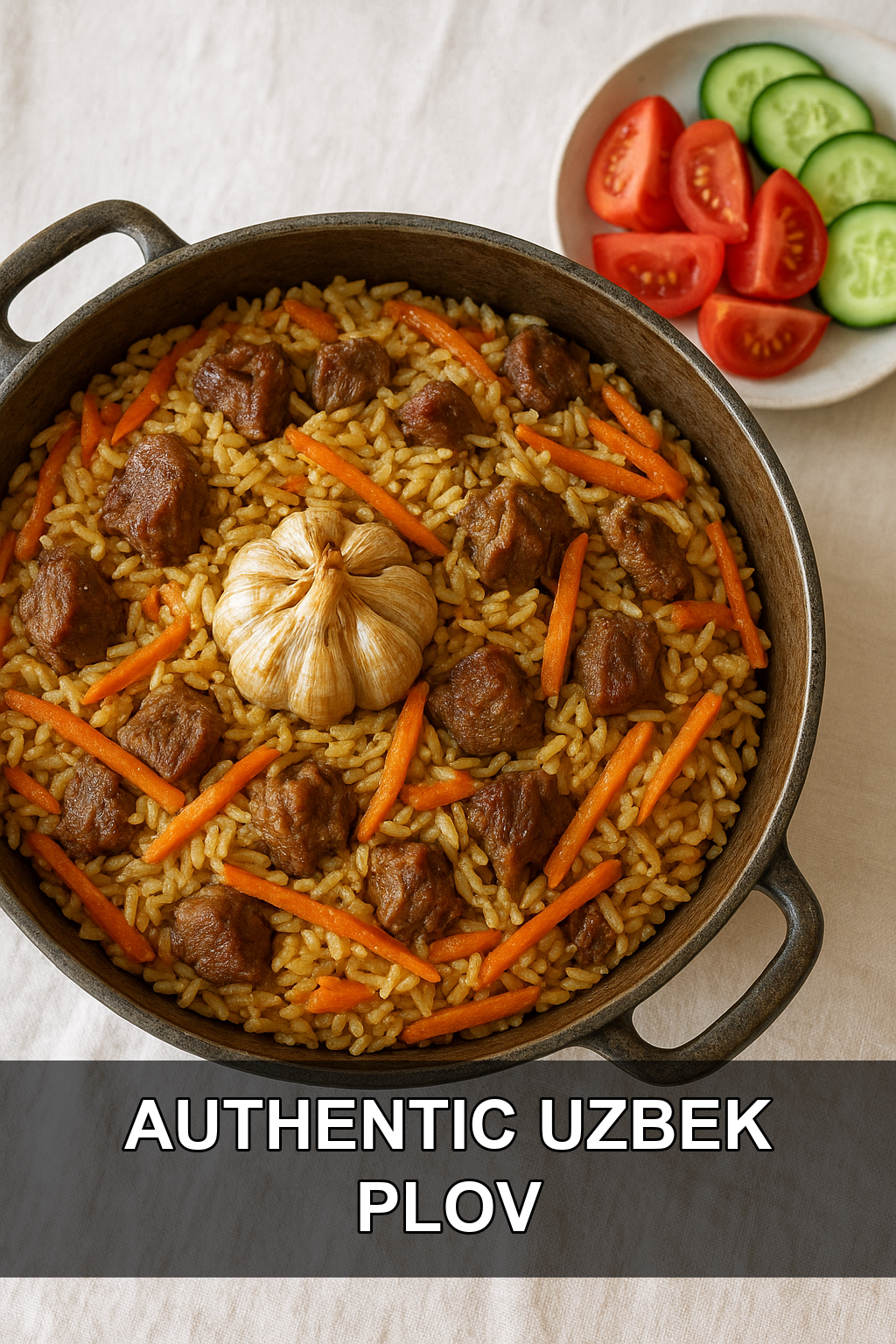
- What Is Uzbek Plov?
- Tips for Cooking and Prepping
- Recipe Variations and Substitutes
- Serving Suggestions
- Storing and Reheating Leftovers
- FAQs
- Uzbek Plov Recipe
If you’ve never had real Uzbek plov, you’re in for a treat. This one-pot wonder layers tender lamb, sweet carrots, and fluffy rice into a dish that’s both simple and deeply comforting, and it’s the kind of meal that fills the whole kitchen with an aroma you won’t forget.
What Is Uzbek Plov?
Plov (sometimes spelled palov or pilaf) is the national dish of Uzbekistan, a rice pilaf built on a base of browned meat, caramelized onions, and carrots that are cooked together before the rice is added and simmered to absorb all those savory juices. It’s traditionally cooked in a large, heavy pot called a kazan, but a Dutch oven works beautifully for home cooks who want to recreate the same rich, layered flavor.
What sets Uzbek plov apart from other pilafs is the way the ingredients are cooked in stages rather than all at once, and the whole bulb of garlic that gets tucked into the rice to slowly infuse everything as it steams. It’s a dish that shows up at weddings, family gatherings, and everyday dinners alike, and once you make it yourself, you’ll understand why it holds such a special place in Central Asian cuisine.
Tips for Cooking and Prepping
#1: Cut the carrots into long strips, not rounds
Traditional plov calls for carrots sliced into thin, matchstick-like strips rather than coins, which helps them soften into the rice and release their natural sweetness throughout the dish.
#2: Brown the meat well before adding vegetables
Take the time to get a deep sear on the lamb or beef in the hot oil first; this fond at the bottom of the pot is what gives the whole dish its rich, savory backbone.
#3: Keep the garlic bulb whole
Nestling a whole trimmed garlic bulb into the rice instead of mincing it lets the cloves steam gently and mellow, infusing the rice with flavor without turning bitter or overpowering.
#4: Use just enough water
Cover the rice with boiled water so it sits about an inch above the surface; too much water leads to mushy rice, while too little can leave it undercooked and dry on top.
#5: Resist the urge to stir once the rice goes in
Turn the top layer of rice once around the 20-minute mark for even cooking, but avoid stirring the whole pot so the rice can steam properly and the layers stay intact.
#6: Let it rest before serving
Once the plov is done cooking, let it sit off the heat for a few minutes with the lid on so the rice can finish steaming and firm up before you fluff and serve it.
Recipe Variations and Substitutes
While lamb is the classic choice for Uzbek plov, beef is a widely used and equally delicious substitute if lamb isn’t available or isn’t your preference. Some cooks add raisins, dried apricots, chickpeas, or barberries to the rice for a touch of sweetness and texture, and cumin is a popular optional spice that adds warmth without overpowering the dish. If you’d like a lighter version, you can use less oil, though the traditional recipe does rely on a generous amount to properly cook the rice and vegetables.
Serving Suggestions
Uzbek plov is hearty enough to serve on its own, but it’s traditionally accompanied by a simple side of fresh, thinly sliced tomatoes, cucumbers, or a tangy shredded cabbage and carrot salad called achichuk to help balance the richness. A side of warm flatbread and a dollop of plain yogurt also pairs wonderfully, and many families finish the meal with hot black tea.
Storing and Reheating Leftovers
Leftover plov keeps well in an airtight container in the refrigerator for up to 4 days, and it reheats nicely on the stovetop or in the microwave with a splash of water to loosen the rice. For longer storage, plov freezes well for up to 2 months; just thaw it overnight in the refrigerator before reheating gently to preserve the texture of the rice.
FAQs
What kind of rice is best for Uzbek plov?
Long grain rice is traditionally used because it holds its shape and stays fluffy after absorbing all the meat and vegetable juices, unlike shorter, starchier grains that can turn mushy.
Can I make Uzbek plov without lamb?
Yes, beef is a common and delicious substitute for lamb, and some home cooks even use chicken for a lighter version, though the flavor will be milder than the traditional recipe.
Why do you cook garlic as a whole bulb in plov?
Cooking a whole trimmed garlic bulb in the rice lets it steam slowly, mellowing its sharpness and infusing the entire dish with a subtle, savory garlic flavor rather than overpowering bites of raw garlic.
Do I need a special pot to make plov?
While plov is traditionally made in a heavy pot called a kazan, a Dutch oven works just as well at home because it distributes heat evenly and holds enough volume for browning, simmering, and steaming the rice.
How do I know when the rice is fully cooked?
The rice is done when all the water has been absorbed and the grains are tender but still separate; give it a gentle fluff after the resting period to check the texture before serving.
Uzbek Plov Recipe
Prep time: 35 min | Cook time: 60 min | Total time: 95 min | Servings: 8
Ingredients
For the Meat and Vegetables
- 1 1/2 lbs lamb (or beef)
- 2 medium onions, diced
- 5 medium carrots, cut into long 1/4-inch thick slices
- 1 bulb of garlic
- 1/2 cup olive oil
- Salt, to taste
- Pepper, to taste
- 2 tsp cumin (optional)
For the Rice
- 3 cups long grain rice
- 3 bay leaves
Instructions
- Prepare your ingredients: clean the carrots and cut them into long, thin slices about 1/4-inch thick, dice the onions into small pieces, and cut the meat into 1-inch cubes.
- Heat the olive oil in a Dutch oven over high heat. Using tongs, brown the meat on all sides. Add the onions and carrots, and cook until the onions turn translucent and the carrots soften.
- Stir in the rice and bay leaves, and saute for a couple of minutes. Remove the top couple of layers from the garlic bulb and trim off the small end of the cloves, then nestle the whole garlic bulb into the rice. Pour in enough boiled water to cover everything, filling the pot to about 1 inch above the rice. Season with salt, pepper, and cumin if using.
- Once the pot comes to a simmer, reduce the heat to very low and cover. Cook for 40 to 50 minutes, turning over the top layer of rice about 20 minutes in to help it cook evenly. Let rest a few minutes before fluffing and serving.
For extra flavor, add a handful of raisins or dried apricots to the rice partway through cooking for a subtle touch of sweetness alongside the savory meat and carrots.
Leave a Reply
You must be logged in to post a comment.