
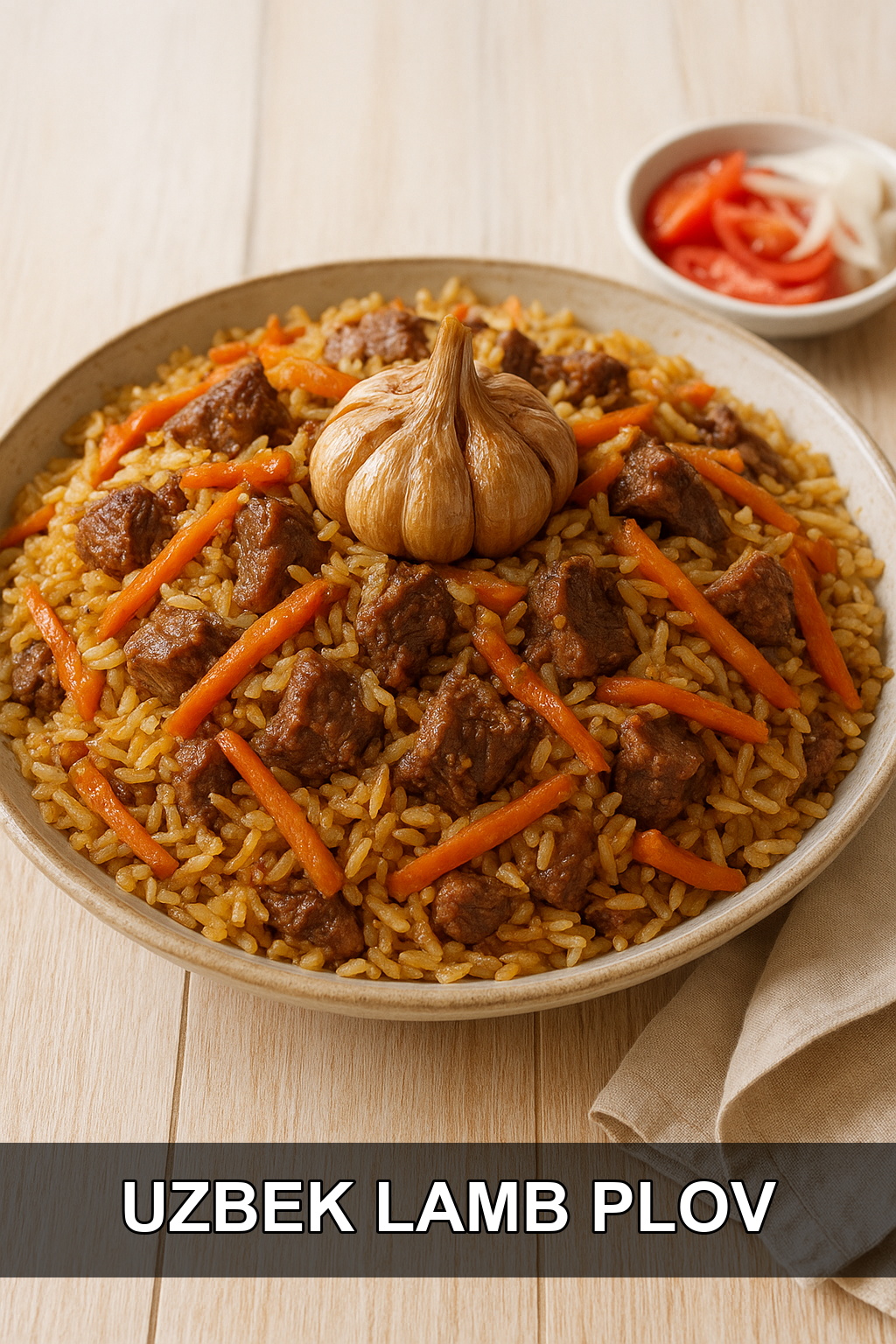
- What Is Uzbek Plov?
- Tips for Cooking and Prepping
- Recipe Variations and Substitutes
- Serving Suggestions
- Storing, Make-Ahead, and Freezing Tips
- FAQs
- Uzbek Plov Recipe
There’s something magical about a pot of plov simmering away, filling the kitchen with the scent of cumin, garlic, and slow-cooked lamb. This Uzbek plov recipe brings a beloved Central Asian classic straight to your table, and once you taste it, you’ll understand why it’s considered the national dish of Uzbekistan.
What Is Uzbek Plov?
Plov (sometimes spelled pilaf or palov) is a rice dish that’s deeply woven into the culinary and cultural fabric of Uzbekistan and the broader Central Asian region. It’s traditionally cooked in a large cauldron called a kazan, where meat, onions, and carrots are seared and simmered into a rich broth called zirvak before rice is layered on top to steam and absorb all that flavor.
While there are countless regional variations across Uzbekistan, the version featured here uses lamb, carrots cut into sticks, whole heads of garlic, and warm spices like cumin and coriander. It’s a communal dish, often served at weddings, family gatherings, and celebrations, and it’s just as satisfying made at home in a Dutch oven.
Tips for Cooking and Prepping
#1: Cut carrots into sticks, not shreds
Traditional plov calls for carrots sliced into medium matchstick-like pieces rather than grated. This keeps them from turning to mush and gives the dish its signature texture.
#2: Sear the onions and lamb on high heat
Cooking the onions and meat over very high heat at the start builds a deep, caramelized base of flavor that carries through the entire dish.
#3: Don’t skip the whole garlic head
Nestling a partially peeled garlic head into the zirvak infuses the broth with a mellow, sweet garlic flavor without overpowering the dish, and it makes a beautiful presentation when served whole.
#4: Rinse the rice until the water runs clear
Washing the basmati rice thoroughly removes excess surface starch, which helps the grains cook up light and separate instead of clumping together.
#5: Resist the urge to stir once rice is added
After spreading the rice over the zirvak, avoid mixing it in. Letting it steam undisturbed is what creates the classic layered texture plov is known for.
#6: Let it rest before serving
Giving the finished plov 15 minutes to rest off the heat allows the rice to finish absorbing any remaining moisture and makes it much easier to fluff and serve.
Recipe Variations and Substitutes
While lamb is the traditional choice for Uzbek plov, beef or chicken thighs can be used as a substitute if lamb isn’t available or preferred. Some cooks also add raisins, dried barberries, or chickpeas to the rice for a touch of sweetness or extra texture, and long-grain rice can stand in for basmati in a pinch, though basmati holds its shape beautifully.
Serving Suggestions
Plov is traditionally served on a large communal platter, with the rice mounded up and the meat, carrots, and roasted garlic cloves arranged on top. Pair it with a simple shredded cabbage and tomato salad (achichuk) or a side of pickled vegetables to cut through the richness, and serve warm flatbread alongside for scooping.
Storing, Make-Ahead, and Freezing Tips
Leftover plov keeps well in an airtight container in the refrigerator for up to 4 days and reheats nicely on the stovetop with a splash of water to loosen the rice. It also freezes well for up to 2 months; just thaw it overnight in the fridge before reheating gently over low heat.
FAQs
What kind of rice is best for plov?
Basmati rice is ideal because its long grains stay firm and separate during the long steaming process, but any good-quality long-grain rice will work.
Can I make Uzbek plov without lamb?
Yes, beef chuck or bone-in chicken thighs are common substitutes and will still give you a rich, flavorful zirvak base.
Why is my plov mushy or too wet?
This usually happens if too much liquid is added or the lid is removed too often during cooking, since plov relies on steaming undisturbed to cook the rice evenly.
Do I need a special pot to make plov?
While traditional plov is made in a kazan, a heavy Dutch oven works perfectly well at home since it distributes heat evenly and holds moisture during the steaming stage.
Can I prepare plov ahead of time for a party?
You can make it a few hours ahead and keep it warm on low heat with the lid on, or reheat it gently just before serving since plov tends to taste even better after the flavors meld.
Uzbek Plov Recipe
Prep time: 15 min | Cook time: 120 min | Total time: 135 min | Servings: 6
Ingredients
For the Meat and Vegetables
- 1/2 cup vegetable oil
- 2 large onions, peeled and cut into half rounds
- 1 1/2 lb. lamb meat, cut into medium pieces
- 1 lb. carrots, peeled and cut into medium sticks
- 1 garlic head
For the Spices and Seasoning
- 1 tbsp. cumin seeds (or 1 tsp. cumin powder)
- 1/2 tbsp. coriander seeds
- 1 tsp. coriander powder
- 2 tsp. salt, or to taste
- 1 tsp. pepper
For the Rice
- 1 lb. basmati rice
- 4 cups water (for the zirvak)
- 3 cups boiling water (for the rice)
Instructions
- Prep the vegetables and meat: peel the onions and cut into half rounds, peel the carrots and cut into medium sticks, and cut the lamb into medium pieces.
- Heat the vegetable oil in a Dutch oven or kettle over very high heat. Add the onions and cook, stirring occasionally, for 5-7 minutes. Add the lamb and cook for another 10 minutes.
- Add the carrots and continue cooking for 10 more minutes. Stir in the cumin, coriander, salt, and pepper, then add 4 cups of water and bring to a boil.
- Peel some of the skin off the garlic head and slice the top off to expose the cloves. Add the garlic to the pot. Reduce heat to medium-low, cover, and cook for about 1 hour. Meanwhile, wash the rice thoroughly until the water runs clear.
- Taste the liquid and adjust the salt if needed. Add the rice on top and spread it out evenly without stirring it into the broth.
- Pour in 3 cups of boiling water, reduce the heat to low, cover, and cook for 25-30 minutes. Check that the water has fully absorbed, cooking a little longer if needed. Let the plov rest for 15 minutes before serving.
For extra flavor, some cooks add a handful of raisins or dried barberries along with the rice for a subtle sweet-tart contrast to the savory lamb and spices.
Leave a Reply
You must be logged in to post a comment.