
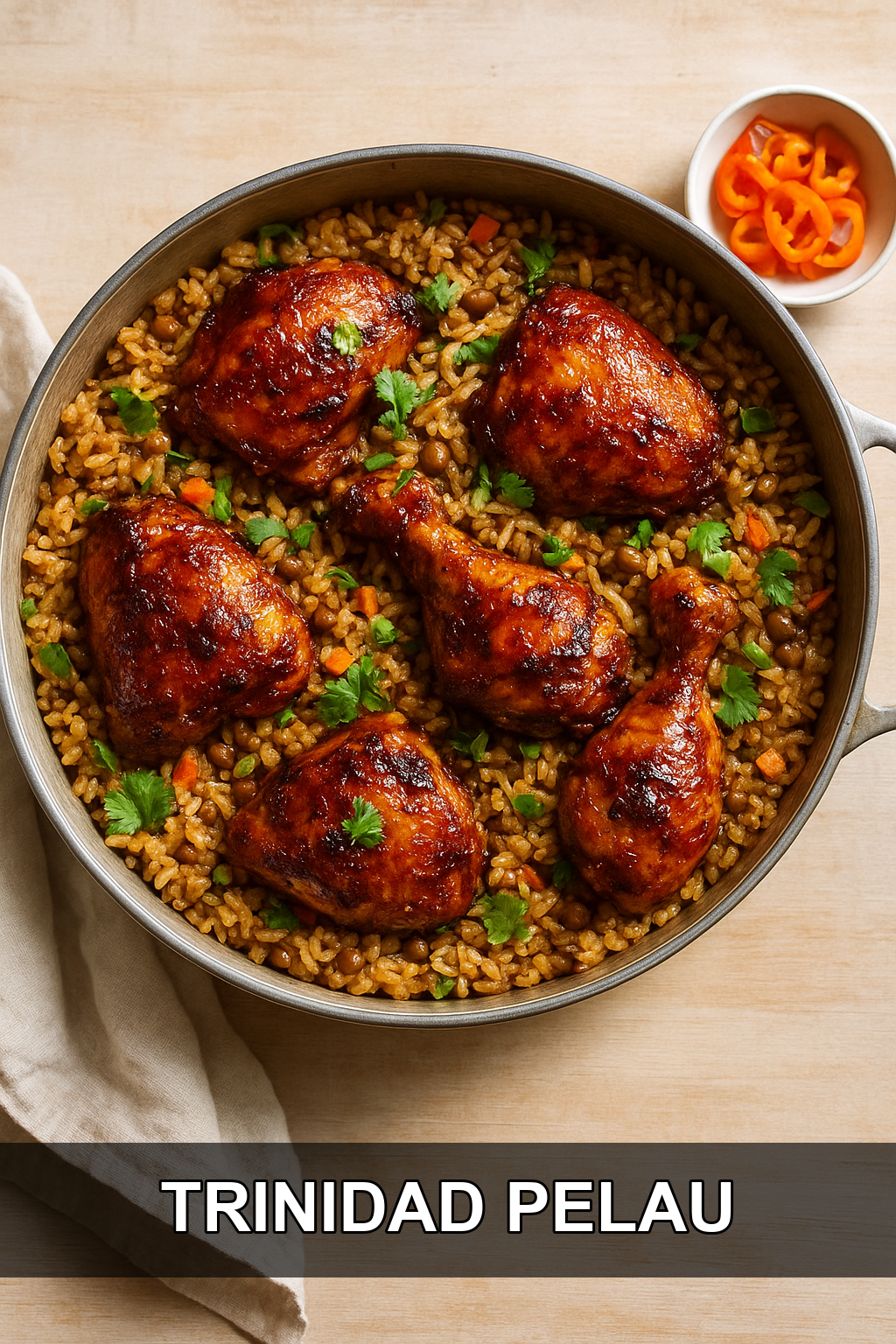
- What Is Trinidad Pelau?
- Tips for Cooking and Prepping
- Recipe Variations and Substitutes
- What to Serve with Pelau
- Storing, Make-Ahead, and Freezing Tips
- FAQs
- Trinidad Pelau Recipe
If you’ve never had Trinidad pelau, get ready to fall in love with one of the Caribbean’s most comforting one-pot meals. Tender chicken, hearty pigeon peas, and coconut-scented rice all simmer together until the flavors meld into something truly magical, and the best part is it all comes together in one pot with about 45 minutes of cooking time.
What Is Trinidad Pelau?
Pelau is a beloved one-pot rice dish from Trinidad and Tobago, built on the technique of browning meat in caramelized sugar before simmering it with rice, pigeon peas, coconut milk, and warm aromatics like thyme and scotch bonnet pepper. The caramelizing step, sometimes called “burning the sugar,” is what gives pelau its signature deep, savory-sweet color and flavor, setting it apart from other Caribbean rice dishes.
Pelau has roots that trace back to a blend of African, Indian, and Creole culinary influences that shaped Trinidadian cuisine over generations. It’s a staple at family gatherings, beach limes, and Sunday lunches across the islands, and it’s the kind of dish that different households make slightly differently, yet everyone agrees a good pelau should be rich, a little smoky-sweet, and packed with tender rice that has soaked up all those coconut and pigeon pea flavors.
Tips for Cooking and Prepping
#1: Watch the sugar closely while it caramelizes
Brown sugar can go from perfectly caramelized to burnt in seconds, so keep your eyes on the pot and resist the urge to stir until it turns a deep brown color.
#2: Add the chicken carefully to avoid splatters
Caramelized sugar is extremely hot and will bubble aggressively when the chicken hits the pot, so lower the pieces in slowly and stand back a bit to protect yourself from splatters.
#3: Marinate the chicken overnight if you can
Letting the chicken sit with the thyme, garlic, salt, and pepper overnight in the fridge deepens the flavor significantly, though even a quick toss before cooking will still give good results.
#4: Keep the Scotch bonnet whole for gentle heat
Adding the pepper whole (instead of chopped) infuses the pelau with warmth and fragrance without making the whole pot fiery hot, just be sure to remove it before serving.
#5: Use parboiled long-grain rice for the best texture
Parboiled rice holds its shape better during the long simmer and is less likely to turn mushy, which is exactly the texture you want in a proper pelau.
#6: Resist lifting the lid too often
Once the liquid goes in and the pot is covered, try to leave it alone as much as possible so the rice steams evenly and absorbs all that coconut-chicken flavor.
Recipe Variations and Substitutes
Pelau is a flexible dish that welcomes small changes based on what you have on hand or what your family prefers. Swap chicken thighs for chicken legs or even bone-in chicken breast, use dried pigeon peas that have been soaked and cooked instead of canned, or add diced pumpkin, sweet potato, or bell pepper along with the carrot for extra color and texture. If you can’t find Scotch bonnet peppers, a habanero works as a close substitute, or you can simply leave the pepper out entirely for a milder version.
What to Serve with Pelau
Traditionally, pelau is served alongside a simple side of coleslaw or a fresh cucumber and tomato salad to balance the richness of the coconut rice. It also pairs beautifully with fried plantains, a side of stewed callaloo, or a cold glass of homemade ginger beer or sorrel drink for a full Trinidadian-style spread.
Storing, Make-Ahead, and Freezing Tips
Pelau actually tastes even better the next day once the flavors have had time to settle, making it a great make-ahead meal for busy weeknights or gatherings. Store leftovers in an airtight container in the fridge for up to 4 days, or freeze portions for up to 3 months, reheating gently on the stovetop or in the microwave with a splash of water or stock to loosen the rice.
FAQs
What is the burnt sugar technique in pelau?
It’s the process of melting and caramelizing brown sugar in hot oil until it turns a deep brown color, which is then used to coat and brown the chicken, giving pelau its signature rich color and slightly sweet, smoky depth of flavor.
Can I make Trinidad pelau without pigeon peas?
Yes, you can substitute pigeon peas with black-eyed peas or kidney beans if that’s what you have available, though pigeon peas are traditional and give pelau its classic flavor and texture.
Is pelau spicy?
Pelau is generally mild since the Scotch bonnet pepper is added whole and removed before serving, infusing gentle heat and flavor rather than intense spiciness, though you can chop it in for more heat if you prefer.
Can I use chicken breast instead of chicken thighs?
Bone-in chicken thighs or legs are recommended because they stay juicy and flavorful during the long simmer, but boneless chicken breast can work in a pinch, just watch the cooking time closely so it doesn’t dry out.
Why is my pelau rice mushy?
Mushy rice usually happens from using the wrong type of rice or too much liquid, so stick with parboiled long-grain rice and measure your stock and coconut milk carefully for the best texture.
Trinidad Pelau Recipe
Prep time: 10 min | Cook time: 45 min | Total time: 55 min | Servings: 6
Ingredients
For the Chicken Marinade
- 2 ½ pounds chicken thighs, bone-in (or chicken legs)
- 1 sprig fresh thyme, leaves only (don’t use the stem)
- 4 cloves garlic, minced (or grated on a fine rasp grater)
- ½ teaspoon salt
- ¼ teaspoon black pepper
For Browning
- 2 tablespoons vegetable oil
- 1 tablespoon brown sugar
For the Rice and Peas
- ½ cup chopped onion (about ½ of a medium onion)
- ½ cup diced carrot (about 1 carrot)
- 19 ounces canned dry pigeon peas, rinsed and drained (1 can)
- 2 cups long-grain parboiled rice, washed and drained
- 1 tablespoon cilantro, finely chopped
- ¼ cup green onion, thinly sliced
- 2 sprigs fresh thyme
- 1 Scotch bonnet pepper (optional, see note)
For the Liquid and Seasoning
- 7 ounces coconut milk (about ½ of a 14 ounce can of coconut milk)
- 3 cups low-sodium chicken stock (or hot water)
- 1 teaspoon Golden Ray margarine (optional)
- 1 teaspoon salt
- black pepper, to taste
Instructions
- Place the chicken in a large bowl. Add the leaves from one thyme sprig, the minced garlic, ½ teaspoon of salt, and black pepper. Stir well so the chicken is evenly coated in the seasonings.
- Optional: cover with plastic wrap and refrigerate overnight for deeper flavor.
- Pour the oil into a large heavy-bottomed pot and place over medium heat. Once hot, sprinkle the brown sugar evenly across the bottom. Let it melt and caramelize undisturbed, watching closely until it turns a deep brown color.
- Carefully add the seasoned chicken to the pot, skin-side down if using skin-on pieces (the hot sugar may splatter, so be cautious). Cook for 2 minutes, then stir to coat the chicken in the caramelized sugar. Continue cooking for about 5 minutes, turning occasionally, until browned on all sides.
- Add the onion, carrot, and pigeon peas. Cook over medium heat for 5 minutes, stirring occasionally, until the onion begins to soften.
- Stir in the rice, then mix in the cilantro, green onion, remaining thyme sprigs, and the whole Scotch bonnet pepper. Cook for another 5 minutes, stirring occasionally.
- Pour in the coconut milk and chicken stock, scraping up any browned bits from the bottom of the pot. Add the remaining teaspoon of salt and a pinch of black pepper, then stir gently to combine. Reduce the heat to medium-low, cover, and cook for 20-25 minutes, until the rice is tender and the liquid has absorbed to your liking.
- Remove the pot from heat and discard the thyme sprigs. Stir in the margarine, if using, then gently fluff the rice with a fork. Serve hot or at room temperature.
For a milder dish, keep the Scotch bonnet whole and remove it before serving; for extra heat, pierce it a few times with a knife before adding it to the pot.
Leave a Reply
You must be logged in to post a comment.