
- What Is Thai Mango Sweet Sticky Rice?
- Tips for Cooking and Prepping
- Recipe Variations and Substitutes
- Serving Suggestions
- Storing, Make-Ahead, and Freezing Tips
- FAQs
- Thai Mango Sweet Sticky Rice Recipe
If you’ve ever had Thai mango sticky rice at a restaurant and immediately wondered how to recreate that dreamy coconut-rice magic at home, you’re in the right place. This dessert is deceptively simple, just a handful of pantry staples transform into something that tastes like a tropical vacation on a plate. Let’s break down exactly how to make it, step by step.
What Is Thai Mango Sweet Sticky Rice?
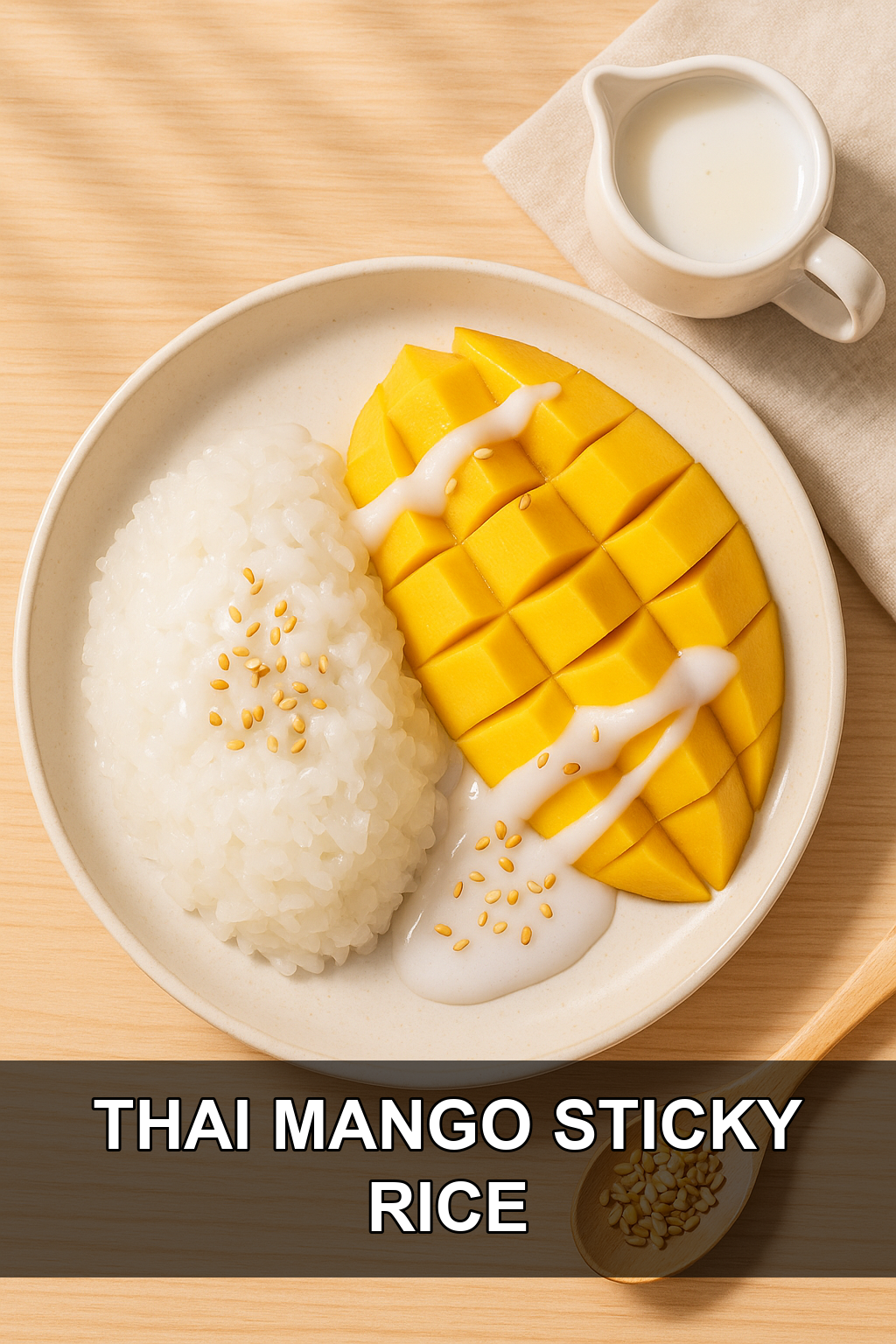
Thai mango sweet sticky rice, known as Khao Niew Mamuang in Thailand, is one of the country’s most beloved desserts. It pairs warm, chewy glutinous rice soaked in sweetened coconut milk with slices of juicy, ripe mango, all finished with a drizzle of thickened coconut sauce and a sprinkle of toasted sesame seeds.
You’ll find it sold from street carts and night markets across Thailand, especially during mango season, though it’s popular year-round at Thai restaurants everywhere. The combination of warm, salty-sweet coconut rice against cool, fresh mango is what makes this dessert so addictive, it’s comforting and refreshing all at once.
Tips for Cooking and Prepping
#1: Soak the rice long enough
Glutinous rice needs a real soak, at least 2 hours, to soften properly before steaming. If you have time, soaking overnight gives the most even, tender texture.
#2: Use glutinous rice, not regular rice
Regular long-grain or jasmine rice won’t give you that signature chewy, sticky texture. Look for glutinous or sweet rice, sometimes labeled ‘sticky rice,’ at Asian grocery stores.
#3: No steamer? No problem
You can rig up a makeshift steamer using aluminum foil balls to elevate a heatproof plate above boiling water in a covered pot. It works surprisingly well if you don’t own a bamboo or metal steamer basket.
#4: Check doneness at the 20-minute mark
Sticky rice can vary in cook time depending on your soak time and steamer, so start checking at 20 minutes. It’s done when it’s soft all the way through with no hard, chalky center.
#5: Save half the coconut sauce before thickening
Setting aside half of the coconut milk mixture before adding the cornstarch slurry gives you two textures: a thinner sauce to mix into the warm rice, and a thicker one to drizzle on top for presentation.
#6: Choose mangoes at peak ripeness
Look for mangoes that give slightly when pressed and smell fragrant near the stem. Underripe mangoes will taste too tart and firm against the sweet, soft rice.
Recipe Variations and Substitutes
While the classic version sticks to mango, rice, and coconut milk, you can experiment a bit within the same basic method. Try swapping black glutinous rice for a nuttier, more colorful twist, or add a few drops of pandan extract to the coconut sauce for extra fragrance. Some cooks also add a touch of toasted mung beans on top instead of, or in addition to, sesame seeds for crunch.
Serving Suggestions
Serve this dessert slightly warm or at room temperature, plated with fanned mango slices right alongside the rice. It works beautifully as the finale to any Thai-inspired dinner, alongside dishes like pad thai, green curry, or larb, and it’s also lovely on its own with a cup of Thai iced tea.
Storing, Make-Ahead, and Freezing Tips
Sticky rice is best enjoyed fresh the day it’s made, but leftovers can be stored in an airtight container in the fridge for up to 2 days. Reheat gently in the microwave with a splash of coconut milk to loosen it back up, and slice fresh mango just before serving rather than storing it pre-cut.
FAQs
Can I make Thai mango sticky rice ahead of time?
Yes, you can steam the rice and prepare the coconut sauce a few hours ahead, then combine and reheat gently before serving. Just add fresh mango slices right before you plate it.
What kind of rice do I need for sticky rice?
You’ll need glutinous rice, also labeled sweet rice or sticky rice, which is different from regular white rice. It has a higher starch content that gives it that signature chewy, sticky texture once steamed.
Why is my sticky rice hard in the middle?
This usually means it needs more steaming time or wasn’t soaked long enough beforehand. Give it another 5-10 minutes of steaming and check again until the center is soft all the way through.
Can I use canned coconut milk?
Yes, canned full-fat coconut milk works great and gives the richest, creamiest sauce. Just give the can a good shake or stir before measuring since it can separate.
What’s the best mango to use for this recipe?
Ataulfo (honey) mangoes or ripe Thai mangoes are ideal for their sweetness and smooth, fiberless texture. If those aren’t available, any ripe, sweet mango variety will work well.
Thai Mango Sweet Sticky Rice Recipe
Prep time: 10 min | Cook time: 25 min | Total time: 35 min | Servings: 4
Ingredients
For the Rice and Mango
- 2-3 fresh mangoes
- 1 cup glutinous/sweet rice
For the Sweet Coconut Sauce
- 1 cup coconut milk
- 1 tbsp coconut milk
- 1/4 cup sugar
- 1/4 tsp salt
- 1/2 tsp corn starch
For Garnish
- 1/2 tsp sesame seeds
Instructions
- Soak glutinous/sweet rice for 2 hours, or up to overnight. Drain the water when ready.
- Using a steamer, steam the sticky rice for 20-30 minutes. Check at the 20 minute mark. If the rice is soft and not hard in the middle, it’s done.
- If you don’t have a steamer, shape aluminum foil into three equal-size balls. Fill a pot with water and place the aluminum balls in the pot.
- Place a metal bowl or heatproof plate on top of the aluminum balls. Add the drained rice to the bowl or plate.
- Bring the pot to a boil, and once boiling, cover the pot and cook for 20-30 minutes. Check at the 20 minute mark. If the rice is soft and not hard in the middle, it’s done.
- While the rice cooks, slice the mangoes.
- Prepare the sweet coconut sauce by bringing 1 cup of coconut milk, sugar, and salt to a boil. Once it reaches a boil, transfer half of the sauce into a small bowl and set aside.
- Combine 1 tbsp of coconut milk with the corn starch, then add it into the pot to thicken the remaining sweet coconut sauce. Boil for a few minutes until the sauce is thickened.
- When the rice is done, add the non-thickened sweet coconut sauce (the sauce set aside in Step 7) to the rice and mix well. Set aside and let it cool for 15-20 minutes.
- Once cool, place the rice onto serving plates, pair with mango slices, and drizzle the thickened sweet coconut sauce over the rice. Garnish with sesame seeds.
- Serve and enjoy!
If using the DIY foil-ball steamer method, make sure the water level stays below the plate holding the rice so it steams rather than boils directly. Leftover thickened coconut sauce can be stored separately in the fridge for a few days and gently rewarmed before serving.
Leave a Reply
You must be logged in to post a comment.