
- What Is Thai Curry?
- Tips for Cooking and Prepping
- Recipe Variations and Substitutes
- Serving Suggestions
- Storing, Make-Ahead, and Freezing Tips
- FAQs
- One-Skillet Thai Curry Chicken Recipe
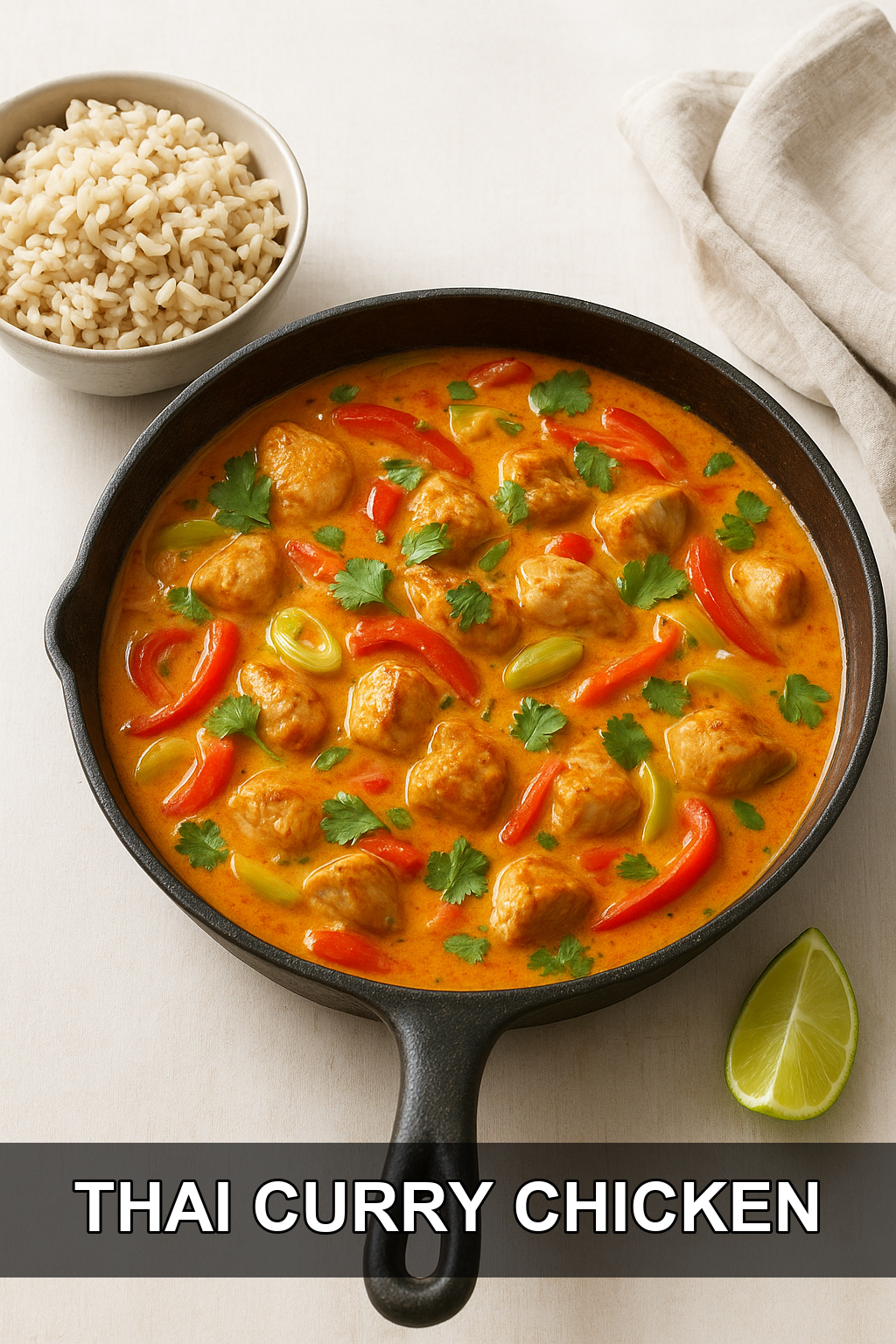
If you’ve been searching for a weeknight dinner that tastes like it took way more effort than it actually did, this Thai curry chicken is it. Juicy seared chicken simmers in a rich, spiced coconut milk sauce with crisp-tender veggies, all finished off in the oven for hands-off convenience. One skillet, minimal cleanup, maximum flavor.
What Is Thai Curry?
Thai curry refers to a family of dishes built around a fragrant curry paste (red, green, yellow, and more) simmered with coconut milk to create a silky, spiced sauce. Traditional versions vary widely by region and paste color, often including ingredients like fish sauce, lemongrass, kaffir lime leaves, and fresh Thai basil, and they’re typically made entirely on the stovetop.
This recipe is a simplified, weeknight-friendly take inspired by that tradition. It leans on store-bought red curry paste and full-fat coconut milk to build big flavor quickly, then finishes the chicken in the oven so it stays juicy while the sauce gently thickens. It’s not meant to be an exact replica of a restaurant dish, but it delivers that same cozy, aromatic, slightly spicy comfort in far less time.
Tips for Cooking and Prepping
#1: Sear the chicken hard, then let it go
Get a deep golden crust on the chicken before removing it from the skillet — that browning adds tons of flavor to the sauce and the finished dish, even though the chicken finishes cooking in the oven.
#2: Don’t skip the full-fat coconut milk
Light coconut milk has too much water content and won’t thicken into that rich, clingy curry sauce you’re after, so stick with full-fat for the best texture.
#3: Bloom the curry paste before adding liquid
Cooking the red curry paste in the skillet for a few minutes before pouring in the coconut milk wakes up its spices and deepens the overall flavor of the sauce.
#4: Slice your leek thinly and rinse well
Leeks can trap grit between their layers, so slice them thin and give them a good rinse before adding them to the pan for the best texture and cleanest flavor.
#5: Use a thermometer for perfectly cooked chicken
Chicken breast size varies a lot, so check for 165°F with an instant-read thermometer rather than relying solely on the timer, since smaller pieces may finish closer to 15 minutes.
Recipe Variations and Substitutes
This curry is easy to adapt to what you have on hand. Swap the chicken breasts for boneless thighs (or a mix of both) for even juicier results, or use green or yellow curry paste instead of red for a different flavor profile. You can also bulk up the veggies with snap peas, carrots, or baby corn, or swap the leek for a sliced yellow onion if that’s what’s in your fridge.
Serving Suggestions
Brown rice is the classic pairing here, soaking up every bit of that creamy curry sauce, but jasmine rice, cauliflower rice, or even rice noodles all work beautifully. A squeeze of fresh lime and extra torn cilantro on top brightens up the richness, and a side of quick-pickled cucumbers or a simple cabbage slaw adds a nice contrasting crunch.
Storing, Make-Ahead, and Freezing Tips
Leftovers keep well in an airtight container in the fridge for up to 4 days, and the flavor actually deepens overnight. This curry also freezes nicely for up to 3 months — just thaw it in the fridge overnight and reheat gently on the stovetop, adding a splash of water or coconut milk if the sauce has thickened too much.
FAQs
Can I make this Thai curry on the stovetop instead of the oven?
Yes — after adding the chicken back to the sauce, simply cover and simmer over low heat for about 20-25 minutes, or until the chicken reaches 165°F, stirring occasionally so nothing sticks.
What can I use instead of red curry paste?
Green or yellow curry paste can be swapped in at the same quantity for a milder or slightly sweeter flavor, though the taste and color of the finished dish will vary a bit from the original.
Is this Thai curry recipe spicy?
It has a mild-to-moderate heat level depending on your brand of curry paste, so start with 1 tablespoon and taste before adding the second if you’re sensitive to spice.
Can I use light coconut milk to make it healthier?
It’s not recommended, since light coconut milk contains more water and won’t reduce into the same thick, creamy sauce — you’ll end up with a thinner, less flavorful curry.
What’s the best way to reheat leftover Thai curry?
Reheat gently in a covered skillet over medium-low heat, stirring occasionally, and add a splash of water or coconut milk if the sauce needs loosening back up.
One-Skillet Thai Curry Chicken Recipe
Prep time: 10 min | Cook time: 40 min | Total time: 50 min | Servings: 4
Ingredients
For the Curry
- 1 1/2 pounds boneless skinless chicken breasts (or thighs, or a mix!)
- 1/2 teaspoon kosher salt
- 1/2 teaspoon ground black pepper
- 2 tablespoons coconut oil
- 1 red bell pepper, thinly sliced
- 1 leek, thinly sliced
- 2 cloves garlic, minced
- 1/2 teaspoon grated fresh ginger
- 2 tablespoons red curry paste
- 1 can (14 ounces) full-fat coconut milk (do not use light, or the sauce won’t thicken properly)
- 3 tablespoons fresh cilantro, torn
For Serving
- Prepared brown rice
Instructions
- Place a rack in the center of your oven and preheat to 375°F. Season the chicken all over with the salt and black pepper.
- Melt the coconut oil in a large, ovenproof skillet over medium-high heat. Add the chicken and sear on both sides until deeply golden brown. Transfer to a plate.
- Reduce the heat to medium-low. Add the bell pepper, leek, garlic, and ginger to the skillet and stir to combine. Cook for about 2 minutes, until slightly softened.
- Stir in the red curry paste and cook for 5 more minutes, stirring often to prevent sticking. Slowly pour in the coconut milk, stirring to combine, then return the seared chicken to the skillet.
- Transfer the skillet to the oven and bake for 25 minutes, or until a thermometer inserted into the thickest part of the chicken reads 165°F and the juices run clear. (Smaller chicken breasts may be done closer to the 15-minute mark, so check early.)
- Top the finished curry with torn cilantro and serve over brown rice, spooning plenty of the coconut curry sauce over each portion.
For extra richness, stir a spoonful of coconut milk into the rice before serving, or add a squeeze of lime juice over the top just before digging in.
Leave a Reply
You must be logged in to post a comment.