
- What Is Thai Curry?
- Tips for Cooking and Prepping
- Recipe Variations and Substitutes
- Serving Suggestions
- Storing, Make-Ahead, and Freezing Tips
- FAQs
- Easy Thai Red Curry with Chicken Recipe
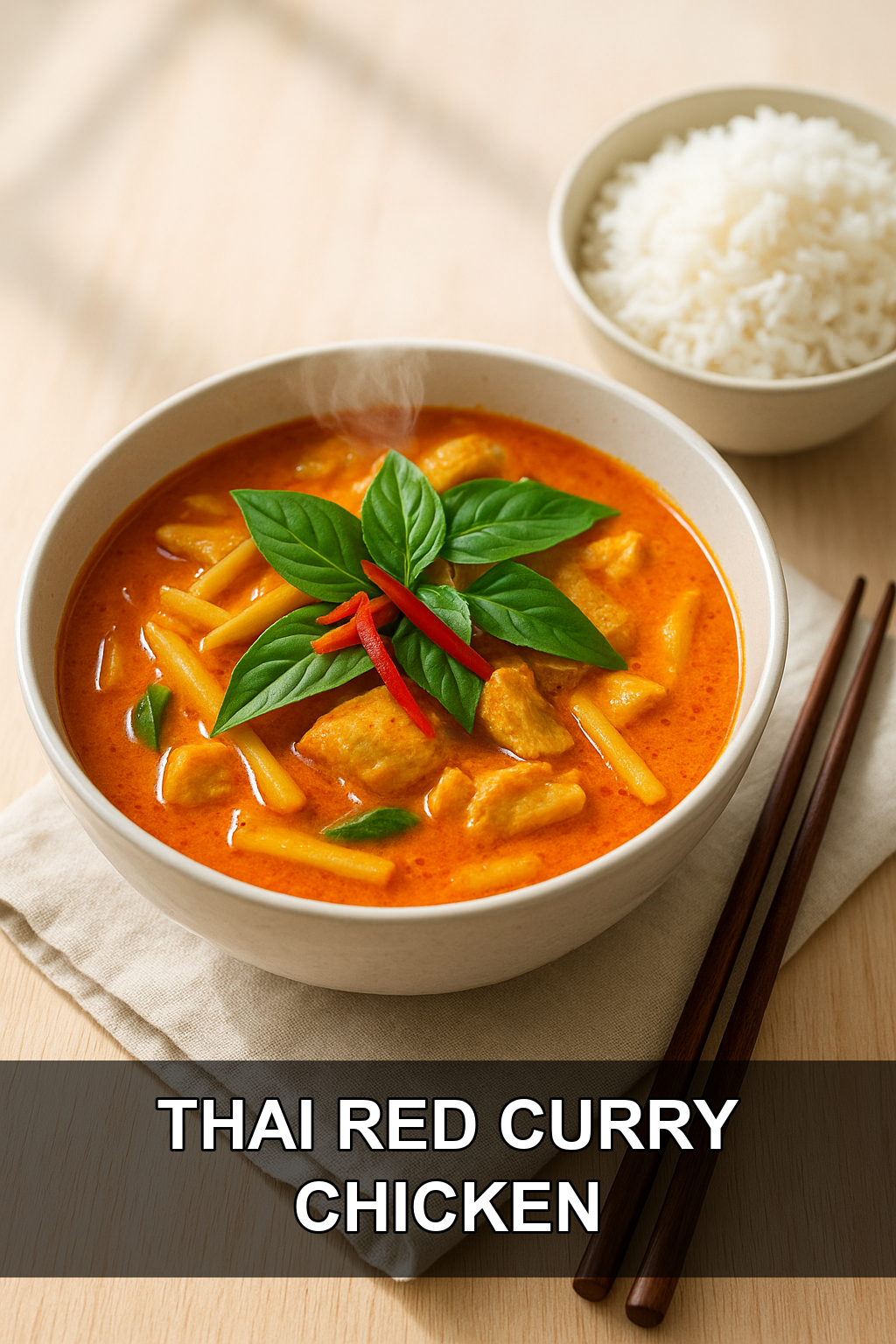
Some nights call for a dinner that feels like a treat without the takeout wait, and this Thai red curry delivers exactly that. Tender chicken simmers in a rich, coconutty red curry sauce studded with bamboo shoots and fragrant Thai basil, and the whole thing comes together in about 30 minutes. Once you see how simple it is, this will become your go-to weeknight rescue meal.
What Is Thai Curry?
Thai curry refers to a family of dishes built around a curry paste base, coconut milk, and a balance of salty, sweet, spicy, and savory flavors. Unlike Indian curries, which often lean on dry spice blends, Thai curries get their signature depth from fresh aromatic pastes made with chilies, lemongrass, galangal, and garlic, simmered right in coconut milk.
Red curry, specifically, gets its color and heat from dried red chilies blended into the paste, and it’s one of the most popular and approachable styles for home cooks. This version keeps things simple with a jarred red curry paste, chicken thighs, and pantry staples like fish sauce and palm sugar, so you get that restaurant-quality flavor without needing a mortar and pestle or a long ingredient list.
Tips for Cooking and Prepping
#1: Marinate the chicken while you prep
Tossing the chicken strips with fish sauce and letting them sit at room temperature while you gather everything else adds a subtle savory depth and saves you a step later.
#2: Bloom the curry paste in oil first
Sauteing the red curry paste in coconut oil for a couple of minutes before adding liquid wakes up the aromatics and deepens the color and flavor of the whole dish. If it starts sticking, splash in a little coconut milk to deglaze.
#3: Bruise, don’t just toss, the lime leaves
Twisting the makrut lime leaves before tearing them releases their fragrant oils so they actually flavor the broth instead of just floating on top.
#4: Watch the chicken closely if using breast meat
Chicken breast cooks faster and dries out easier than thighs, so pull the pot off the heat as soon as it’s just cooked through since it will keep cooking in the hot sauce.
#5: Taste before adding the final fish sauce
Curry paste brands vary a lot in saltiness, so hold off on the last 2-3 teaspoons of fish sauce until you’ve tasted the finished sauce.
Recipe Variations and Substitutes
This curry is easy to customize: swap the chicken thighs for chicken breast, shrimp, tofu, or thinly sliced beef, and adjust cooking time accordingly since seafood and tofu need much less time in the pot. You can also swap in other vegetables like sliced bell peppers, zucchini, eggplant, or snap peas alongside or instead of the bamboo shoots, and green or yellow curry paste can stand in for red curry paste if you prefer a different flavor profile. No palm sugar? Light brown sugar works as a nearly seamless substitute.
Serving Suggestions
Jasmine rice is the classic pairing here, soaking up every drop of that coconutty sauce, but rice noodles or cauliflower rice work well too for a change of pace. Round out the meal with a simple cucumber salad or Thai-style slaw on the side to add some crunch and acidity to balance the richness of the curry.
Storing, Make-Ahead, and Freezing Tips
Leftover curry keeps well in an airtight container in the fridge for up to 3-4 days, and the flavor actually improves overnight as everything melds together. For freezing, let the curry cool completely, then store in a freezer-safe container for up to 2 months; thaw overnight in the fridge and reheat gently on the stove, adding a splash of water or stock if the sauce has thickened too much.
FAQs
What is the difference between red and green Thai curry?
The main difference is the chili used in the paste: red curry uses dried red chilies for a deeper, slightly sweeter heat, while green curry uses fresh green chilies for a brighter, sharper spice.
Can I make Thai curry less spicy?
Yes, simply reduce the amount of red curry paste to 4 tablespoons or less, and add a bit more coconut milk to mellow the heat while keeping the flavor balanced.
Is fish sauce necessary for this recipe?
Fish sauce provides the essential salty, savory backbone of Thai cooking, but if you need to avoid it, soy sauce or a vegetarian fish sauce alternative can be used in a pinch, though the flavor will be slightly different.
Can I use light coconut milk instead of full-fat?
You can, but the curry will be noticeably thinner and less rich, so full-fat coconut milk is recommended for the best texture and flavor.
What can I substitute for makrut lime leaves?
If you can’t find makrut lime leaves, they’re optional in this recipe, but a bit of lime zest stirred in near the end can offer a similar citrusy fragrance.
Easy Thai Red Curry with Chicken Recipe
Prep time: 20 min | Cook time: 10 min | Total time: 30 min | Servings: 4
Ingredients
For the Chicken
- 1 lb boneless skinless chicken thighs, cut into 1 cm strips (or sub chicken breast)
- 4 tsp fish sauce
For the Curry
- 3 Tablespoons virgin coconut oil (or neutral oil)
- 4-6 Tablespoons red curry paste
- 1 teaspoon fermented shrimp paste (optional)
- 1.5 cups coconut milk
- 1 cup chicken stock (unsalted or low sodium)
- 2 Tbsp palm sugar, finely chopped (or light brown sugar)
- 1 can bamboo shoots strips, rinsed well and drained
- 5 makrut lime leaves (optional)
- 1 cup Thai basil leaves
- 2-3 teaspoons fish sauce, or as needed
For Serving
- 1 handful julienned red pepper (optional, for garnish, any pepper works)
- Jasmine rice, for serving
Instructions
- Mix the chicken strips with the 4 teaspoons of fish sauce and stir well. Set aside at room temperature while you prep the rest of the ingredients.
- In a medium pot over medium heat, add the coconut oil and red curry paste. Saute the paste for about 2 minutes, deglazing with a little coconut milk if it starts sticking to the bottom of the pot.
- Add the remaining coconut milk, chicken stock, palm sugar, and bamboo shoots, stirring to combine. Twist the makrut lime leaves to bruise them, tear into chunks, and add to the pot. Bring to a simmer and let cook for 5 minutes.
- Add the marinated chicken to the pot. Once the sauce returns to a simmer, cook for another 1-2 minutes, just until the chicken is cooked through. If using chicken breast, remove from heat promptly to avoid overcooking, as it will continue cooking in the residual heat.
- Turn off the heat and stir in the julienned red pepper (if using) and Thai basil leaves. Taste the sauce and add more fish sauce as needed, since this depends on the brand of curry paste used. Serve hot over jasmine rice.
Fermented shrimp paste is optional but adds an authentic umami depth if you can find it; if using chicken breast instead of thighs, keep a close eye on cook time to prevent dryness.
Leave a Reply
You must be logged in to post a comment.