
- What Is Thai Curry?
- Tips for Cooking and Prepping
- Recipe Variations and Substitutes
- Serving Suggestions
- Storing, Make-Ahead, and Freezing Tips
- FAQs
- Easy Thai Curry Recipe
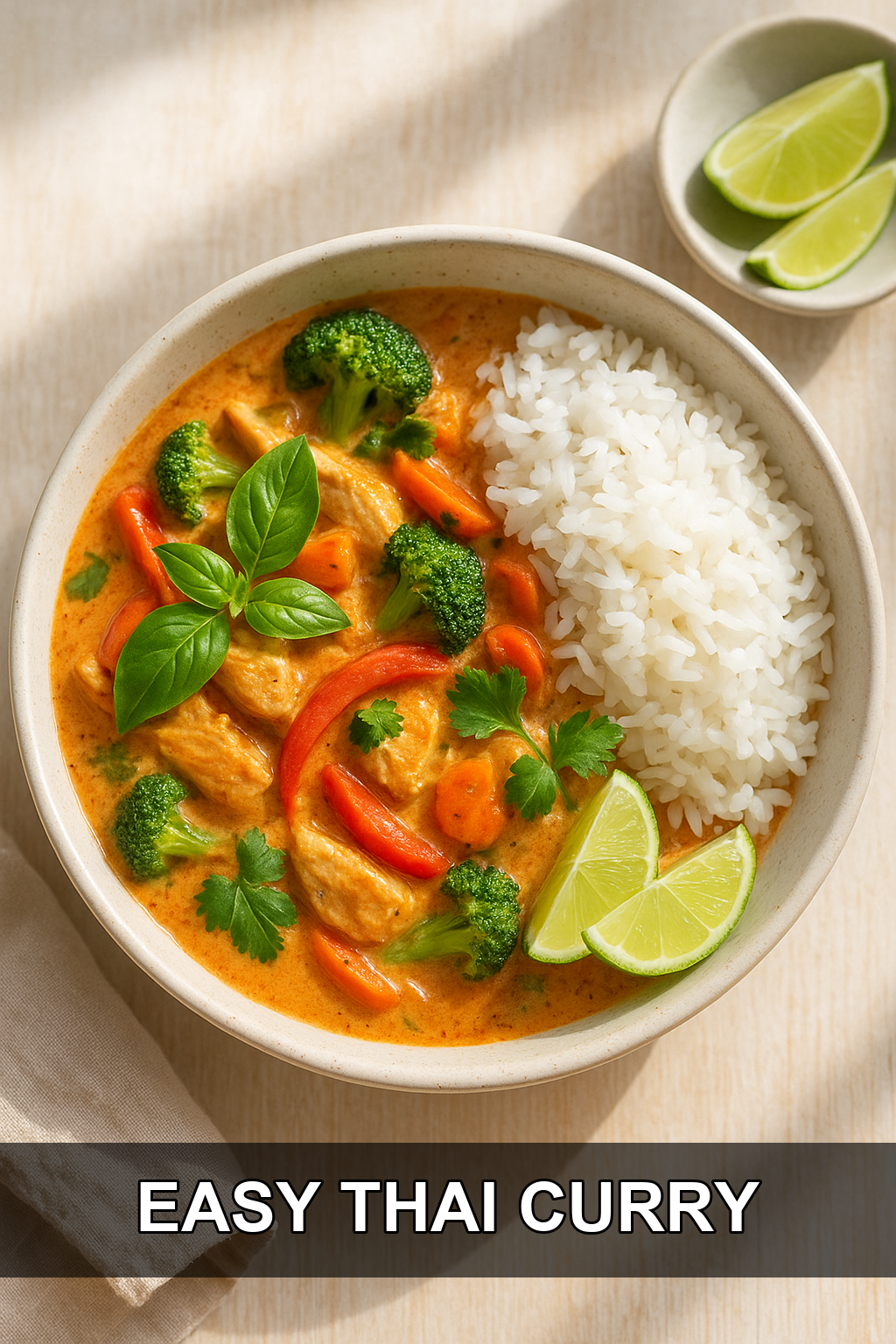
If you’ve ever craved that rich, spicy-sweet flavor of your favorite Thai takeout, this easy Thai curry recipe is about to become your new weeknight hero. With tender chicken, crisp-tender veggies, and a creamy coconut curry sauce, it comes together in just 30 minutes using simple pantry staples. Serve it over steamed rice and you’ve got a restaurant-quality meal made right in your own kitchen.
What Is Thai Curry?
Thai curry refers to a family of aromatic, sauce-based dishes built on a foundation of curry paste, coconut milk, and fresh herbs. Unlike Indian curries, which often rely on dry spice blends, Thai curries get their signature flavor from fresh chiles, lemongrass, galangal, and other aromatics that are pounded into a fragrant paste, then simmered with coconut milk for richness and balance.
This particular version uses red curry paste as its flavor backbone, combined with fish sauce, soy sauce, lime juice, and a touch of brown sugar to hit all the classic sweet, salty, sour, and spicy notes Thai cuisine is known for. It’s a simplified, home-cook-friendly take that doesn’t skimp on flavor, using easy-to-find ingredients from your local grocery store instead of a long list of specialty items.
Tips for Cooking and Prepping
#1: Slice the chicken thin and even
Thinly slicing the chicken thighs ensures they cook quickly and evenly in the hot skillet, so you get tender bites instead of dry, overcooked edges.
#2: Bloom the curry paste in the oil
Cooking the red curry paste directly with the chicken and onions right at the start helps release its full aroma and deepens the flavor of the entire dish.
#3: Cut vegetables for staggered cooking times
Broccoli goes in a minute before the bell pepper and carrot because it needs a little extra time to soften slightly while still staying crisp-tender.
#4: Whisk the cornstarch slurry until smooth
Mixing the cornstarch with the reserved coconut milk in a separate bowl before adding it to the pan prevents lumps and helps the sauce thicken evenly.
#5: Taste and adjust the sauce before serving
Since fish sauce, lime juice, and brown sugar brands vary in intensity, taste the curry near the end of cooking and adjust with a little extra lime juice, chili sauce, or salt to balance the flavors to your liking.
Recipe Variations and Substitutes
This Thai curry is easy to customize based on what you have on hand or your spice preference. Swap chicken thighs for chicken breast, shrimp, or tofu for a different protein, or use green or yellow curry paste instead of red for a milder or brighter flavor profile. You can also swap in whatever vegetables you have, like snap peas, zucchini, or baby corn, in place of the broccoli and carrots.
Serving Suggestions
Serve this curry hot over steamed jasmine rice to soak up every bit of that coconut curry sauce, or spoon it over rice noodles for a fun twist. A side of crispy spring rolls or a simple cucumber salad rounds out the meal nicely.
Storing, Make-Ahead, and Freezing Tips
Leftover Thai curry keeps well in an airtight container in the refrigerator for up to 4 days, and the flavors often taste even better the next day. To freeze, cool the curry completely and store in a freezer-safe container for up to 3 months; thaw overnight in the fridge before reheating gently on the stovetop, adding a splash of water or coconut milk if the sauce has thickened too much.
FAQs
Is this Thai curry recipe spicy?
It has a mild to medium heat level depending on the brand of red curry paste you use, but you can easily adjust the spice by using more or less curry paste and adding Sriracha to taste at the end.
Can I make this Thai curry vegetarian?
Yes, simply swap the chicken for extra-firm tofu or additional vegetables, and use soy sauce or a vegetarian fish sauce alternative in place of regular fish sauce.
What can I use instead of red curry paste?
Green curry paste or yellow curry paste both work well as substitutes and will simply shift the flavor and heat level slightly, so feel free to use whichever you prefer or have on hand.
Why is my curry sauce too thin or too thick?
If the sauce is too thin, simmer it a bit longer to let it reduce; if it’s too thick, stir in a small splash of water or extra coconut milk until it reaches your desired consistency.
Do I have to use fish sauce?
Fish sauce adds an essential savory depth that’s hard to replicate, but if you need to avoid it, you can substitute extra soy sauce, though the flavor will be slightly less complex.
Easy Thai Curry Recipe
Prep time: 18 min | Cook time: 12 min | Total time: 30 min | Servings: 4
Ingredients
For the Curry
- 1 1/2 tablespoons light olive oil or coconut oil
- 1 pound chicken thighs, thinly sliced
- 1/2 large yellow onion, chopped
- 2 tablespoons red curry paste
- 1 red bell pepper, cut into 1-inch pieces
- 1 carrot, thinly sliced
- 1 1/2 cups broccoli florets
- 2 teaspoons freshly grated ginger
- 4 garlic cloves, minced
For the Sauce
- 1 (13.5 oz) can quality coconut milk
- 1 tablespoon cornstarch
- 1 tablespoon Asian/Thai sweet chili sauce
- 2 tablespoons less sodium soy sauce
- 2 tablespoons fish sauce
- 2 tablespoons lime juice
- 1 tablespoon brown sugar
- 1 bay leaf
- 1 teaspoon dried basil
- 1/4 teaspoon salt
- 1/4 teaspoon pepper
For Serving
- Sriracha or Asian chili sauce, to taste
- Lime juice and zest, to taste
- Fresh basil
- Fresh cilantro
- Steamed rice
Instructions
- Heat the oil over medium-high heat in a large nonstick skillet or enameled pan. Once sizzling, add the sliced chicken, chopped onion, and red curry paste. Cook until the chicken is mostly opaque, stirring occasionally to combine the flavors.
- Add the broccoli florets and stir-fry for one minute. Then add the chopped red bell pepper, sliced carrot, grated ginger, and minced garlic. Sauté everything together for one more minute to enhance the flavors and slightly soften the vegetables.
- Pour half of the coconut milk into the skillet. In a separate bowl, whisk the remaining coconut milk with the cornstarch until smooth, then add this mixture to the skillet. Stir in the sweet chili sauce, soy sauce, fish sauce, lime juice, brown sugar, bay leaf, dried basil, salt, and pepper, mixing well to combine.
- Bring the curry to a boil, then reduce the heat to a simmer. Cook for about 5 minutes, or until the sauce has thickened and the vegetables reach your preferred crisp-tender texture. Thin with a little water if the sauce becomes too thick. Remove and discard the bay leaf before serving.
- Garnish with fresh basil, cilantro, lime zest, extra lime juice, and Sriracha or Asian chili sauce to taste. Serve hot over steamed rice.
For extra depth, toast the red curry paste in the oil for 30 seconds before adding the chicken. Leftovers taste even better the next day once the flavors have had time to meld.
Leave a Reply
You must be logged in to post a comment.