
- What Is Thai Curry?
- Tips for Cooking and Prepping
- Recipe Variations and Substitutes
- Serving Suggestions
- Storing, Make-Ahead, and Freezing Tips
- FAQs
- Easy Homemade Thai Curry Recipe
There’s something so comforting about a bowl of steaming Thai curry, and the good news is you don’t need a trip to your favorite Thai restaurant to enjoy it. This easy homemade version comes together in about 40 minutes with simple pantry staples and a rainbow of veggies, all simmered in a rich, creamy coconut curry sauce. It’s cozy, vibrant, and endlessly adaptable to whatever you have on hand.
What Is Thai Curry?
Thai curry refers to a broad family of dishes from Thailand built around a fragrant curry paste, usually simmered with coconut milk to create a rich, silky sauce. Unlike Indian curries, which often rely on dry spice blends, Thai curries get their signature flavor from fresh aromatics like lemongrass, galangal, chilies, and lime leaves that are pounded into a paste. Red, green, and yellow curries are the most common varieties you’ll find on restaurant menus, each named for the color of the paste used.
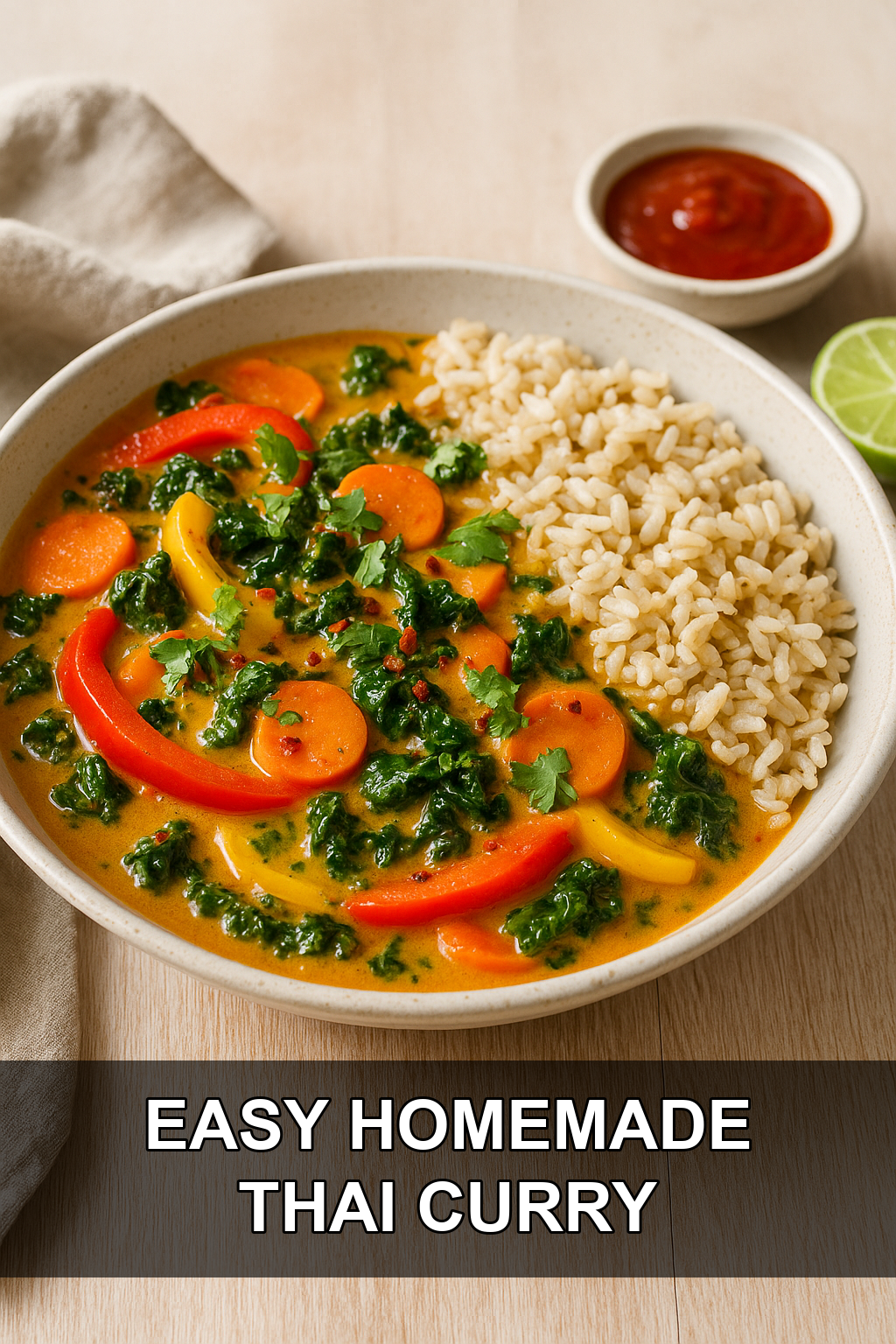
This homemade version leans on store-bought Thai red curry paste to keep things quick and approachable, while still delivering that bold, spicy-sweet flavor you crave. Loaded with bell peppers, carrots, and kale, and served over fluffy brown jasmine rice, it’s a wonderfully balanced weeknight meal that tastes like it took much longer than it actually did.
Tips for Cooking and Prepping
#1: Start your rice first
Brown rice takes about 30 minutes to cook, so get it boiling before you start chopping vegetables. This way, everything finishes around the same time and nothing goes cold waiting.
#2: Don’t skip toasting the curry paste
Cooking the red curry paste in the pan for a couple of minutes before adding liquid helps bloom its flavor and take away any raw, harsh edge, making the finished curry taste much deeper and more complex.
#3: Slice vegetables uniformly
Cutting the bell peppers into thin, even strips and the carrots into consistent diagonal rounds ensures everything cooks at the same rate, so you won’t end up with crunchy carrots and mushy peppers.
#4: Add kale at the end
Kale wilts down quickly, so stir it in during the simmering stage rather than with the other vegetables. This keeps it tender but still vibrant instead of overcooked and dull.
#5: Balance the sauce right before serving
Taste the curry after it simmers and adjust with a little extra tamari for savoriness or rice vinegar for brightness. This final seasoning step is what makes homemade curry taste truly restaurant-quality.
Recipe Variations and Substitutes
This curry is very forgiving, so feel free to swap in green or yellow curry paste for a different flavor profile, or use whatever vegetables are in your fridge, like zucchini, snap peas, broccoli, or baby corn. For extra protein, stir in cooked chicken, shrimp, tofu, or chickpeas during the simmering step. If you don’t have kale on hand, baby spinach or Swiss chard work beautifully as well.
Serving Suggestions
Serve this curry over the brown jasmine rice as written, or swap in white rice, cauliflower rice, or rice noodles depending on your mood. A sprinkle of fresh basil or cilantro, a squeeze of lime, and a drizzle of sriracha take it over the top, and a side of crispy spring rolls or a simple cucumber salad rounds out the meal nicely.
Storing, Make-Ahead, and Freezing Tips
Leftover curry keeps well in an airtight container in the fridge for up to 4 days, and the flavor actually deepens overnight. To freeze, cool the curry completely and store it (without the rice) in a freezer-safe container for up to 3 months; thaw overnight in the fridge and reheat gently on the stovetop, adding a splash of water or coconut milk if it’s thickened too much.
FAQs
Is Thai red curry paste spicy?
Thai red curry paste has a moderate heat level that varies by brand, so it’s a good idea to start with less and taste as you go if you’re sensitive to spice. You can always add sriracha or chili flakes at the table for those who want more kick.
Can I use light coconut milk instead of full-fat?
Yes, though the curry will be noticeably thinner and less rich, since full-fat coconut milk is what gives this dish its creamy, luxurious texture. If using light coconut milk, consider reducing the water slightly to compensate.
What vegetables work best in Thai curry?
Bell peppers, carrots, and kale are used here, but sturdy vegetables like broccoli, green beans, sweet potato, and eggplant also hold up well to simmering and taste great in this curry base.
Is this recipe vegan and gluten-free?
As written, it’s vegan, and it’s gluten-free as long as you use tamari instead of regular soy sauce and double-check that your curry paste doesn’t contain any hidden gluten ingredients.
Can I make this curry ahead of time for meal prep?
Absolutely, this curry reheats beautifully and the flavors meld even more after a day in the fridge, making it a great option for meal prepping lunches or dinners for the week.
Easy Homemade Thai Curry Recipe
Prep time: 10 min | Cook time: 30 min | Total time: 40 min | Servings: 4
Ingredients
For the Rice
- 1 ¼ cups brown jasmine rice or long-grain brown rice, rinsed
For the Curry
- 1 tablespoon coconut oil or olive oil
- 1 small white onion, chopped (about 1 cup)
- Pinch of salt, more to taste
- 1 tablespoon finely grated fresh ginger (about a 1-inch nub of ginger)
- 2 cloves garlic, pressed or minced
- 1 red bell pepper, sliced into thin 2-inch long strips
- 1 yellow, orange or green bell pepper, sliced into thin 2-inch long strips
- 3 carrots, peeled and sliced on the diagonal into ¼-inch thick rounds (about 1 cup)
- 2 tablespoons Thai red curry paste
- 1 can (14 ounces) regular coconut milk
- ½ cup water
- 1 ½ cups packed thinly sliced kale (tough ribs removed first), preferably Tuscan/lacinato/dinosaur variety
- 1 ½ teaspoons coconut sugar or turbinado (raw) sugar or brown sugar
- 1 tablespoon tamari or soy sauce
- 2 teaspoons rice vinegar or fresh lime juice
For Garnish/Serving
- Handful of chopped fresh basil or cilantro
- Optional red pepper flakes
- Optional sriracha or chili garlic sauce
Instructions
- To cook the rice, bring a large pot of water to boil. Add the rinsed rice and continue boiling for 30 minutes, reducing heat as necessary to prevent overflow. Remove from heat, drain the rice, and return it to the pot. Cover and let it rest for 10 minutes or longer, until you’re ready to serve. Just before serving, season the rice to taste with salt and fluff it with a fork.
- To make the curry, warm a large skillet with deep sides over medium heat. Once hot, add the oil. Add the onion and a sprinkle of salt and cook, stirring often, until softened and turning translucent, about 5 minutes. Add the ginger and garlic and cook until fragrant, about 30 seconds, stirring continuously.
- Add the bell peppers and carrots. Cook until the peppers are fork-tender, 3 to 5 more minutes, stirring occasionally. Add the curry paste and cook, stirring often, for 2 minutes.
- Add the coconut milk, water, kale, and sugar, and stir to combine. Bring to a simmer over medium heat, reducing heat as needed to maintain a gentle simmer. Cook until the peppers, carrots, and kale have softened to your liking, about 5 to 10 minutes, stirring occasionally.
- Remove the pot from the heat and season with tamari and rice vinegar. Add salt to taste (about ¼ teaspoon for optimal flavor). If the curry needs more punch, add ½ teaspoon more tamari; for more acidity, add ½ teaspoon more rice vinegar. Divide rice and curry into bowls and garnish with chopped basil or cilantro and red pepper flakes, if desired. Serve with sriracha or chili garlic sauce on the side for those who like it spicy.
Look for Thai red curry paste in the international aisle of most grocery stores; brands vary in heat and salt level, so taste and adjust seasoning as you go. Leftovers keep well for meal prep and taste even better the next day.
Leave a Reply
You must be logged in to post a comment.