
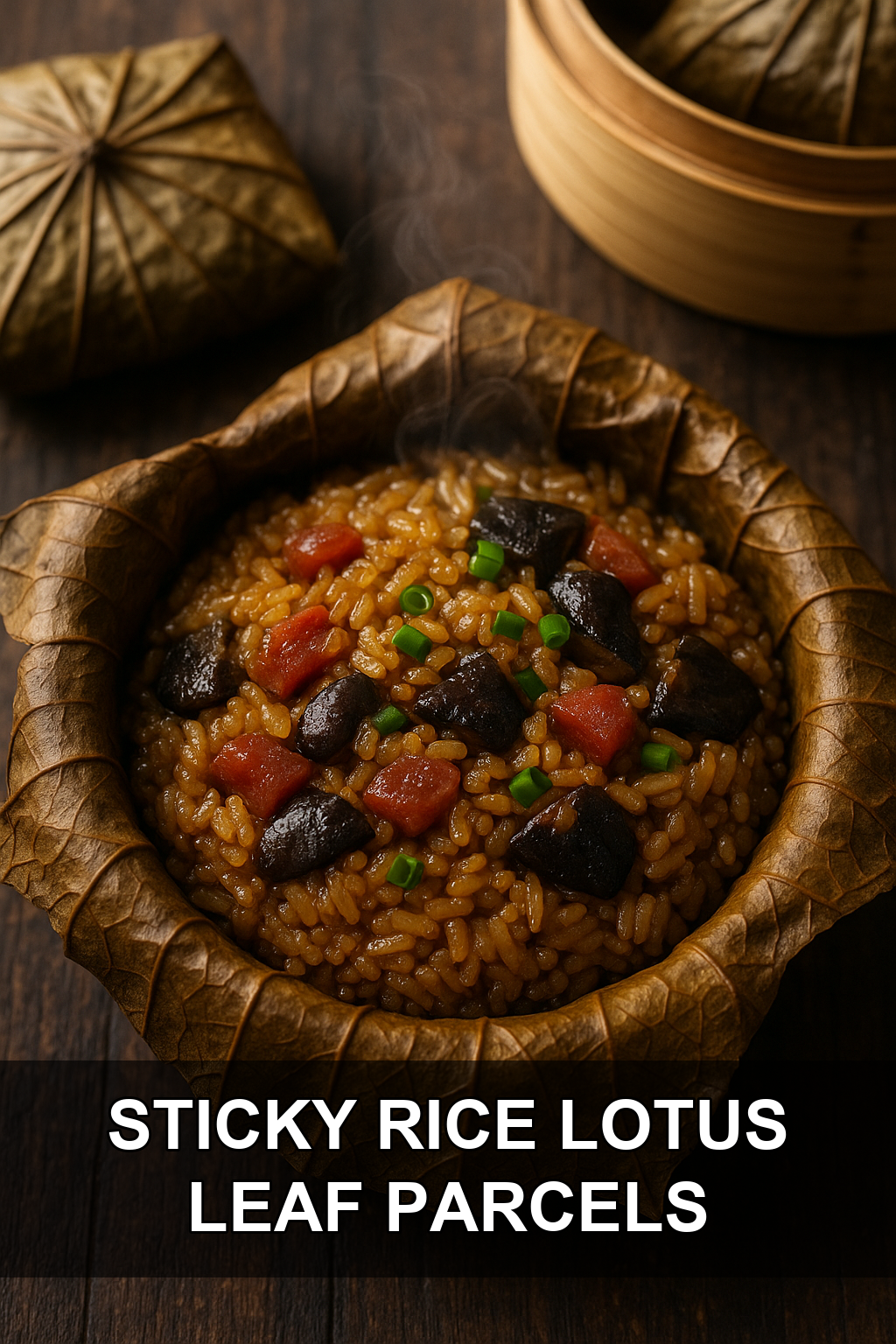
- What Is Sticky Rice Stuffed Lotus Leaves?
- Tips for Cooking and Prepping
- Recipe Variations and Substitutes
- Serving Suggestions
- Storing, Make-Ahead, and Freezing Tips
- FAQs
- Sweet Sticky Rice Stuffed Lotus Leaves with Chinese Sausage and Shiitake Recipe
There’s something deeply comforting about unwrapping a warm lotus leaf parcel and finding a mound of glossy, savory-sweet sticky rice waiting inside. This dim sum classic, often called lo mai gai, combines chewy glutinous rice, smoky Chinese sausage, and earthy shiitake mushrooms into a fragrant bundle that’s every bit as fun to make as it is to eat.
What Is Sticky Rice Stuffed Lotus Leaves?
Lo mai gai, or sticky rice wrapped in lotus leaves, is a beloved Cantonese dim sum dish traditionally served in bamboo steamer baskets at yum cha restaurants. Glutinous rice is seasoned with soy sauce, oyster sauce, and a touch of sugar, then mixed with savory bits like Chinese sausage (lap cheong), dried shiitake mushrooms, and sometimes chicken or dried shrimp before being wrapped tightly in dried lotus leaves and steamed until fragrant and tender.
The lotus leaf itself isn’t eaten, but it infuses the rice with a subtle, tea-like earthiness while keeping every grain moist during the long steam. This version leans slightly sweeter than the traditional savory-only style, balancing the smoky sausage and umami mushrooms with a hint of sugar and Chinese five spice for a rounded, deeply satisfying bite.
Tips for Cooking and Prepping
#1: Soak the lotus leaves until fully pliable
Dried lotus leaves need at least 30 minutes in hot water to soften enough for folding without cracking; rinse well afterward to remove any dust or grit from packaging.
#2: Soak glutinous rice for a minimum of 4 hours
Glutinous rice needs a long soak (or overnight) to steam evenly and become properly sticky and tender rather than chalky in the center.
#3: Rehydrate shiitake mushrooms in their own soaking liquid
Save the mushroom soaking water and add a splash to the rice mixture for extra depth of flavor instead of discarding it.
#4: Pre-cook or par-steam the rice filling before wrapping
Stir-frying the soaked rice briefly with the sausage, mushrooms, and seasonings ensures the flavors distribute evenly before the final steam, rather than staying pale and separated.
#5: Fold the lotus leaf packages tightly but not overstuffed
A snug, well-folded parcel keeps steam concentrated inside for even cooking, while overpacking makes the rice dense and prevents it from steaming through fully.
#6: Steam over consistently high heat with plenty of water
These parcels need a solid 45-60 minutes of steady steaming, so check your water level periodically to avoid the pot running dry.
Recipe Variations and Substitutes
You can swap the Chinese sausage for diced char siu pork, cooked chicken thigh, or even dried shrimp for a different flavor profile. Vegetarians can omit the sausage and chicken entirely, doubling up on shiitake mushrooms and adding diced water chestnuts for crunch, while a drizzle of extra dark soy sauce keeps the color rich without meat.
Serving Suggestions
Serve these parcels hot, straight from the steamer, alongside other dim sum favorites like har gow, siu mai, or a light cucumber salad to cut through the richness. A small dish of chili oil or soy sauce with a few drops of sesame oil makes a nice accompaniment for dipping.
Storing, Make-Ahead, and Freezing Tips
Wrapped, unsteamed parcels can be refrigerated for up to 2 days or frozen for up to 2 months; steam frozen parcels directly, adding about 15 extra minutes of steaming time. Leftover steamed parcels keep well in the fridge for 3-4 days and reheat beautifully by re-steaming for 10-15 minutes.
FAQs
Can I use banana leaves instead of lotus leaves?
Yes, banana leaves work as a substitute and are easier to find in many grocery stores, though they impart a slightly different, more grassy aroma compared to the tea-like scent of lotus leaves.
Do you eat the lotus leaf wrapping?
No, the lotus leaf is not eaten; it’s used purely to wrap and flavor the rice during steaming and should be discarded once the parcel is opened.
Why is my sticky rice still hard after steaming?
This usually means the rice wasn’t soaked long enough before cooking or the parcels didn’t steam for a sufficient amount of time; glutinous rice needs a minimum 4-hour soak and 45-60 minutes of steaming to become fully tender.
Can I make these ahead for a party?
Absolutely, you can wrap and refrigerate the parcels up to 2 days in advance, then steam them fresh right before serving so they’re hot and fragrant for your guests.
What’s the difference between this and zongzi?
Zongzi are typically wrapped in bamboo leaves in a tetrahedron shape and often boiled rather than steamed, while lo mai gai is a flatter, rectangular lotus leaf parcel that’s always steamed and commonly served as individual dim sum portions.
Sweet Sticky Rice Stuffed Lotus Leaves with Chinese Sausage and Shiitake Recipe
Prep time: 40 min | Cook time: 60 min | Total time: 100 min | Servings: 6
Ingredients
For the Rice Filling
- 3 cups glutinous (sticky) rice, soaked 4 hours or overnight
- 6 dried shiitake mushrooms, soaked in hot water until soft
- 3 links Chinese sausage (lap cheong), diced
- 2 tbsp vegetable oil
- 2 cloves garlic, minced
- 3 tbsp light soy sauce
- 2 tbsp oyster sauce
- 1 tbsp dark soy sauce
- 2 tbsp sugar
- 1/2 tsp Chinese five spice powder
- 1/2 cup reserved shiitake soaking liquid
- 1/4 cup dried shrimp, soaked and chopped (optional)
- 2 green onions, finely chopped
- White pepper, to taste
For Wrapping
- 6-8 dried lotus leaves, soaked in hot water until pliable
- Kitchen twine or extra lotus leaf strips for tying (optional)
Instructions
- Soak the glutinous rice in a large bowl of water for at least 4 hours or overnight, then drain well.
- Soak the dried lotus leaves in a large basin of very hot water for 30-45 minutes until soft and pliable, then rinse and pat dry. Trim tough stems if needed.
- Soak dried shiitake mushrooms in hot water for 20-30 minutes until softened; reserve the soaking liquid, then remove stems and dice the caps.
- Heat vegetable oil in a wok over medium heat and sauté the diced Chinese sausage until fragrant and slightly crisp, about 3 minutes.
- Add garlic and diced shiitake mushrooms to the wok and stir-fry for another 2 minutes.
- Add the drained glutinous rice to the wok along with light soy sauce, oyster sauce, dark soy sauce, sugar, five spice powder, and the reserved shiitake soaking liquid. Stir well to coat the rice evenly.
- Cook the rice mixture over medium heat, stirring frequently, for about 8-10 minutes until the liquid is mostly absorbed and the rice looks glossy (it does not need to be fully cooked at this stage). Stir in the dried shrimp, green onions, and white pepper, then remove from heat.
- Cut each softened lotus leaf into a large workable square or rectangle if needed. Place a generous scoop of the rice mixture (about 3/4 to 1 cup) in the center of each leaf.
- Fold the sides of the lotus leaf over the filling, then fold the top and bottom to create a tight, secure rectangular or square parcel. Tie with kitchen twine if desired for extra security.
- Arrange the parcels seam-side down in a large steamer basket lined with parchment or extra lotus leaf scraps, making sure they don’t touch too closely.
- Steam over high heat for 45-60 minutes, checking water levels periodically and topping up with boiling water as needed, until the rice inside is fully tender and cooked through.
- Remove parcels from the steamer and let rest for 5 minutes before unwrapping and serving hot.
For extra richness, stir a tablespoon of rendered chicken fat or lard into the rice mixture before wrapping. If lotus leaves are unavailable, banana leaves or even parchment paper plus foil can be used in a pinch, though the aroma will differ slightly.
Leave a Reply
You must be logged in to post a comment.