
- What Are Sushi Bowls?
- Tips for Cooking and Prepping
- Recipe Variations and Substitutes
- Serving Suggestions
- Storing and Make-Ahead Tips
- FAQs
- Sushi Bowl Recipe
If you love sushi but rolling your own maki sounds like more trouble than it’s worth on a Tuesday night, these sushi bowls are about to become your best friend. All the flavors of your favorite sushi roll get piled into a bowl over seasoned rice, no bamboo mat required. It’s fast, fresh, and endlessly customizable.
What Are Sushi Bowls?
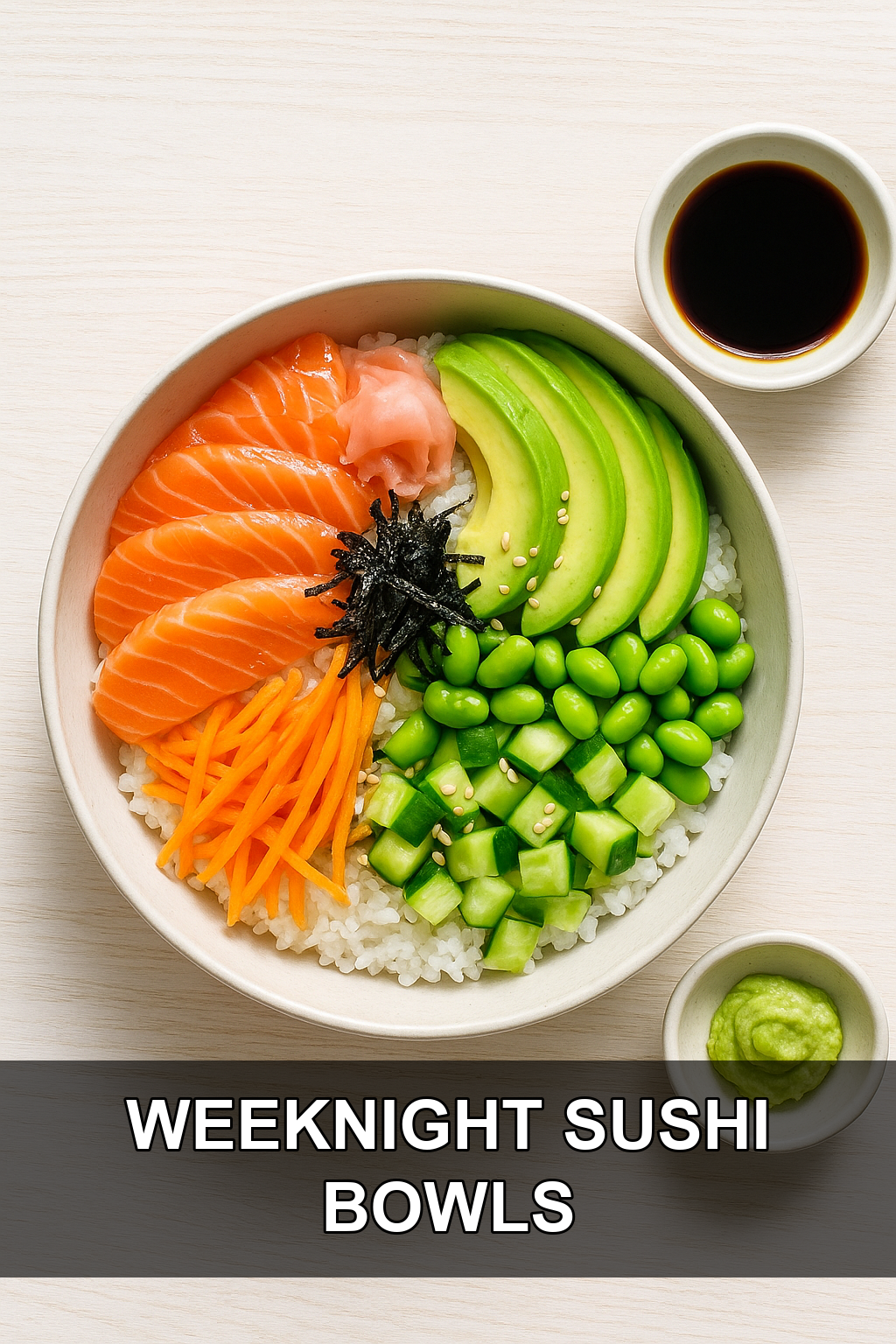
Sushi bowls (sometimes called chirashi bowls or poke-style sushi bowls) take everything you love about sushi rolls — seasoned rice, raw fish, crisp vegetables, nori, and pickled ginger — and layer them into a bowl instead of rolling them by hand. It’s essentially deconstructed sushi, which means you skip the fussy rolling technique and the specialty tools, but you still get that same satisfying combination of tangy rice, buttery fish, and crunchy veggies in every bite.
This style of eating has roots in Japanese chirashizushi, a dish where an assortment of raw fish and toppings is scattered over sushi rice rather than rolled. It’s traditionally more casual and quicker to prepare than nigiri or maki, which makes it perfect for home cooks who want restaurant-quality flavor without the restaurant-level effort on a weeknight.
Tips for Cooking and Prepping
#1: Rinse the rice thoroughly
Rinsing short-grain Japanese rice until the water runs clear removes excess surface starch, which is what keeps your sushi rice from turning gummy or clumpy once it’s seasoned.
#2: Let the rice steam undisturbed
Resist the urge to lift the lid while the rice simmers or during the 10-minute rest after cooking — that trapped steam is what finishes cooking the grains evenly and gives you that classic sticky-but-distinct texture.
#3: Season the rice while it’s warm, then cool it down
Fold the vinegar mixture into the rice while it’s still warm so it absorbs evenly, then let it cool to room temperature before assembling bowls so it doesn’t wilt the avocado or steam up the nori.
#4: Buy sushi-grade fish from a trusted source
Since the salmon or tuna is served raw, always buy it labeled ‘sushi-grade’ or ‘sashimi-grade’ from a reputable fishmonger, and use it the same day you bring it home.
#5: Cut the nori just before serving
Nori softens and loses its crisp snap quickly once it touches moist rice or vegetables, so slice it into strips right before you build the bowls, not ahead of time.
#6: Keep ingredients separated until serving
Prep all your toppings in individual piles rather than mixing them together early, so each component keeps its own texture and the bowl looks vibrant and fresh when it hits the table.
Recipe Variations and Substitutes
Sushi bowls are wonderfully flexible, so don’t feel locked into the exact toppings listed here. Swap raw salmon or tuna for cooked shrimp, seared tofu, or even canned crab if you want a cooked or budget-friendly version, and feel free to add mango, radish, or spicy mayo for extra flair. Brown rice or cauliflower rice can also stand in for the traditional short-grain rice if you’re looking for a different texture or lower-carb option.
Serving Suggestions
Serve sushi bowls with extra soy sauce, a drizzle of spicy mayo, or a squeeze of fresh lime for brightness. They pair nicely with a light miso soup or a simple cucumber salad on the side if you want to round out the meal into something a little more filling.
Storing and Make-Ahead Tips
The sushi rice can be cooked and seasoned up to a day ahead and stored covered in the fridge, just bring it closer to room temperature before serving for the best texture. Keep raw fish and cut avocado separate until you’re ready to eat, and assemble the bowls fresh since the toppings don’t hold up well once fully combined.
FAQs
Can I use cooked fish instead of raw salmon or tuna?
Absolutely — cooked shrimp, seared salmon, canned tuna, or even imitation crab all work well if you’d rather skip raw fish, and they still soak up the same great flavors from the rice and toppings.
What does ‘sushi-grade’ fish actually mean?
Sushi-grade generally refers to fish that has been handled and frozen according to standards that make it safe to eat raw; it’s best to buy it from a fishmonger or grocery store that specifically labels and sells it for raw consumption.
Can I make sushi bowls ahead of time for meal prep?
Yes, you can cook and season the rice and prep the vegetables in advance, storing everything separately in airtight containers in the fridge for up to 2 days, then assemble the bowls right before eating for the freshest texture.
What can I use instead of sushi rice?
Brown rice, quinoa, or cauliflower rice can all be seasoned with the same vinegar mixture and used as a substitute if you want a different texture or a lighter option.
How do I keep the avocado from browning if I prep ahead?
Toss the sliced avocado lightly in a bit of lemon or lime juice and store it tightly wrapped in plastic touching the surface of the fruit, then add it to the bowls just before serving.
Sushi Bowl Recipe
Prep time: 20 min | Cook time: 20 min | Total time: 40 min | Servings: 4
Ingredients
For the Sushi Rice
- 2 cups short-grain Japanese rice
- 2 cups water
- ¼ cup rice vinegar
- 2 tablespoons sugar
- 1 teaspoon salt
For the Bowls
- 8 ounces sushi-grade salmon or tuna, thinly sliced
- 1 large cucumber, diced or sliced
- 2 avocados, sliced
- 2 carrots, shredded or julienned
- 1 cup edamame beans, cooked and shelled
- 4 sheets nori (seaweed), cut into thin strips
- 2 tablespoons pickled ginger
- 2 tablespoons sesame seeds (white or black), toasted
For Serving
- Soy sauce or tamari
- Wasabi paste (optional)
Instructions
- Rinse the rice under cold water until the water runs clear.
- In a medium saucepan, combine the rice and water. Bring to a boil over medium heat. Reduce heat to low, cover, and simmer for 15 minutes. Remove from heat and let it sit, covered, for an additional 10 minutes.
- In a small bowl, mix the rice vinegar, sugar, and salt until dissolved. Transfer the cooked rice to a large bowl. Gently fold in the vinegar mixture with a wooden spoon. Let the rice cool to room temperature.
- Divide the cooled sushi rice evenly among four bowls. Arrange the sliced fish, cucumber, avocado, carrots, edamame, and nori strips on top of the rice. Add pickled ginger and sprinkle with toasted sesame seeds.
- Serve the bowls with soy sauce or tamari and wasabi paste on the side. Enjoy immediately with chopsticks or a spoon.
For a cooked version, swap the raw fish for seared salmon, cooked shrimp, or crispy tofu. Leftover components store well separately for up to 2 days, but assemble fresh for the best texture.
Leave a Reply
You must be logged in to post a comment.