
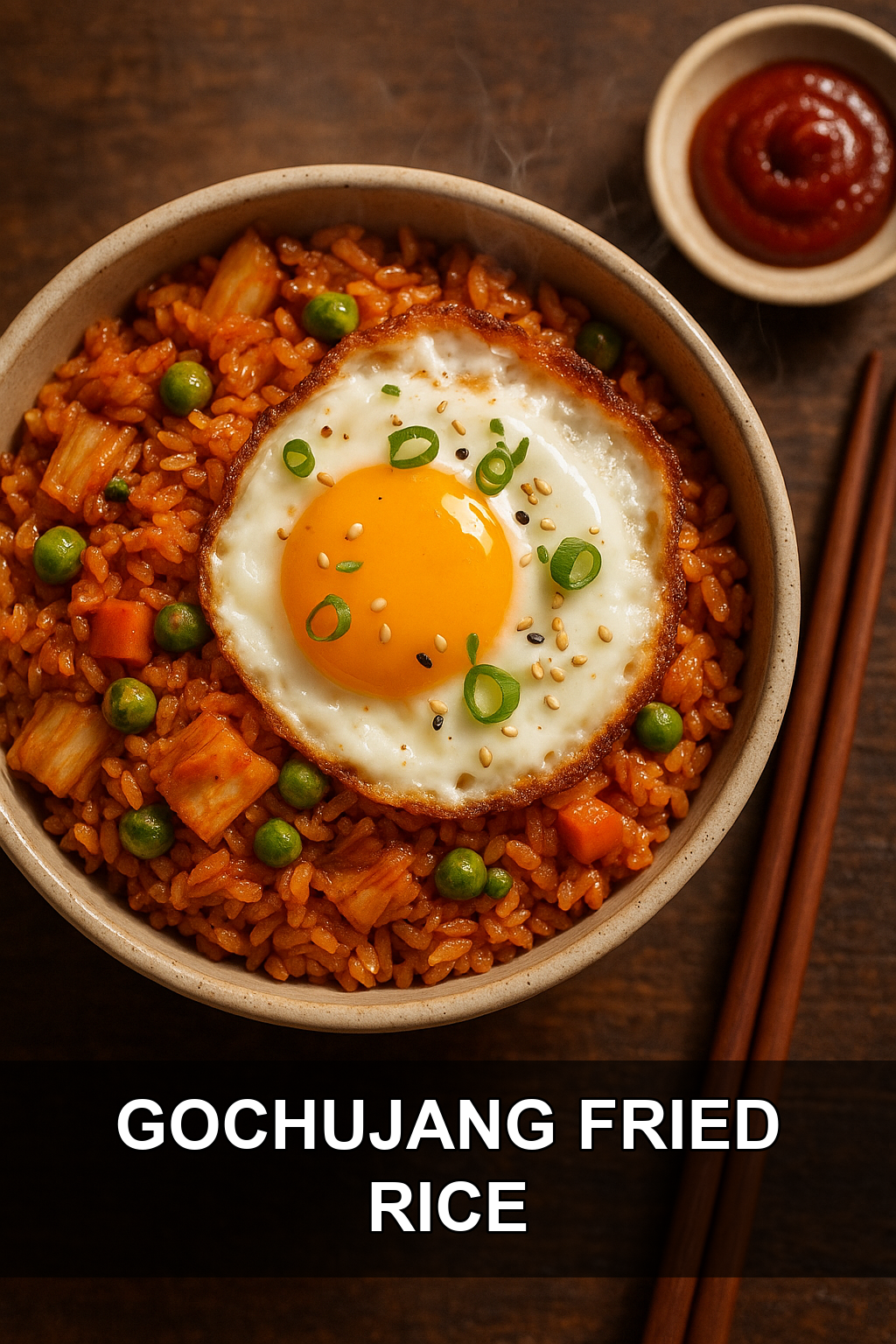
- What Is Gochujang Fried Rice?
- Tips for Cooking and Prepping
- Recipe Variations and Substitutes
- Serving Suggestions
- Storing, Make-Ahead, and Freezing Tips
- FAQs
- Spicy Korean Gochujang Fried Rice with Crispy Fried Egg Recipe
If you’ve got a bowl of leftover rice and a jar of gochujang in the fridge, you’re about 20 minutes away from one of the best meals of your week. This spicy Korean gochujang fried rice is smoky, savory, a little sweet, and topped with a crispy-edged fried egg that turns every bite into something spectacular.
What Is Gochujang Fried Rice?
Gochujang fried rice (called gochujang-bokkeumbap in Korean) is a spin on classic bokkeumbap, Korea’s answer to fried rice. Instead of soy sauce doing all the heavy lifting, gochujang – a fermented Korean chili paste made from red chili powder, glutinous rice, and fermented soybeans – takes center stage, giving the rice a deep, funky heat that’s totally different from the fried rice you might get at a Chinese takeout spot.
The dish is beloved in Korean home cooking as a way to use up leftover rice, kimchi, and whatever vegetables or protein are hanging around the fridge. Topping it with a crispy fried egg, whose runny yolk mixes into the spicy rice to mellow and enrich the sauce, is a very common and very smart finishing touch.
Tips for Cooking and Prepping
#1: Use cold, day-old rice
Freshly cooked rice is too soft and steamy, so it clumps and turns mushy in the wok. Cold rice, especially rice that’s been refrigerated overnight, has firmer, separated grains that fry up perfectly.
#2: Bloom the gochujang in oil first
Frying the gochujang paste with garlic and a little sesame oil for a minute before adding rice deepens its flavor and mellows the raw, sharp edge the paste can have straight from the jar.
#3: Break up rice clumps with your hands
Before it hits the pan, crumble cold rice between your fingers so every grain gets coated evenly in sauce instead of forming dense, gochujang-less lumps.
#4: Cook the egg separately and hot
For a truly crispy, lacy-edged fried egg, use a separate small pan with plenty of oil on medium-high heat rather than trying to squeeze it in with the rice.
#5: Don’t skip the acid
A splash of rice vinegar or a handful of chopped kimchi at the end cuts through the richness of the gochujang and egg yolk, keeping the dish from tasting one-note.
#6: Keep the pan hot and don’t overcrowd it
High heat and a wide, mostly-empty pan surface give you those slightly charred, wok-hei-like edges on the rice instead of a steamed, soggy texture.
Recipe Variations and Substitutes
This fried rice is endlessly adaptable: swap in diced Spam, bacon, shrimp, or leftover shredded chicken for protein, or keep it vegetarian with mushrooms, tofu, or extra kimchi. If you don’t have gochujang, a mix of gochugaru (Korean chili flakes) and a spoonful of miso or soy sauce can approximate the flavor, though it won’t be quite as deep or sticky-sweet.
Serving Suggestions
Serve this fried rice straight out of the pan with the crispy egg on top, a sprinkle of toasted sesame seeds, and sliced scallions for freshness. It pairs beautifully with a side of extra kimchi, quick cucumber salad, or a bowl of miso soup to round out the meal.
Storing, Make-Ahead, and Freezing Tips
Store leftover rice (without the egg) in an airtight container in the fridge for up to 4 days, and reheat in a hot skillet with a splash of water to loosen it up. It also freezes well for up to 2 months, but fry a fresh egg each time you serve it since fried eggs don’t reheat or freeze nicely.
FAQs
What can I use instead of gochujang?
If you’re out of gochujang, mix 2 tablespoons of gochugaru (Korean chili flakes) with a tablespoon of miso, soy sauce, or a touch of brown sugar for a similar spicy-sweet, umami-rich flavor. It won’t be identical, but it’ll get you close.
Why is my fried rice mushy?
Mushy fried rice almost always comes down to using freshly cooked, warm rice instead of cold, day-old rice, which has less moisture and holds its shape better in a hot pan.
Is gochujang fried rice very spicy?
It has a noticeable kick, but it’s more of a warm, lingering heat than a sharp burn, and the fried egg’s runny yolk helps mellow it out. You can easily adjust the amount of gochujang up or down to suit your spice tolerance.
Can I make this dish vegetarian or vegan?
Yes, simply skip any meat and use vegetable oil instead of butter, swap fish sauce (if used) for soy sauce, and either omit the egg or use a plant-based egg substitute to keep it fully vegan.
What’s the best rice to use for fried rice?
Short or medium-grain white rice is traditional and gives the best chewy-but-firm texture, though day-old brown rice or even cooked quinoa can work in a pinch.
Spicy Korean Gochujang Fried Rice with Crispy Fried Egg Recipe
Prep time: 10 min | Cook time: 15 min | Total time: 25 min | Servings: 2
Ingredients
For the Fried Rice
- 2 cups cold, cooked short-grain rice (day-old preferred)
- 2 tablespoons gochujang (Korean chili paste)
- 1 tablespoon soy sauce
- 1 teaspoon sugar
- 1 tablespoon sesame oil, divided
- 1 tablespoon vegetable oil
- 2 cloves garlic, minced
- 1/2 cup diced kimchi, plus 2 tablespoons kimchi juice
- 1/2 cup diced onion
- 1/2 cup frozen peas and carrots (or diced zucchini/mushrooms)
- 2 scallions, thinly sliced, plus more for garnish
- 1 teaspoon rice vinegar
For the Crispy Fried Eggs
- 2 large eggs
- 2 tablespoons vegetable oil
- Pinch of salt
For Topping
- Toasted sesame seeds
- Extra sliced scallions
- Drizzle of sesame oil
- Extra gochujang or chili crisp, optional
Instructions
- In a small bowl, whisk together the gochujang, soy sauce, and sugar until smooth; set aside.
- Heat 1/2 tablespoon sesame oil and the vegetable oil in a large wok or nonstick skillet over medium-high heat. Add the onion and cook for 2-3 minutes until softened.
- Add the garlic and diced kimchi, and stir-fry for 1-2 minutes until fragrant and slightly caramelized at the edges.
- Push the vegetables to the side, add the gochujang sauce mixture to the empty part of the pan, and let it sizzle for 30 seconds to bloom before stirring everything together.
- Add the cold rice, breaking up any clumps with your hands or a spatula as you add it. Stir-fry for 4-5 minutes, pressing the rice into the pan occasionally to let it crisp slightly, until every grain is coated in the red sauce.
- Stir in the frozen peas and carrots and kimchi juice, and cook for another 2 minutes until heated through. Remove from heat and stir in the rice vinegar and half the sliced scallions. Taste and adjust seasoning with more soy sauce or gochujang if desired.
- While the rice finishes cooking, heat the vegetable oil in a separate small skillet over medium-high heat until shimmering. Crack in the eggs and fry for 2-3 minutes, spooning a little hot oil over the whites, until the edges are golden, lacy, and crisp but the yolk is still runny. Season with a pinch of salt.
- Divide the fried rice between two bowls, top each with a crispy fried egg, and finish with toasted sesame seeds, remaining scallions, and a drizzle of sesame oil. Serve immediately.
For extra richness, stir in a tablespoon of butter with the rice, and feel free to bump up the gochujang for more heat or add a fried egg per person for a heartier meal.
Leave a Reply
You must be logged in to post a comment.