
- What Is Ground Beef Bolognese?
- Tips for Cooking and Prepping
- Recipe Variations and Substitutes
- Serving Suggestions
- Storing, Make-Ahead, and Freezing Tips
- FAQs
- Slow-Simmered Ground Beef Bolognese Recipe
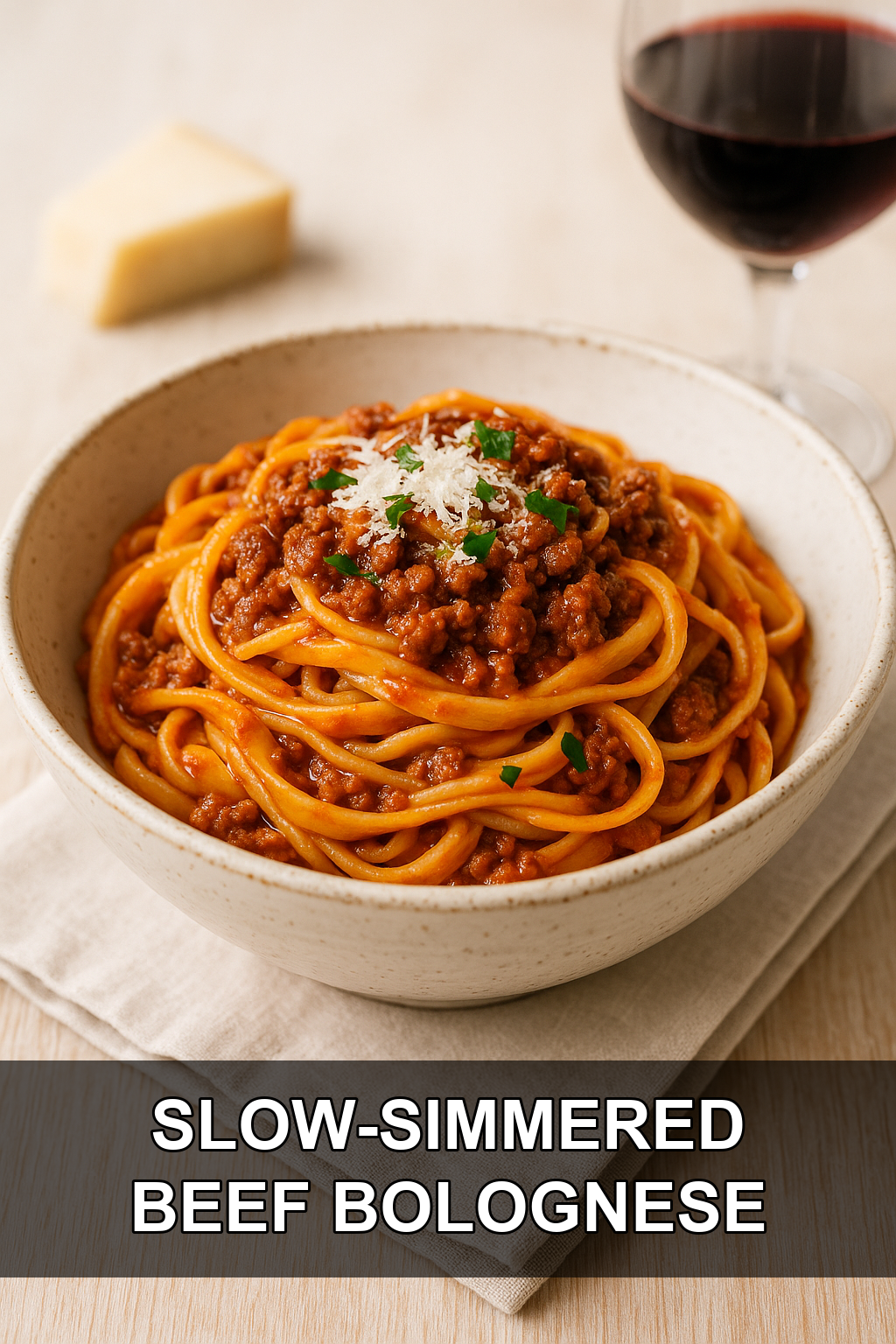
There’s something magical about a pot of bolognese bubbling away on the stove all afternoon, filling the whole house with the smell of garlic, tomatoes, and wine. This slow-simmered ground beef version is proof that you don’t need fancy cuts of meat or imported ingredients to make a restaurant-quality Italian classic at home — just a little patience and a few pantry staples.
What Is Ground Beef Bolognese?
Bolognese is a meat-based Italian sauce that originated in Bologna, Italy, traditionally made with a mix of ground meats, soffritto (onion, carrot, celery), tomatoes, milk, and wine, simmered for hours until deeply flavorful and thick. While classic versions sometimes call for a combination of beef, pork, and pancetta, this recipe keeps things simple and affordable by relying on humble ground beef as the star protein.
The secret to a great bolognese isn’t a long ingredient list — it’s time. Letting the sauce simmer low and slow allows the red wine to reduce, the tomatoes to sweeten, and the beef to become almost silky in texture. The result is a deeply savory, comforting sauce that tastes like it took all day to make (because it did, but barely any of that time is hands-on).
Tips for Cooking and Prepping
#1: Choose the cheapest ground beef and drain the fat
You don’t need lean, expensive ground beef for this recipe — an 80/20 blend is actually ideal because the extra fat adds flavor, and you’ll drain most of it off after browning anyway. This lets you buy the most budget-friendly package at the store without sacrificing taste.
#2: Don’t skip the milk or cream step
Adding a splash of milk before the tomatoes go in helps tenderize the beef and mellow the acidity of the sauce later. Whole milk works best, but even a splash of any milk you have on hand makes a noticeable difference.
#3: Use a cheap, drinkable red wine (not cooking wine)
You don’t need a $30 bottle — a $7-10 dry red wine like a basic Chianti or Merlot from the grocery store works perfectly, and you can drink the rest with dinner. Skip the ‘cooking wine’ sold near the vinegar, since it’s often loaded with salt and lacks real flavor.
#4: Finely dice your vegetables for a smoother sauce
Dicing the onion, carrot, and celery very small (or pulsing them in a food processor) helps them melt into the sauce as it simmers, giving you that classic silky bolognese texture instead of chunky vegetable bites.
#5: Simmer low and slow, and don’t rush it
The longer this sauce simmers (at least 1.5 to 2 hours), the better it tastes, as the flavors concentrate and the sauce thickens naturally. If you’re short on time, a 45-minute simmer still works, but the extra hour makes a noticeable difference.
#6: Buy a wedge of parmesan instead of pre-shredded
A block of parmesan is cheaper per ounce than pre-grated cheese, lasts much longer in the fridge, and you can toss the rind into the simmering sauce for extra umami flavor before serving.
Recipe Variations and Substitutes
This bolognese is easy to customize based on what’s in your fridge or budget. Swap in ground turkey or a mix of ground beef and pork for a different flavor profile, use grated pecorino instead of parmesan, or stir in a handful of frozen peas or mushrooms for extra bulk and nutrition. No red wine on hand? A splash of balsamic vinegar mixed with beef broth makes a solid non-alcoholic substitute.
Serving Suggestions
Serve this sauce over spaghetti, tagliatelle, or any pasta shape you already have in the pantry — it also works beautifully spooned over creamy polenta, mashed potatoes, or even baked spaghetti squash for a lower-carb option. A simple side salad and crusty, buttered bread round out the meal without adding much to the grocery bill.
Storing, Make-Ahead, and Freezing Tips
Bolognese is one of those magical dishes that tastes even better the next day, making it perfect for meal prep. Store leftovers in an airtight container in the fridge for up to 4 days, or freeze in individual portions for up to 3 months for an easy future dinner.
FAQs
Can I make bolognese without wine?
Yes — simply replace the red wine with an equal amount of beef broth mixed with a splash of balsamic vinegar for a similar depth of flavor without the alcohol.
What’s the best cheap ground beef to use for bolognese?
An 80/20 ground beef blend is ideal since the extra fat adds richness, and it’s usually the most budget-friendly option at the grocery store; just drain excess fat after browning.
Can I freeze ground beef bolognese?
Absolutely — this sauce freezes beautifully for up to 3 months in an airtight, freezer-safe container. Thaw overnight in the fridge and reheat gently on the stove with a splash of water or broth to loosen it back up.
Why does my bolognese taste too acidic?
This usually happens when the tomatoes haven’t simmered long enough to mellow out, or the milk step was skipped. A pinch of sugar or a longer simmer time can help balance the acidity.
Do I have to use fresh vegetables, or can I use frozen?
Frozen diced onion, carrot, and celery mixes work just fine and are often cheaper than fresh — just sauté them a bit longer to cook off the extra moisture before adding the beef.
Slow-Simmered Ground Beef Bolognese Recipe
Prep time: 15 min | Cook time: 120 min | Total time: 135 min | Servings: 6
Ingredients
For the Sauce
- 2 tbsp olive oil
- 1 medium yellow onion, finely diced
- 2 carrots, finely diced
- 2 celery stalks, finely diced
- 3 cloves garlic, minced
- 1 1/2 lbs ground beef (80/20 blend)
- Salt and black pepper, to taste
- 1/2 cup whole milk
- 3/4 cup dry red wine
- 1 (28 oz) can crushed tomatoes
- 2 tbsp tomato paste
- 1 cup beef broth (plus more as needed)
- 1 bay leaf
- 1/2 tsp dried oregano
- 1/4 tsp red pepper flakes (optional)
- 1 parmesan rind (optional, if available)
For Serving
- 1 lb spaghetti or tagliatelle, cooked according to package instructions
- Grated parmesan cheese
- Fresh parsley or basil, chopped (optional)
Instructions
- Heat olive oil in a large, heavy-bottomed pot or Dutch oven over medium heat. Add the diced onion, carrot, and celery, and cook for 6-8 minutes, stirring occasionally, until softened.
- Add the minced garlic and cook for another 30 seconds until fragrant.
- Add the ground beef to the pot, breaking it up with a wooden spoon. Season with salt and pepper, and cook until browned, about 8-10 minutes. Drain off excess fat if there’s a lot.
- Pour in the milk and let it simmer for 3-4 minutes, stirring occasionally, until mostly absorbed.
- Add the red wine and let it simmer for 5 minutes to cook off the alcohol and reduce slightly.
- Stir in the crushed tomatoes, tomato paste, beef broth, bay leaf, oregano, and red pepper flakes if using. Add the parmesan rind if you have one.
- Bring the sauce to a gentle simmer, then reduce heat to low. Partially cover the pot and let it simmer for at least 1.5 to 2 hours, stirring occasionally and adding a splash more broth or water if it gets too thick.
- Taste and adjust seasoning with more salt, pepper, or a pinch of sugar if needed. Remove the bay leaf and parmesan rind before serving.
- Cook pasta according to package directions, then toss with the bolognese sauce or spoon the sauce generously over the top.
- Serve hot, topped with freshly grated parmesan and chopped parsley or basil if desired.
For an even deeper flavor, make this sauce a day ahead and reheat before serving — the flavors continue to develop overnight in the fridge.
Leave a Reply
You must be logged in to post a comment.