
- What Is Seasoned Rice?
- Tips for Cooking and Prepping
- Recipe Variations and Substitutes
- What to Serve with Seasoned Rice
- Storing, Make-Ahead, and Freezing
- FAQs
- Seasoned Rice Recipe
If you’re tired of plain, boring rice sitting sadly next to your main dish, this seasoned rice recipe is about to become a regular in your kitchen. It’s fluffy, buttery, and loaded with savory garlic, onion, and paprika flavor, and it comes together in one pot with almost no effort. Whether you’re serving it alongside grilled chicken, roasted veggies, or a saucy stir-fry, this rice steals the show.
What Is Seasoned Rice?
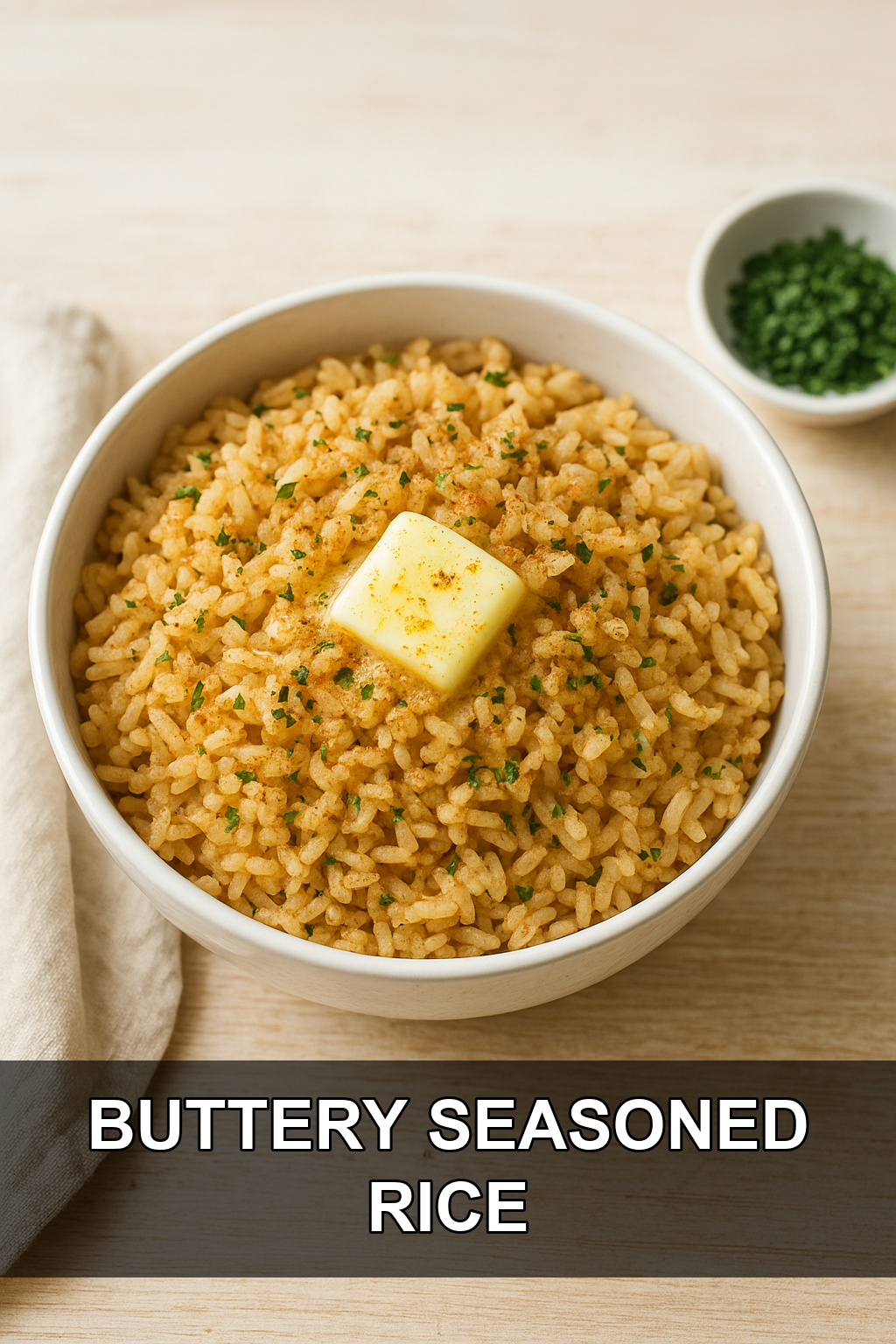
Seasoned rice is exactly what it sounds like: plain rice transformed into something crave-worthy by simmering it directly in a savory broth made from bouillon, garlic powder, onion powder, paprika, thyme, and parsley, then finishing it with a generous pat of butter. Instead of boiling rice in plain water and hoping your main dish carries all the flavor, this method builds seasoning right into the grain itself, so every single bite tastes good on its own.
This particular version is a flexible base recipe that works beautifully with either long grain white rice or brown rice, making it a go-to side dish for busy families who want something more exciting than steamed rice but don’t have time for a complicated pilaf. It’s the kind of recipe you’ll find yourself making on repeat because it pairs with almost anything.
Tips for Cooking and Prepping
#1: Use cold tap water, not hot
Starting with cold water helps the rice cook evenly as the pot comes up to temperature, rather than shocking the outside of the grains while the centers stay undercooked.
#2: Resist the urge to lift the lid
Every time you peek during the 13-minute simmer, steam escapes and the cook time gets thrown off. Trust the process and only check briefly at the very end to see if the water has absorbed.
#3: Adjust for brown rice
Brown rice has a tougher outer bran layer and needs more water and a longer simmer time than white rice, so if you’re using brown rice, increase the liquid and extend the cooking time until the grains are tender (see Note 1 in the recipe card).
#4: Let it rest before fluffing
The 10-minute stand time after cooking allows the steam trapped inside the pot to finish softening the rice and lets the grains firm up slightly, which prevents mushy or gluey rice when you fluff it.
#5: Don’t skimp on the butter
Butter added at the very end is what gives this rice its glossy, rich finish, so don’t be shy about using a little extra if you like your rice extra indulgent.
Recipe Variations and Substitutes
This seasoned rice recipe is a fantastic base you can easily customize. Swap chicken bouillon for vegetable or beef bouillon to change the flavor profile, stir in a pinch of turmeric or a splash of soy sauce for extra depth, or fold in sautéed onions and mushrooms once the rice is done cooking for a heartier side.
What to Serve with Seasoned Rice
This buttery, savory rice pairs beautifully with roasted or grilled chicken, baked salmon, pork chops, or a simple stir-fry. It also makes a great base for grain bowls topped with beans, roasted vegetables, and a drizzle of sauce.
Storing, Make-Ahead, and Freezing
Leftover seasoned rice keeps well in an airtight container in the fridge for up to 5 days, making it ideal for meal prep. It also freezes beautifully, so portion it into freezer bags or containers and thaw overnight in the fridge or reheat straight from frozen with a splash of water to loosen it back up.
FAQs
Can I make this rice in a rice cooker?
Yes, simply add all the same ingredients, water, and rice in the same ratios to your rice cooker, cook according to the manufacturer’s directions, and stir the butter through once it’s done.
Can I use brown rice instead of white rice?
Absolutely, brown rice works great in this recipe, but you’ll need to increase the water slightly and extend the cooking time since brown rice takes longer to cook through and absorb liquid than white rice.
Why is my seasoned rice mushy or gummy?
This usually happens if the lid is lifted during cooking, the heat is too high, or the rice isn’t given its full 10-minute rest before fluffing, all of which affect how evenly the liquid absorbs.
Can I use bouillon cubes instead of powder?
Yes, simply dissolve 2 bouillon cubes in a small amount of boiling water and add that to the pot in place of the chicken powder or granulated bouillon.
How do I reheat leftover seasoned rice?
Reheat it in a covered pan over low heat with a splash of water or broth, or microwave it covered with a damp paper towel to restore moisture and fluffiness.
Seasoned Rice Recipe
Prep time: 5 min | Cook time: 13 min | Total time: 18 min | Servings: 6
Ingredients
- 2 cups long grain white rice, uncooked (Note 1 for brown rice)
- 3 1/4 cups water, cold tap water
- 2 tsp chicken powder / granulated bouillon, or 2 cubes dissolved in boiling water (Note 2)
- 1 tsp garlic powder
- 1 tsp onion powder
- 1 tsp paprika
- 1/2 tsp dried thyme
- 2 tbsp dried parsley, optional
- 1 tsp salt
- 1/2 tsp black pepper
- 50g / 3 tbsp butter, unsalted (or more!)
Instructions
- Place all the rice ingredients (rice, water, chicken powder or bouillon, garlic powder, onion powder, paprika, thyme, parsley, salt, and pepper) in a large saucepan and give it a good stir.
- Bring to a simmer over medium-high heat until the edges are bubbling and the entire surface is rippling, then put the lid on and turn the stove down to medium-low (or low for strong stoves) so it’s simmering gently.
- Cook for 13 minutes without lifting the lid.
- Tilt the pot and quickly peek to make sure all the water has been absorbed.
- Remove from the stove and let it stand for 10 minutes with the lid on.
- Add the butter and fluff the rice with a rubber spatula, then serve.
- For rice cooker method: use the same ingredients and water-to-rice ratio, add everything to your rice cooker, cook per the manufacturer’s directions, and stir the butter through at the end.
If using brown rice, increase the water and cook time as brown rice needs more liquid and a longer simmer to become tender. Leftovers store well in the fridge for up to 5 days or in the freezer for longer storage.
Leave a Reply
You must be logged in to post a comment.