
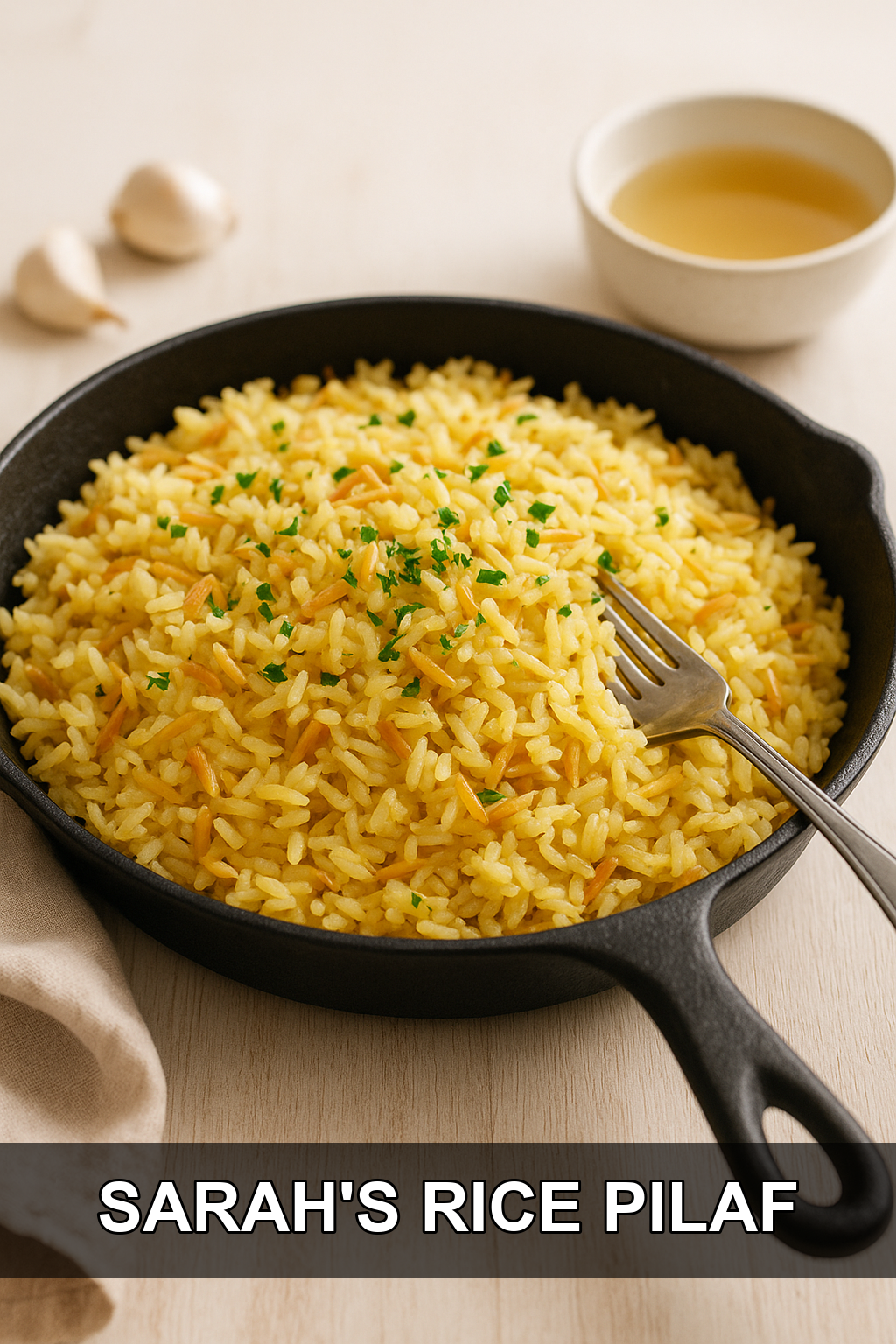
- What Is Sarah’s Rice Pilaf?
- Tips for Cooking and Prepping
- Recipe Variations and Substitutes
- What to Serve with Rice Pilaf
- Storing, Make-Ahead, and Freezing Tips
- FAQs
- Sarah’s Rice Pilaf Recipe
If you’re tired of boring boxed rice mixes, Sarah’s Rice Pilaf is about to become your new go-to side dish. With toasty orzo, tender rice, and a savory garlic-onion base simmered in chicken broth, it’s simple enough for a weeknight but tasty enough for a holiday table.
What Is Sarah’s Rice Pilaf?
Sarah’s Rice Pilaf is a classic stovetop side dish that combines two starches — orzo pasta and white rice — toasted in butter before being simmered in chicken broth with onion and garlic. The toasting step is what sets a true pilaf apart from plain steamed rice, giving the grains a nutty, golden flavor and preventing them from turning gummy as they cook.
This particular version leans on humble pantry staples, which is exactly why it’s become such a beloved recipe among home cooks. It comes together in one skillet, requires no fancy technique, and pairs with just about any main dish you can think of, from roast chicken to grilled salmon.
Tips for Cooking and Prepping
#1: Toast the orzo until it’s truly golden
Don’t rush this step — stir the orzo constantly in the melted butter until it turns a deep golden brown, which usually takes a few minutes. This toasting is what gives the pilaf its signature nutty flavor, so pulling it too early will leave the dish tasting flat.
#2: Keep the heat at medium-low while toasting
Butter burns quickly, and scorched butter will make the whole dish taste bitter. Medium-low heat gives the orzo time to toast evenly without the butter browning too fast or the onions burning.
#3: Dice the onion small and uniform
Since the onion cooks alongside quick-toasting orzo and rice, cutting it into small, even pieces ensures it softens fully and blends seamlessly into the pilaf rather than leaving crunchy bites.
#4: Resist lifting the lid while it simmers
Once you cover the skillet, let the rice and orzo simmer undisturbed for the full 20 to 25 minutes. Removing the lid releases steam and can throw off the liquid-to-rice ratio, leaving you with unevenly cooked grains.
#5: Always let it rest before fluffing
The 5-minute rest off the heat allows any remaining moisture to redistribute and the grains to firm up slightly, so fluffing with a fork afterward gives you light, separate grains instead of a sticky clump.
Recipe Variations and Substitutes
This pilaf is easy to customize based on what you have on hand. Swap the chicken broth for vegetable broth to make it vegetarian, or stir in fresh herbs like parsley, thyme, or a squeeze of lemon juice right before serving for extra brightness. You can also toss in toasted slivered almonds, dried cranberries, or sautéed mushrooms for added texture and flavor.
What to Serve with Rice Pilaf
Sarah’s Rice Pilaf is a versatile side that pairs beautifully with roasted or grilled chicken, baked salmon, pork chops, or a simple steak. It also works well alongside roasted vegetables or a fresh green salad for a lighter vegetarian meal, and makes a comforting addition to a holiday spread next to turkey or ham.
Storing, Make-Ahead, and Freezing Tips
Leftover pilaf keeps well in an airtight container in the refrigerator for up to 4 days. Reheat it gently on the stovetop or in the microwave with a splash of broth or water to loosen the grains back up. For freezing, cool the pilaf completely, then store in a freezer-safe bag or container for up to 2 months; thaw overnight in the fridge before reheating.
FAQs
Can I use brown rice instead of white rice?
You can, but keep in mind brown rice needs more liquid and a longer cooking time than white rice, so you’ll need to adjust the broth amount and simmer time accordingly, likely adding 15 to 20 extra minutes.
Why is my rice pilaf mushy?
Mushy pilaf usually happens when too much liquid is used, the lid is lifted during simmering, or the rice is stirred too much while cooking, which releases excess starch. Stick to the exact broth measurement and let it simmer undisturbed for the best texture.
Can I make this dish vegetarian?
Yes, simply substitute the chicken broth with an equal amount of vegetable broth and the rest of the recipe stays exactly the same.
Do I have to use orzo, or can I skip it?
The orzo is what gives this pilaf its classic toasted texture and slightly different bite from the rice, but if you don’t have any on hand, you can use all rice instead, adjusting the liquid slightly since orzo and rice absorb broth a bit differently.
Can I double this recipe?
Yes, this recipe doubles easily, just be sure to use a large enough skillet or pot so the rice and orzo have room to cook evenly, and the cooking time may need a few extra minutes.
Sarah’s Rice Pilaf Recipe
Prep time: 10 min | Cook time: 35 min | Total time: 45 min | Servings: 4
Ingredients
- 2 tablespoons butter
- 0.5 cup orzo pasta
- 0.5 cup diced onion
- 2 cloves garlic, minced
- 0.5 cup uncooked white rice
- 2 cups chicken broth
Instructions
- Gather all ingredients.
- Melt butter in a skillet over medium-low heat. Add orzo; cook and stir until orzo is golden brown.
- Stir in onion and cook until onion becomes translucent.
- Add garlic and cook for 1 minute. Stir in rice and chicken broth, turn heat to high, and bring to a boil.
- Reduce heat to medium-low, cover the skillet, and simmer until rice is tender and liquid has been absorbed, 20 to 25 minutes.
- Remove from the heat and let stand, covered, for 5 minutes. Fluff with a fork before serving.
- Serve and enjoy!
For extra flavor, stir in a handful of chopped fresh parsley or a squeeze of lemon juice right before serving. Leftovers reheat best with a splash of broth to restore moisture.
Leave a Reply
You must be logged in to post a comment.