
- What Is Rice Kheer?
- Tips for Cooking and Prepping
- Recipe Variations and Substitutes
- Serving Suggestions
- Storing and Make-Ahead Tips
- FAQs
- Rice Kheer Recipe: Your Guide to Sweet Perfection!
There’s something deeply comforting about a warm bowl of rice kheer simmering slowly on the stove, filling the kitchen with the scent of saffron and cardamom. This creamy, slow-cooked rice pudding is a beloved staple at Indian celebrations, but it’s simple enough to make any night you’re craving something sweet and soul-soothing. Let’s walk through everything you need to know to make it perfectly, every single time.
What Is Rice Kheer?
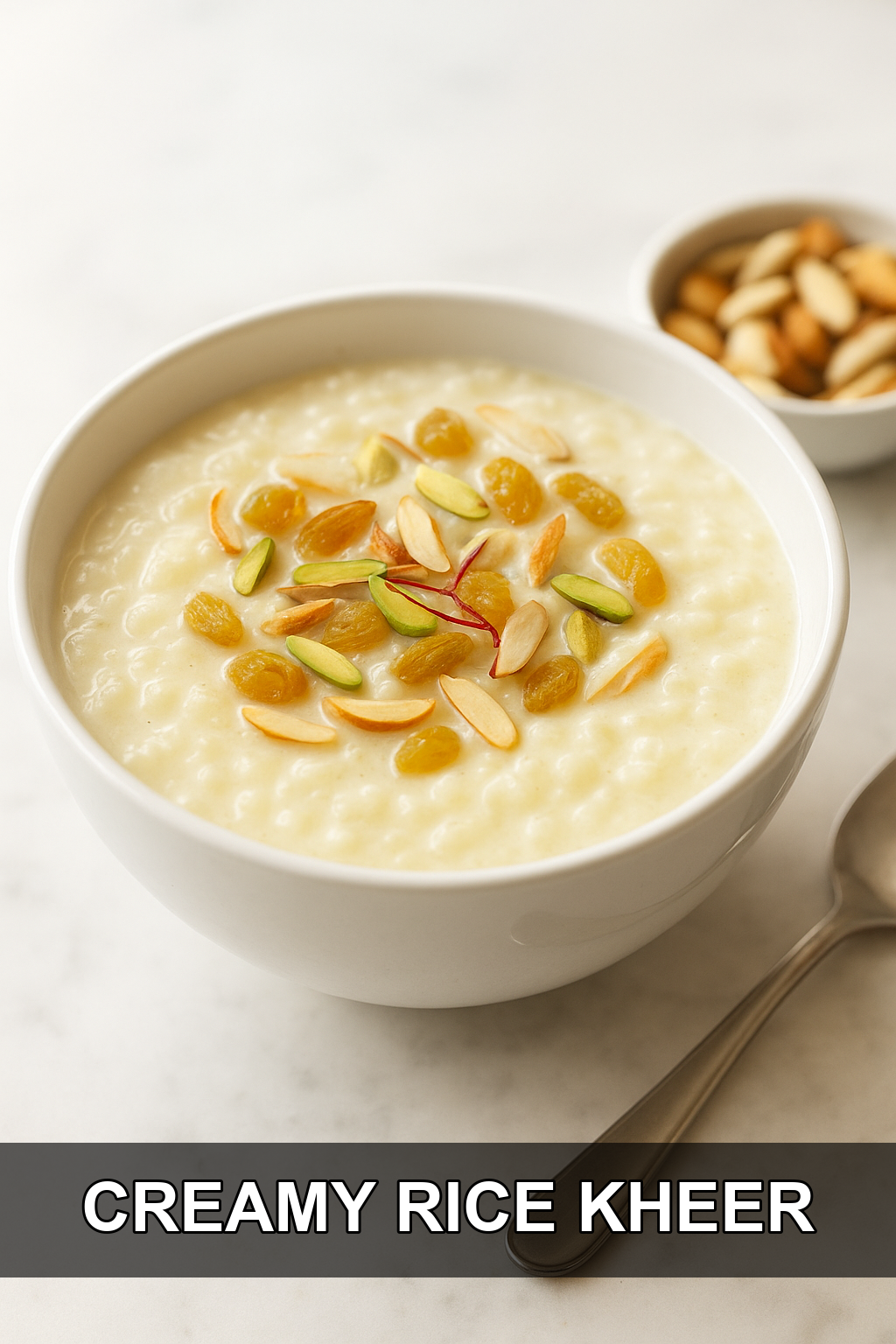
Rice kheer is a traditional Indian dessert made by slowly simmering rice in milk until it turns thick, creamy, and fragrant. Sweetened with sugar and perfumed with cardamom and saffron, it’s typically finished with a generous scattering of almonds, cashews, pistachios, and golden raisins for texture and richness.
Tips for Cooking and Prepping
#1: Rinse and soak the rice properly
Rinsing the basmati rice until the water runs clear removes excess surface starch, while soaking it for 15-20 minutes softens the grains so they cook evenly into the milk without turning mushy or sticking together.
#2: Use a heavy, wide pan
A wide, heavy-bottomed pan or kadai allows the milk to reduce evenly and gives the rice more surface area to cook in, which speeds up the thickening process and reduces the risk of scorching.
#3: Stir frequently and don’t cover the pan
Milk-based desserts like kheer need regular stirring to prevent sticking and scorching at the bottom, and leaving the pan uncovered lets steam escape so the milk can reduce and thicken properly.
#4: Add sugar only after the rice is half-cooked
Adding sugar too early can slow down the rice’s cooking process, so wait until the grains are about 50% done before sweetening the kheer.
#5: Bloom your saffron separately
Steeping saffron strands in a spoonful of warm milk before adding it to the kheer helps release its color and aroma fully, giving the dish a deeper golden hue and richer fragrance.
#6: Remember it thickens as it cools
Rice kheer continues to thicken significantly after you turn off the heat, so it’s best to switch off the flame when it’s just slightly thinner than your desired final consistency.
Recipe Variations and Substitutes
While traditional rice kheer relies on basmati rice, whole milk, and a handful of nuts, there’s plenty of room to make it your own. Swap basmati for other short-grain rice varieties, use condensed milk for extra richness and a shortcut sweetness, or stir in a tablespoon of rose water or kewra water at the end for a floral twist. Some cooks also like to add a touch of ghee-roasted vermicelli or replace raisins with chopped dates for variety.
Serving Suggestions
Rice kheer is wonderfully versatile when it comes to serving temperature — enjoy it warm right off the stove on a chilly evening, or chill it for a few hours for a refreshing, creamy dessert in the summer. It pairs beautifully after a spicy meal, as its sweetness and coolness help balance heat, and it’s a natural centerpiece for festivals, celebrations, or Sunday family dinners. Garnish with extra slivered pistachios or a few saffron strands right before serving for a beautiful presentation.
Storing and Make-Ahead Tips
Rice kheer keeps well in the refrigerator for 1 to 2 days when stored in an airtight container, making it a great make-ahead dessert for gatherings. Since it thickens considerably once chilled, simply stir in a splash of milk and gently reheat on the stove or in the microwave until it reaches your preferred consistency before serving again.
FAQs
Can I use a different type of rice for kheer?
Basmati rice is preferred for its delicate aroma and texture, but you can use any short-grain rice; just note that cooking times may vary slightly depending on the variety.
Why did my kheer turn out too thick or too thin?
Kheer thickens as it cools, so if it seems too thin while hot, let it rest for 10-15 minutes before deciding to cook it longer; if it becomes too thick after refrigerating, just stir in warm milk to loosen it.
Can I make rice kheer without saffron?
Yes, saffron is optional and mainly adds color and fragrance; the kheer will still taste delicious with just cardamom powder for flavoring.
How do I keep the milk from sticking or burning?
Use a heavy-bottomed pan, keep the heat on low to medium-low, and stir at regular intervals, especially near the bottom edges of the pan where milk solids tend to collect.
Can I make this recipe vegan?
You can substitute whole milk with a full-fat plant-based milk like cashew or oat milk, though the texture and richness will differ slightly from the traditional version.
Rice Kheer Recipe: Your Guide to Sweet Perfection!
Prep time: 20 min | Cook time: 30 min | Total time: 50 min | Servings: 5
Ingredients
- ¼ cup basmati rice
- 1 litre whole milk (4 cups)
- 6 tablespoons sugar (or add as required)
- ½ teaspoon green cardamom powder (or 5 to 6 green cardamoms powdered in a mortar-pestle)
- 1 pinch saffron strands (or 14 to 16 saffron strands)
- 1 tablespoon chopped or sliced almonds or blanched almonds
- 1 tablespoon chopped or sliced cashews
- 1 tablespoon chopped or sliced unsalted pistachios
- 1 tablespoon golden raisins
Instructions
- Rinse the basmati rice a couple of times until the water runs clear of starch.
- Soak the rinsed rice in enough water for 15 to 20 minutes.
- Optional: Blanch the almonds by bringing water to a boil in a small pan, switching off the heat, adding the almonds, and covering for 30 minutes. Then peel and slice them.
- While the rice soaks, pour the whole milk into a heavy, wide pan or kadai and place it over low to medium-low heat, stirring at intervals so it doesn’t stick to the bottom.
- Let the milk come to a boil.
- Take 1 tablespoon of the warm milk into a small bowl and add a few saffron strands to it; set this saffron-infused milk aside.
- Once the milk is boiling, drain all the water from the soaked rice and add the rice to the hot milk. Mix well.
- Lower the heat and simmer the rice uncovered, stirring occasionally, until the rice grains are about 50% cooked.
- Add the sugar and stir until fully dissolved into the milk.
- Continue cooking on low to medium-low heat, stirring at intervals, until the rice is almost fully cooked.
- Add the cardamom powder along with the blanched sliced almonds, chopped cashews, and sliced pistachios. Mix well.
- Pour in the saffron-infused milk and stir to combine.
- Keep cooking on low heat until the kheer thickens and the rice grains are completely cooked through.
- Turn off the heat once the rice is fully cooked and the kheer has thickened (it will thicken further as it cools). Scrape any milk solids from the sides of the pan back into the kheer.
- Stir in the golden raisins. Optionally, add 1 tablespoon of rose water or kewra water at this stage.
- Pour the kheer into individual serving bowls and serve hot, warm, or chilled. Refrigerate leftovers in a closed container and consume within 1 to 2 days.
- To serve chilled leftovers warm again, add a splash of milk and gently reheat until it reaches your desired consistency.
For an extra fragrant kheer, freshly grind your own cardamom pods instead of using store-bought powder, and always bloom the saffron in warm milk before adding it for the best color and aroma.
Leave a Reply
You must be logged in to post a comment.