
- What Is Congee?
- Tips for Cooking and Prepping
- Recipe Variations and Substitutes
- Serving Suggestions
- Storing, Make-Ahead, and Freezing Tips
- FAQs
- Rice Cooker Congee with Ginger Scallion Chicken and Crispy Shallots Recipe
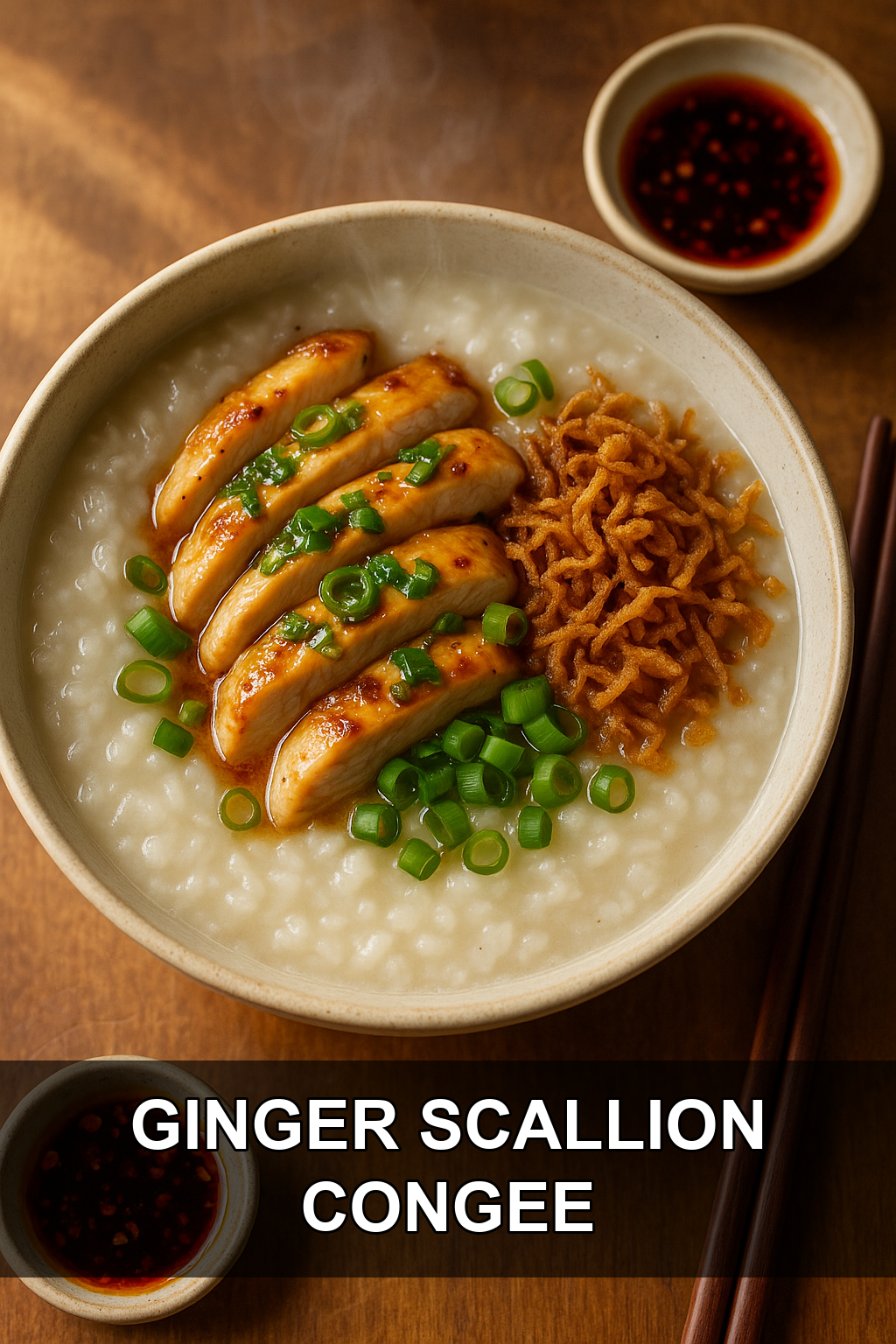
There’s something almost meditative about a pot of slowly simmered congee, and letting your rice cooker do the work makes it downright effortless. This version gets topped with bright, gingery scallion chicken and a shower of crispy shallots for crunch, turning a humble bowl of rice porridge into a full, satisfying meal.
What Is Congee?
Congee (also known as jook, conjee, or rice porridge) is a rice-based dish found across many Asian cuisines, from Chinese and Cantonese kitchens to Korean, Filipino, and Vietnamese tables. Rice is simmered low and slow in a generous amount of water or broth until the grains break down into a thick, silky, spoonable porridge. It’s the kind of dish that’s often served for breakfast, as a comfort food when someone’s under the weather, or as a base for all kinds of savory toppings.
This rice cooker version leans into the comfort-food side of congee while keeping things practical for a weeknight. Instead of babysitting a pot on the stove and stirring constantly, you let the rice cooker’s porridge or slow-cook function do the heavy lifting. Meanwhile, you sear off quick ginger scallion chicken and fry up a batch of crispy shallots, so by the time the congee is done, you’ve got a fully dressed bowl ready to go.
Tips for Cooking and Prepping
#1: Rinse the rice, but don’t skip the starch entirely
Give your rice a quick rinse to remove excess surface debris, but don’t scrub away all the starch — that starch is what helps the congee turn thick and creamy as it cooks down.
#2: Use the right rice-to-liquid ratio for your rice cooker
Congee needs a lot more liquid than regular rice, typically 1 part rice to 7-8 parts water or broth; check your rice cooker’s porridge setting guidelines since some models have a max fill line for congee.
#3: Freeze the raw rice for extra-creamy texture
A classic restaurant trick is to freeze the raw, rinsed rice for a few hours before cooking; freezing breaks down the grain’s structure so it splits open faster and yields a silkier, more velvety congee.
#4: Slice chicken thin and marinate while the congee cooks
Thin, even slices of chicken thigh cook quickly and soak up the ginger-scallion marinade fast, so prep it during the congee’s simmer time and you’ll have no dead time in the recipe.
#5: Fry shallots low and slow, then drain well
Crispy shallots go from golden to burnt in seconds, so cook them over medium-low heat and pull them the moment they turn light golden brown, since they’ll continue to darken as they cool on a paper towel.
#6: Season the congee itself, not just the toppings
Congee can taste flat if only the toppings are seasoned, so stir in salt, white pepper, and a splash of soy sauce or the reserved shallot oil directly into the pot before serving.
Recipe Variations and Substitutes
This congee is easy to adapt: swap chicken thighs for shredded rotisserie chicken, poached shrimp, or soft-boiled eggs for a different protein, or make it vegetarian with mushrooms and tofu simmered in vegetable broth. You can also stir in aromatics like garlic or star anise while the rice cooks, or finish bowls with chili crisp, soy-marinated eggs, peanuts, or pickled vegetables for extra layers of flavor and texture.
Serving Suggestions
Ladle the hot congee into deep bowls, top generously with the warm ginger scallion chicken, and finish with a big spoonful of crispy shallots plus their fragrant frying oil. Serve alongside simple sides like Chinese donut sticks (youtiao), steamed greens, soft-boiled eggs, or a small dish of chili oil and soy sauce so everyone can adjust seasoning to taste.
Storing, Make-Ahead, and Freezing Tips
Congee thickens significantly as it cools and sits in the fridge, so store the base, chicken, and crispy shallots in separate airtight containers for up to 4 days. To reheat, add a splash of water or broth to loosen the congee before microwaving or warming on the stove; crispy shallots are best made fresh or re-crisped briefly in a dry pan, since they lose crunch in the fridge. The plain congee base also freezes well for up to 2 months — just thin it out with extra liquid once thawed.
FAQs
Can I make congee in a regular rice cooker without a porridge setting?
Yes — simply use the regular white rice or ‘cook’ setting with the higher liquid ratio, and check periodically since the cooker may switch to ‘keep warm’ before the rice has fully broken down; if so, stir and restart the cook cycle once or twice more.
Why is my congee still watery or too thin?
Congee thickens as it cools, so it may look thinner than expected right when it’s done; if it’s still soupy after resting a few minutes, simmer it uncovered a bit longer or mash some of the rice against the pot to release more starch.
What kind of rice works best for congee?
Long-grain white rice like jasmine is the most common choice and gives a light, fluffy-yet-creamy texture, but short-grain rice will make an even thicker, stickier porridge if you prefer that style.
Can I use chicken breast instead of thighs for the ginger scallion topping?
Yes, though thighs are recommended because they stay juicier; if using breast, slice it thin, don’t overcook it, and consider a quick cornstarch coating (velveting) to keep it tender.
How do I keep the crispy shallots from getting soggy?
Fry them until just light golden, drain thoroughly on paper towels in a single layer, and store them uncovered until fully cooled before sealing, since trapped steam is the main cause of sogginess.
Rice Cooker Congee with Ginger Scallion Chicken and Crispy Shallots Recipe
Prep time: 20 min | Cook time: 90 min | Total time: 110 min | Servings: 4
Ingredients
For the Congee
- 1 cup long-grain white rice (jasmine preferred), rinsed
- 7 cups low-sodium chicken broth or water
- 1-inch piece fresh ginger, smashed
- 1 teaspoon salt, plus more to taste
- 1/4 teaspoon ground white pepper
For the Ginger Scallion Chicken
- 1 lb boneless, skinless chicken thighs, thinly sliced
- 2 tablespoons soy sauce
- 1 tablespoon Shaoxing wine or dry sherry
- 1 teaspoon sesame oil
- 1 teaspoon cornstarch
- 1 tablespoon minced fresh ginger
- 4 scallions, thinly sliced (white and green parts separated)
- 1 tablespoon neutral oil (for cooking)
For the Crispy Shallots
- 3 medium shallots, thinly sliced into rings
- 1/2 cup neutral oil (such as vegetable or canola)
For Serving
- Extra sliced scallions
- Soy sauce or chili oil
- Soft-boiled eggs (optional)
Instructions
- Add the rinsed rice, broth or water, smashed ginger, salt, and white pepper to the rice cooker insert. Select the porridge/congee setting (or regular cook setting if unavailable) and start cooking; this typically takes 60-90 minutes.
- While the congee cooks, make the crispy shallots: heat the 1/2 cup oil in a small saucepan over medium-low heat. Add the sliced shallots and fry gently, stirring often, until light golden brown, about 8-10 minutes.
- Immediately strain the shallots through a fine-mesh sieve, spreading them on a paper towel-lined plate to drain and crisp up further as they cool. Reserve the flavorful shallot oil for later.
- In a bowl, toss the sliced chicken with soy sauce, Shaoxing wine, sesame oil, cornstarch, minced ginger, and the white parts of the scallions. Let marinate for 10-15 minutes.
- Heat the neutral oil in a skillet over medium-high heat. Add the marinated chicken in a single layer and sear for 2-3 minutes per side until cooked through and lightly browned. Stir in the green scallion tops during the last minute of cooking.
- Once the congee has finished cooking, remove the ginger piece and stir the porridge well; add a splash more broth or water if it’s thicker than you’d like, and adjust salt to taste.
- Ladle the hot congee into bowls, top with the ginger scallion chicken, and finish generously with crispy shallots and a drizzle of the reserved shallot oil. Garnish with extra scallions and serve immediately.
For an even creamier congee, freeze the rinsed raw rice for 2-3 hours before cooking to help the grains break down faster. Leftover crispy shallot oil is fantastic drizzled over eggs, noodles, or roasted vegetables.
Leave a Reply
You must be logged in to post a comment.