
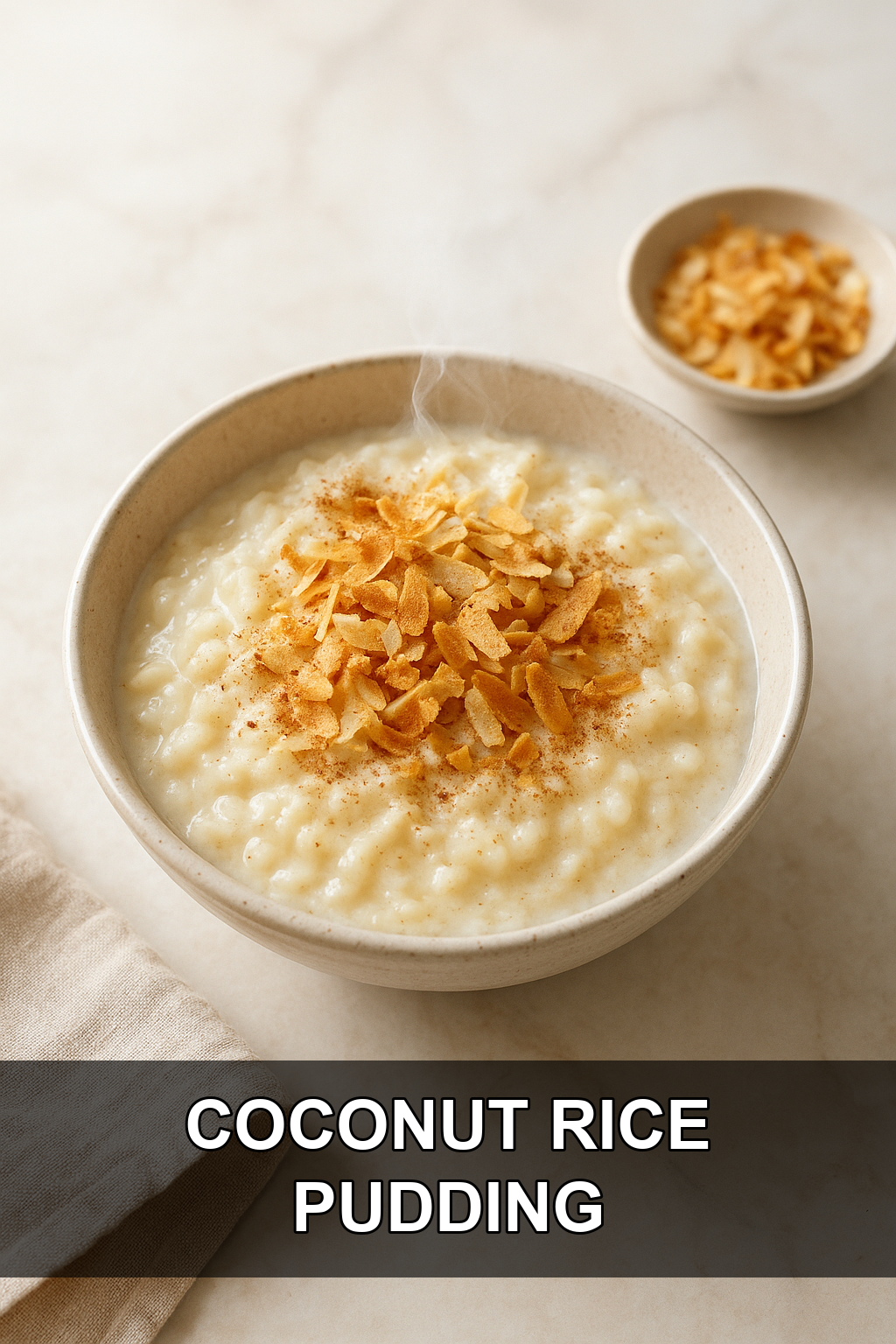
- What Is Rice Cooker Coconut Rice Pudding?
- Tips for Cooking and Prepping
- Recipe Variations and Substitutes
- Serving Suggestions
- Storing, Make-Ahead, and Freezing Tips
- FAQs
- Rice Cooker Coconut Rice Pudding Recipe
If you love the idea of a cozy, custardy rice pudding but don’t love babysitting a pot on the stove, this recipe is about to become your new favorite. Just dump everything into your rice cooker, let it work its magic, and finish with a sprinkle of golden toasted coconut for that irresistible crunch. It’s dessert (or breakfast, we won’t judge) made almost entirely by a kitchen appliance.
What Is Rice Cooker Coconut Rice Pudding?
Coconut rice pudding is a comforting, creamy dessert made by slow-simmering rice in a mixture of coconut milk, milk, sugar, and warm spices until it turns thick, luscious, and almost custard-like. Variations of rice pudding show up in cuisines around the world — from Southeast Asian sticky rice with coconut milk, to Latin American arroz con leche, to Middle Eastern roz bel laban — and coconut milk brings a tropical richness that pairs beautifully with vanilla, cinnamon, and toasted coconut.
Using a rice cooker instead of the stovetop takes the guesswork (and the constant stirring) out of the process. The appliance holds a steady, gentle heat that slowly coaxes starch out of the rice, creating that signature creamy texture without any scorching or babysitting. It’s essentially a set-it-and-forget-it dessert that tastes like it took way more effort than it actually did.
Tips for Cooking and Prepping
#1: Rinse the rice first
Give your rice a quick rinse under cold water to remove excess surface starch — this keeps the pudding creamy rather than gluey or gummy once it thickens.
#2: Use full-fat coconut milk
Light coconut milk will work in a pinch, but full-fat canned coconut milk gives the pudding its signature richness and helps it set up thick and velvety.
#3: Don’t skip the resting time
Rice pudding looks a little loose and soupy right when the rice cooker finishes — that’s normal. Let it sit covered for 10-15 minutes and it will thicken beautifully as it cools slightly.
#4: Stir once halfway through
Most rice cookers don’t require stirring, but lifting the lid once midway to give the pudding a gentle stir helps distribute the coconut milk evenly and prevents any sticking at the bottom.
#5: Toast the coconut flakes separately
Toast your coconut flakes in a dry skillet or the oven while the rice cooker does its thing — this way they stay crisp and golden instead of turning soggy in the pudding.
#6: Adjust sweetness at the end
Coconut milk brands vary in sweetness, so taste your pudding once it’s done and stir in a little extra sugar or a drizzle of honey if needed before serving.
Recipe Variations and Substitutes
This pudding is easy to customize: swap the white rice for jasmine or arborio rice for extra creaminess, or use a mix of coconut milk and regular milk if you want a lighter version. Add a pinch of cardamom, a splash of pandan extract, or a spoonful of mango puree for a fun twist, and feel free to swap white sugar for coconut sugar, maple syrup, or condensed milk for a richer, caramel-like flavor.
Serving Suggestions
Serve this pudding warm right after cooking for a cozy, custardy bowl, or chill it for a few hours for a firmer, more scoopable texture. Top with extra toasted coconut flakes, a drizzle of honey or condensed milk, fresh mango or berries, or a sprinkle of cinnamon for a beautiful finishing touch.
Storing, Make-Ahead, and Freezing Tips
Rice pudding keeps well in the fridge for up to 5 days in an airtight container, making it a great make-ahead dessert or breakfast. It thickens quite a bit once chilled, so stir in a splash of milk or coconut milk when reheating. Freezing is possible for up to 2 months, though the texture will be slightly less creamy after thawing, so a good stir (and a little extra milk) after defrosting helps restore it.
FAQs
Can I use brown rice instead of white rice?
Yes, but brown rice takes longer to cook and absorbs less liquid quickly, so you may need to add extra liquid and cooking time. Short-grain white or jasmine rice gives the classic creamy texture with the least effort.
Why is my rice cooker pudding runny?
This is completely normal right when the cooker finishes — the pudding is still hot and loose. Let it rest covered for 10-15 minutes off heat and it will thicken up significantly as it cools.
Can I make this dairy-free?
Absolutely — simply use all coconut milk (or a coconut milk and oat milk blend) in place of any dairy milk, and the pudding will still turn out rich and creamy.
Do I need a special rice cooker setting?
No special setting is required for most machines — the regular ‘white rice’ or ‘cook’ setting works fine. If your rice cooker has a ‘porridge’ or ‘congee’ setting, that works beautifully too and may yield an even creamier texture.
Can I double the recipe?
Yes, as long as your rice cooker has enough capacity to hold the increased volume of liquid and rice without overflowing during cooking — check your model’s max fill line before doubling.
Rice Cooker Coconut Rice Pudding Recipe
Prep time: 10 min | Cook time: 45 min | Total time: 55 min | Servings: 4
Ingredients
For the Rice Pudding
- 1 cup short-grain white rice or jasmine rice, rinsed
- 1 (13.5 oz) can full-fat coconut milk
- 1 1/2 cups whole milk (or additional coconut milk for dairy-free)
- 1/3 cup granulated sugar
- 1/4 teaspoon salt
- 1 teaspoon vanilla extract
- 1/2 teaspoon ground cinnamon (optional)
For Topping
- 1/2 cup unsweetened coconut flakes, toasted
- Extra cinnamon or honey, for serving (optional)
- Fresh fruit such as mango or berries (optional)
Instructions
- Add the rinsed rice, coconut milk, whole milk, sugar, salt, vanilla extract, and cinnamon (if using) to the bowl of your rice cooker. Stir well to combine.
- Close the lid and set your rice cooker to the regular ‘cook’ or ‘white rice’ setting (or ‘porridge’ setting if available). Let it cook undisturbed.
- Halfway through cooking, if your rice cooker allows, lift the lid and give the mixture a gentle stir to redistribute the liquid and prevent sticking, then close the lid again.
- While the pudding cooks, toast the coconut flakes in a dry skillet over medium-low heat, stirring frequently, until golden brown, 3-5 minutes. Set aside to cool.
- Once the rice cooker switches to ‘keep warm’ or finishes its cycle, let the pudding rest, covered, for 10-15 minutes — it will thicken as it sits.
- Give the pudding a final stir, taste and adjust sweetness if needed, then spoon into bowls.
- Top each serving with toasted coconut flakes and any additional toppings like honey, cinnamon, or fresh fruit. Serve warm or chilled.
For an extra creamy texture, stir in an additional splash of coconut milk just before serving, especially if the pudding has been chilled. Leftovers thicken in the fridge, so loosen with a bit of milk when reheating.
Leave a Reply
You must be logged in to post a comment.