
- What Is Ghormeh Sabzi?
- Tips for Cooking and Prepping
- Recipe Variations and Substitutes
- Serving Suggestions
- Storing, Make-Ahead, and Freezing Tips
- FAQs
- Authentic Ghormeh Sabzi (Persian Herb Stew) Recipe
If you’ve never cooked Persian food at home, Ghormeh Sabzi is the perfect place to start. This deeply savory herb stew, simmered low and slow with dried limes and red kidney beans, is considered by many Iranians to be their national dish, and one bite will show you exactly why.
What Is Ghormeh Sabzi?
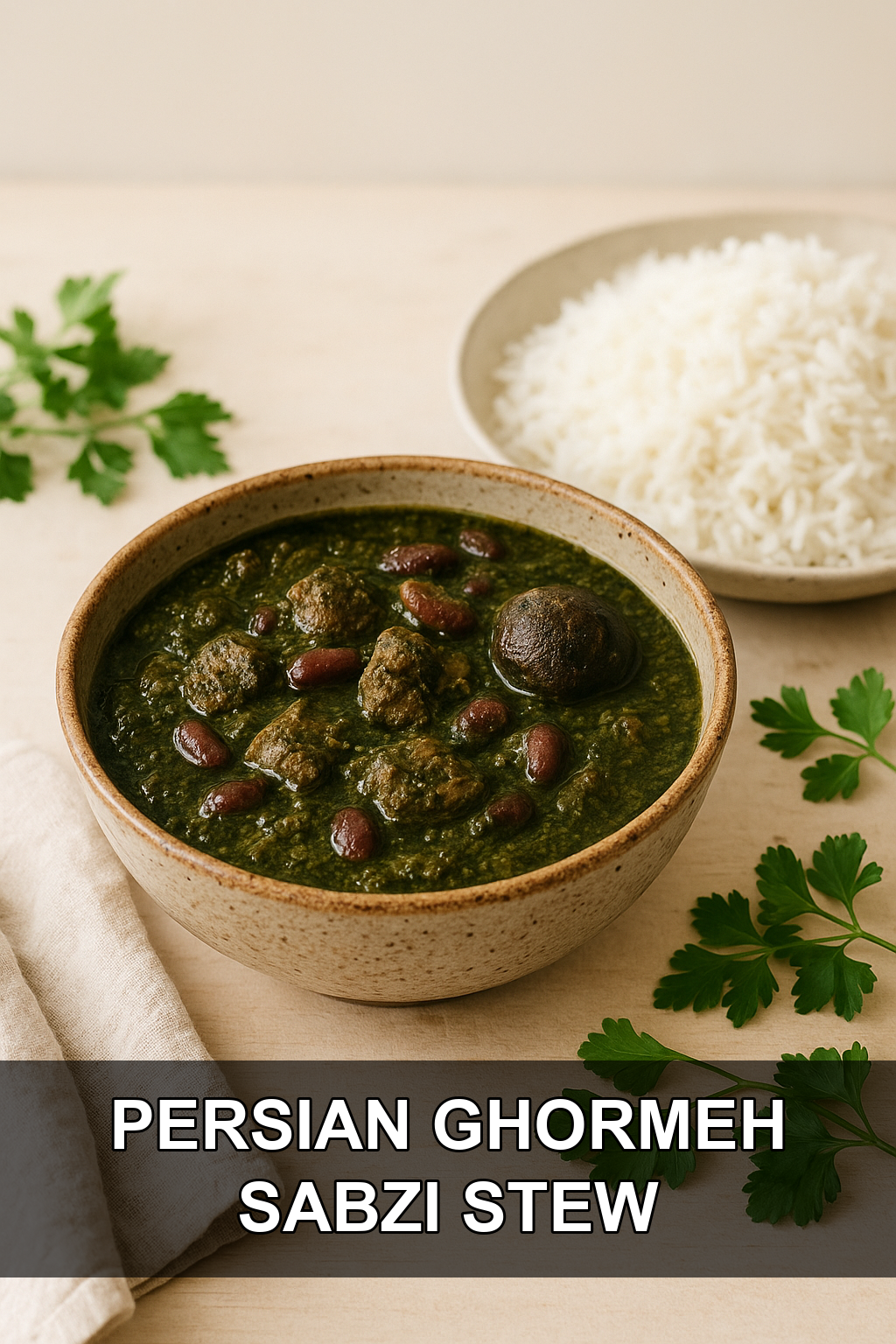
Ghormeh Sabzi is a classic Persian stew built on a base of sautéed fresh herbs, typically parsley, cilantro, and fenugreek, cooked down with lamb or beef, dried limes (limoo amani), and kidney beans. The herbs are fried in oil until deeply fragrant before the meat and liquid are added, which is the key step that gives the stew its signature dark green color and rich, almost smoky depth of flavor.
This dish is a staple at Iranian family tables and celebrations, often simmered for hours so the flavors have time to meld. It’s traditionally served over a mountain of fluffy basmati rice, sometimes with a golden, crispy tahdig crust on the bottom of the pot.
Tips for Cooking and Prepping
#1: Fry the herbs low and slow
Sautéing the parsley, cilantro, and fenugreek in oil for 20-30 minutes over medium-low heat is what develops the stew’s signature deep flavor, so don’t rush this step or turn the heat up too high.
#2: Pierce the dried limes
Poke a few holes in the dried limes (limoo amani) with a skewer or fork before adding them to the pot so their tangy flavor can fully infuse the stew instead of staying trapped inside.
#3: Balance the sourness gradually
Dried limes vary in strength, so add 2-3 to start, taste after an hour of simmering, and add more only if you want extra tang.
#4: Use bone-in lamb shank or beef stew meat
Bone-in cuts add richness and body to the braising liquid, giving the stew a fuller, more authentic flavor than lean boneless meat alone.
#5: Let it rest overnight if you can
Like most stews, Ghormeh Sabzi tastes even better the next day once the flavors have had time to fully meld together in the fridge.
#6: Don’t skip the fenugreek
Fenugreek leaves are what give this stew its distinctive slightly bitter, aromatic backbone; use dried fenugreek leaves if fresh isn’t available, but never leave it out entirely.
Recipe Variations and Substitutes
Traditional versions use lamb, but beef chuck or stew meat works beautifully and is easier to find in many grocery stores. For a vegetarian version, swap the meat for extra kidney beans and mushrooms, and use vegetable broth instead of meat stock. If you can’t find dried limes, a mix of fresh lemon juice and lime zest added near the end of cooking can approximate the tang, though the flavor won’t be quite as complex.
Serving Suggestions
Ghormeh Sabzi is traditionally ladled generously over steamed basmati rice, ideally with a crispy tahdig crust for texture contrast. Serve it alongside a simple shirazi salad (diced cucumber, tomato, and onion with lime juice) and a side of plain yogurt or torshi (Persian pickles) to round out the meal.
Storing, Make-Ahead, and Freezing Tips
Ghormeh Sabzi keeps well in an airtight container in the fridge for up to 5 days, and the flavor actually improves after a day or two. It also freezes beautifully for up to 3 months; just thaw overnight in the fridge and reheat gently on the stovetop, adding a splash of water or broth if it’s thickened too much.
FAQs
What are dried limes and where can I find them?
Dried limes, or limoo amani, are whole limes that have been sun-dried until hard and dark; they add a distinctive sour, slightly musty flavor. You can find them at Middle Eastern or Persian grocery stores, or online.
Can I make Ghormeh Sabzi in a slow cooker or Instant Pot?
Yes, after sautéing the herbs and browning the meat on the stovetop, transfer everything to a slow cooker for 6-8 hours on low, or pressure cook for about 35-40 minutes with a natural release in an Instant Pot.
Why is my stew bitter?
A slightly bitter, earthy note is normal thanks to the fenugreek, but if it tastes overly bitter, you likely used too much fenugreek or didn’t fry the herbs long enough to mellow their raw edge.
Can I use frozen herbs instead of fresh?
Absolutely, and many home cooks actually prefer frozen sabzi ghormeh (the pre-chopped herb mix) for convenience; just sauté it a bit longer than fresh herbs since it releases more water.
What can I use instead of kidney beans?
Black-eyed peas or pinto beans are common substitutes if kidney beans aren’t available, and they won’t significantly change the flavor of the finished stew.
Authentic Ghormeh Sabzi (Persian Herb Stew) Recipe
Prep time: 25 min | Cook time: 150 min | Total time: 175 min | Servings: 6
Ingredients
For the Stew
- 3 tbsp vegetable oil, divided
- 2 lbs lamb shank or beef stew meat, cut into chunks
- 1 large yellow onion, finely chopped
- 2 cups finely chopped fresh parsley
- 1 cup finely chopped fresh cilantro
- 1/2 cup finely chopped fresh or dried fenugreek leaves (or 3 tbsp dried)
- 1/2 cup chopped scallions or leeks
- 4-5 whole dried limes (limoo amani), pierced with a fork
- 1 can (15 oz) red kidney beans, drained and rinsed
- 1 tsp turmeric
- 3 cups water or beef broth
- Salt and black pepper, to taste
For Serving
- Steamed basmati rice
- Plain yogurt
- Shirazi salad or torshi (Persian pickles), optional
Instructions
- Heat 2 tablespoons of oil in a large pot over medium heat. Add the onion and cook until soft and golden, about 8 minutes.
- Add the meat, turmeric, salt, and pepper, and brown on all sides, about 8-10 minutes.
- In a separate large skillet, heat the remaining tablespoon of oil over medium-low heat. Add the parsley, cilantro, fenugreek, and scallions, and sauté, stirring often, for 20-30 minutes until deeply fragrant and darkened in color.
- Add the sautéed herb mixture to the pot with the meat and stir to combine.
- Pour in the water or broth, then add the pierced dried limes. Bring to a boil, then reduce heat to low, cover, and simmer for 1.5 hours, stirring occasionally.
- Add the kidney beans and continue simmering, uncovered, for another 30-45 minutes, until the meat is very tender and the stew has thickened.
- Taste and adjust salt, pepper, or tartness by gently squeezing one of the dried limes with a spoon against the side of the pot if more tang is desired.
- Serve hot over steamed basmati rice with yogurt and a side of shirazi salad or torshi.
This stew tastes even better the next day, so consider making it a day ahead and reheating gently before serving. For a shortcut, look for frozen ‘sabzi ghormeh’ herb mix at Persian grocery stores.
Leave a Reply
You must be logged in to post a comment.