
- What Is Ghormeh Sabzi?
- Tips for Cooking and Prepping
- Recipe Variations and Substitutes
- Serving Suggestions
- Storing, Make-Ahead, and Freezing Tips
- FAQs
- Persian Ghormeh Sabzi (Herb Stew) Recipe
There’s something magical about the smell of fresh herbs slowly sautéing in a pan, and that magic is exactly what fills your kitchen when you make this Persian classic. Ghormeh Sabzi, Iran’s beloved herb stew, is deeply savory, tangy, and layered with flavors built over generations. Pull up a chair, because we’re about to bring a little piece of Persian culinary tradition into your home kitchen.
What Is Ghormeh Sabzi?
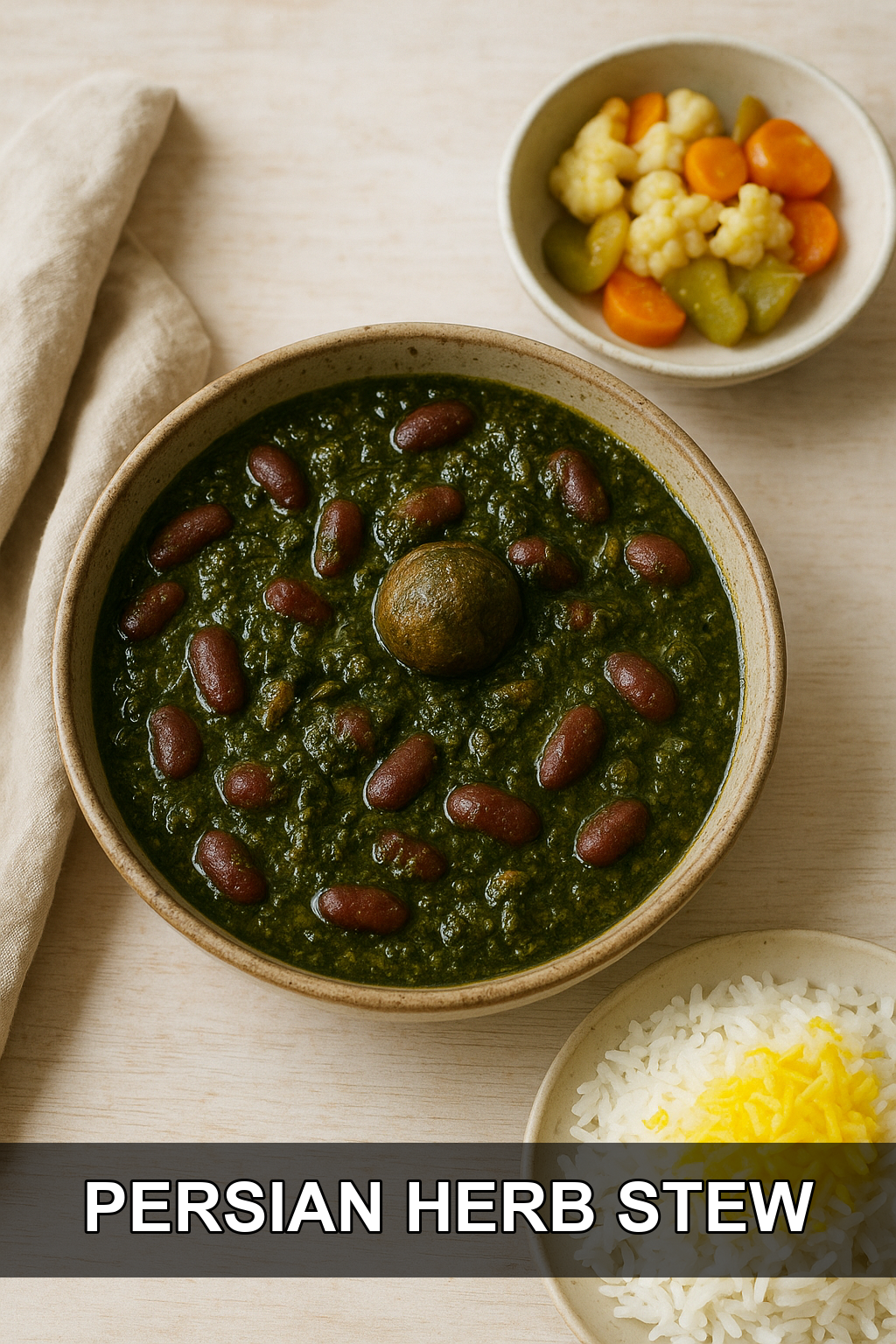
Ghormeh Sabzi is often considered the national dish of Iran, a slow-simmered stew built around a trio of fresh herbs — parsley, cilantro, and fenugreek — along with green onions, kidney beans, and tender meat. The dried limes (limoo amani) give the dish its signature sour, slightly smoky tang, balancing the richness of the meat and the earthiness of the greens.
While it takes patience to let the flavors develop, the actual hands-on work is simple: chop, sauté, simmer, and let time do the rest. Traditionally served over fluffy saffron rice, Ghormeh Sabzi is a dish that shows up at family gatherings, holidays, and Sunday dinners across Persian households, and it’s easier to recreate at home than many people expect.
Tips for Cooking and Prepping
#1: Don’t rush the herb sauté
Cooking the parsley, cilantro, and fenugreek in oil until they turn a deep, dark green is what unlocks their full aroma and flavor, so resist the urge to skip or shorten this step.
#2: Use good quality dried limes
Dried limes (limoo amani) are the backbone of the stew’s tangy flavor, so pierce them a few times before adding so their sour juices can fully infuse the broth.
#3: Brown the meat properly
Take the time to sear the meat on all sides after the onions turn golden; a good brown crust adds depth to the final stew instead of just boiling the meat.
#4: Low and slow is key
A gentle simmer for a couple of hours allows the meat to become fork-tender and the flavors to meld, so keep the heat low rather than boiling hard.
#5: Taste before serving
Dried limes and beans can vary in saltiness and sourness, so always adjust salt and pepper right at the end rather than relying only on early seasoning.
Recipe Variations and Substitutes
While beef or lamb stew meat is traditional, some cooks use chicken thighs for a lighter version, and vegetarians can skip the meat entirely and lean on extra kidney beans for heartiness. Fresh fenugreek leaves can replace dried if you have access to them, though you’ll want to use about three times the amount since dried herbs are more concentrated.
Serving Suggestions
Ghormeh Sabzi is traditionally ladled generously over fluffy, buttery saffron rice (tahdig if you’re feeling ambitious), with a side of Persian cucumber and tomato salad or torshi (pickled vegetables) to cut through the richness. A wedge of fresh lime and warm flatbread on the side never hurt either.
Storing, Make-Ahead, and Freezing Tips
This stew actually tastes even better the next day once the flavors have had more time to marry, so feel free to make it a day ahead and reheat gently on the stove. It also freezes beautifully in an airtight container for up to three months, making it a great make-ahead option for busy weeks.
FAQs
Can I make Ghormeh Sabzi without dried limes?
Dried limes give the dish its signature tang, but in a pinch you can substitute fresh lime juice added toward the end of cooking, though the flavor will be brighter and less smoky.
What cut of meat works best?
Cubed beef stew meat or lamb shoulder are traditional choices because they become tender and flavorful during the long simmer; chicken thighs also work for a quicker, lighter version.
Why do you sauté the herbs separately?
Sautéing the herbs on their own before adding them to the pot deepens their flavor and removes excess moisture, which concentrates their aroma in the final stew.
Is Ghormeh Sabzi spicy?
No, this dish is savory and tangy rather than spicy, relying on herbs and dried limes for flavor instead of chili heat.
Can I make this dish vegetarian?
Yes, simply omit the meat and add extra kidney beans or even mushrooms for texture, keeping the herb base, dried limes, and simmering process the same.
Persian Ghormeh Sabzi (Herb Stew) Recipe
Prep time: 10 min | Cook time: 150 min | Total time: 160 min | Servings: 4
Ingredients
For the Herb Base
- 1 bunch parsley, finely chopped
- 1 bunch cilantro, finely chopped
- 1 bunch green onions, finely chopped
- 1 tablespoon dried fenugreek
- Oil for sautéing
For the Stew
- 1 large onion, chopped
- 1 teaspoon turmeric
- 1 lb stew meat (beef or lamb), cubed
- 1 can kidney beans (or 1 cup cooked)
- 2 dried limes, pierced a few times
- Salt and pepper to taste
- Water, to cover
Instructions
- Finely chop the parsley, cilantro, green onions, and fenugreek. Sauté in oil over medium heat until the herbs turn a dark green and become deeply fragrant, about 8-10 minutes. Set aside.
- In a large pot, sauté the chopped onion with turmeric until golden. Add the cubed meat and brown on all sides.
- Add the sautéed herb mixture to the pot along with the kidney beans and dried limes, stirring to combine everything evenly.
- Cover the mixture with water and bring to a simmer. Reduce heat to low and let it cook gently for 2-3 hours, until the meat is tender and the stew has thickened.
- Taste and adjust salt and pepper as needed. Serve hot, ladled generously over fluffy saffron rice.
For extra tang, squeeze one of the cooked dried limes with a fork before serving to release more of its juice into the stew. Leftovers taste even better the next day as the flavors continue to develop.
Leave a Reply
You must be logged in to post a comment.