
- What Is Sushi Rice?
- Tips for Cooking and Prepping
- Recipe Variations and Substitutes
- Serving Suggestions
- Storing, Make-Ahead, and Freezing Tips
- FAQs
- Perfect Sushi Rice Recipe
If you’ve ever wondered why homemade sushi never quite tastes like your favorite Japanese restaurant, the secret usually comes down to the rice. This foolproof method walks you through rinsing, cooking, and seasoning sushi rice so it turns out sticky, fluffy, and perfectly tangy every single time.
What Is Sushi Rice?
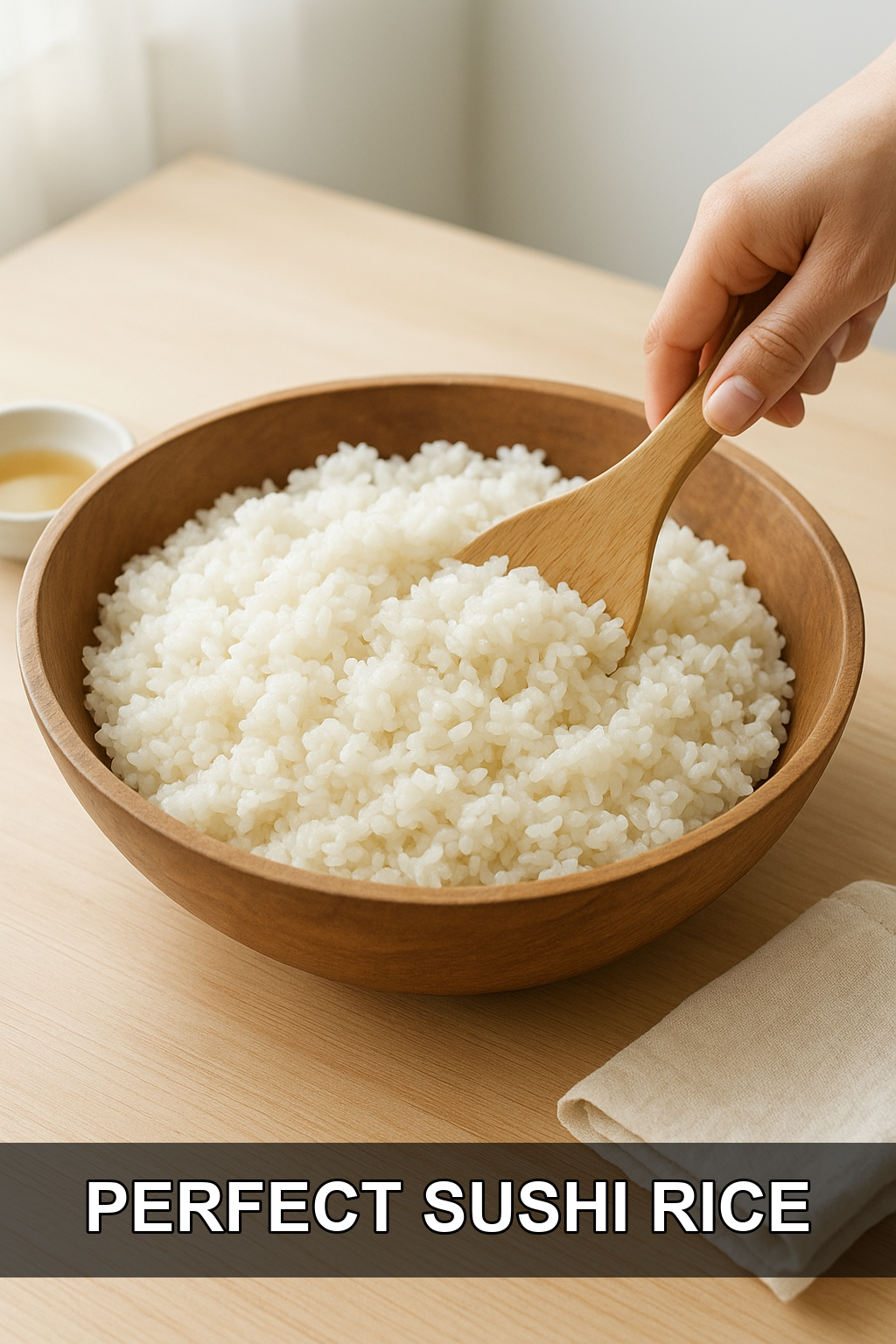
Sushi rice, also called shari or sumeshi, is short-grain Japanese rice that’s cooked and then seasoned with a mixture of rice vinegar, sugar, and salt. Unlike the fluffy long-grain rice you might serve alongside a curry, sushi rice has a higher starch content that gives it a naturally sticky, cohesive texture perfect for holding its shape in rolls, nigiri, and bowls.
The magic happens in two stages: first cooking the rice so each grain is tender but distinct, then folding in warm sushi vinegar so the seasoning absorbs evenly without turning the rice mushy. Get this base right, and you’re most of the way to restaurant-quality sushi at home.
Tips for Cooking and Prepping
#1: Rinse until the water runs clear
Sushi rice is coated in excess starch that causes gummy, clumpy results, so rinse it in cold water, swirling gently with your hand, until the water is no longer cloudy.
#2: Don’t skip the soaking time
Letting the rinsed rice soak for 30 minutes before cooking allows the grains to hydrate evenly, which is key to that tender, fluffy texture instead of a hard center.
#3: Keep the lid on while cooking
Whether you’re using a rice cooker or the stovetop, resist the urge to peek. Lifting the lid releases steam and can leave you with unevenly cooked rice.
#4: Season the rice while it’s hot
Pour the warm sushi vinegar over the rice as soon as it’s cooked so the grains absorb the seasoning fully; cooled rice won’t take on the flavor the same way.
#5: Fold, don’t stir
Use a gentle slicing and folding motion with a rice paddle or spatula to coat the grains in vinegar without crushing or mashing them.
#6: Cool it properly before rolling
Covering the bowl with a damp tea towel while the rice cools to room temperature keeps it from drying out or forming a crust on top.
Recipe Variations and Substitutes
While traditional sushi rice sticks to the classic vinegar, sugar, and salt blend, you can tweak the ratio to taste — a little more sugar for a sweeter roll-style rice, or less for a more savory poke bowl base. Brown rice vinegar or seasoned rice vinegar can be swapped in for a slightly different depth of flavor, and some cooks like to add a small piece of kombu to the cooking water for extra umami.
Serving Suggestions
Use this rice as the foundation for California rolls, maki, nigiri, or temaki hand rolls, or spoon it into bowls topped with sashimi-grade fish, avocado, and cucumber for an easy poke bowl. It also works beautifully as a simple side dish alongside teriyaki chicken or grilled salmon.
Storing, Make-Ahead, and Freezing Tips
Sushi rice is best used the day it’s made, but leftovers can be kept in an airtight container in the fridge for up to a day; bring it to room temperature and fluff gently before using. Freezing isn’t recommended, as the texture becomes hard and grainy once thawed, losing the soft stickiness that makes it ideal for sushi.
FAQs
Can I use regular rice instead of sushi rice?
Regular long-grain rice lacks the starch content needed for that signature sticky texture, so it won’t hold together well in rolls. For the best results, stick with short-grain Japanese sushi rice.
Why is my sushi rice mushy or too wet?
Mushy rice usually means too much water was used or the rice wasn’t rinsed thoroughly enough beforehand. Double-check your water measurements and rinse until the water runs clear before cooking.
Do I really need to let the rice rest after cooking?
Yes, resting for 10-15 minutes with the lid on allows the steam to finish cooking the grains evenly, which prevents a hard or undercooked center.
Can I make sushi rice ahead of time?
You can prepare it a few hours ahead and keep it covered with a damp towel at room temperature, but it’s best used within the same day for optimal texture and flavor.
What’s the difference between sushi rice and sushi vinegar?
Sushi rice refers to the short-grain rice itself, while sushi vinegar is the seasoned mixture of rice vinegar, sugar, and salt that’s folded into the cooked rice to flavor it.
Perfect Sushi Rice Recipe
Prep time: 40 min | Cook time: 10 min | Total time: 50 min | Servings: 4
Ingredients
For the Rice
- 1 ½ cups sushi rice
- 1 ½ cups + 1 tablespoon water (if using rice cooker method)
- 1 ⅜ cups (330ml) water (if using stovetop method)
For the Sushi Vinegar
- ¼ cup rice vinegar
- 2 tablespoons sugar
- 1 teaspoon salt
Instructions
- Place the sushi rice in a large bowl and wash it under running cold water until the water runs clear, using your hand to move the rice in a circular motion to speed up rinsing.
- Carefully drain the water using a sieve or by gently pouring it off to remove excess starch from the rice.
- Rice cooker method: Place the rinsed rice along with 1 ½ cups plus 1 tablespoon of water into the rice cooker bowl. Let the rice soak for 30 minutes before cooking. Select the ‘sushi rice’ setting if available and start cooking. Once finished, turn off the rice cooker and let the rice rest, covered, for an additional 10-15 minutes without opening the lid.
- Stovetop method: Place the rinsed rice and 1 ⅜ cups (330ml) water in a pot and soak for 30 minutes. Cover with a lid, bring to a boil over medium heat, then reduce heat to the lowest setting and cook for 8 minutes without lifting the lid. Remove from heat and let sit, covered, for 10-15 minutes to finish steaming.
- While the rice cooks, combine the rice vinegar, sugar, and salt in a small saucepan. Heat until just boiling, then remove from heat and stir until all the sugar dissolves to make the sushi vinegar.
- Transfer the cooked rice into a large bowl. Immediately pour the hot sushi vinegar over the rice and gently toss and fold to combine evenly without mashing the grains.
- Cover the bowl with a damp tea towel to prevent drying and let the rice cool at room temperature until it reaches a suitable temperature for sushi-making.
- Use the prepared sushi rice as the base for sushi rolls like California or Maki rolls, or incorporate it into poke bowls and other Japanese dishes.
For extra flavor, try adding a small piece of kombu to the cooking water, and always season the rice while it’s still warm so it absorbs the vinegar mixture fully.
Leave a Reply
You must be logged in to post a comment.