
- What Is Sushi Rice?
- Tips for Cooking and Prepping
- Recipe Variations and Substitutes
- Serving Suggestions
- Storing, Make-Ahead, and Freezing Tips
- FAQs
- Perfect Sushi Rice Recipe
If you’ve ever wondered why homemade sushi never quite tastes like the rolls from your favorite sushi spot, the secret is almost always the rice. Perfect sushi rice is glossy, slightly sticky, tangy-sweet, and holds together beautifully without turning mushy. Once you learn this simple method, you’ll never look at a sushi roll the same way again.
What Is Sushi Rice?
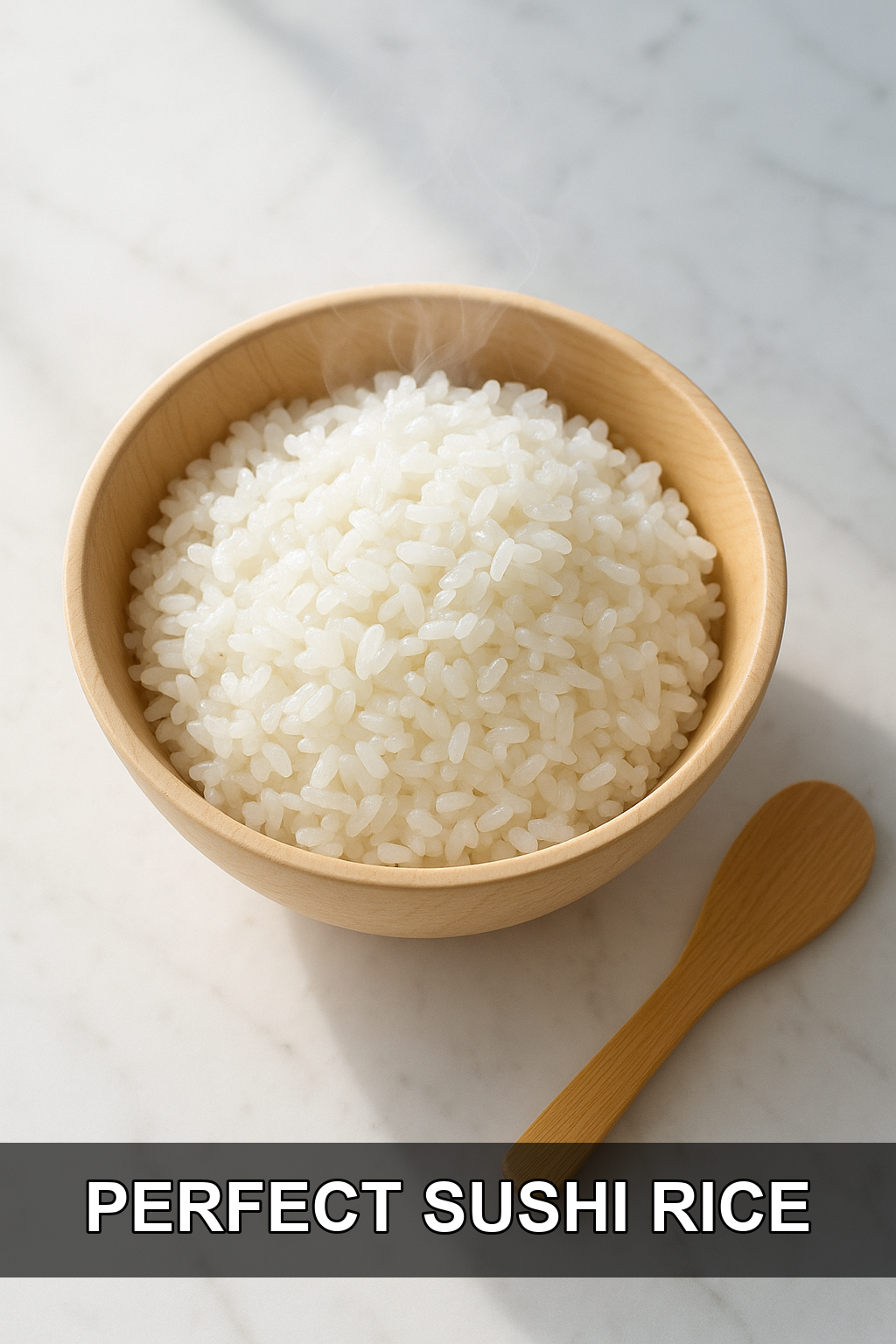
Sushi rice, also called shari or sumeshi, is short-grain Japanese rice that has been cooked and then seasoned with a mixture of rice vinegar, sugar, and salt. Unlike regular steamed rice, sushi rice is meant to be slightly sticky so it holds its shape when formed into nigiri or rolled into maki, while still having individual grains that are tender rather than gluey.
The magic of sushi rice lies in the balance between the starch content of short-grain rice and the acidity of the vinegar seasoning. Done right, the rice becomes the flavorful foundation of every sushi dish, complementing fish, vegetables, and nori without overpowering them.
Tips for Cooking and Prepping
#1: Rinse until the water runs clear
Short-grain rice is coated in surface starch that causes gumminess if left on. Rinsing under cold water until it runs mostly clear removes excess starch and helps you get that ideal separate-but-sticky texture.
#2: Don’t skip the soak
Letting the rinsed rice soak for 20 to 30 minutes allows the grains to absorb water evenly before cooking, which prevents a hard center or uneven texture once it’s steamed.
#3: Measure water precisely for your cooking method
Whether you use a stovetop, rice cooker, or Instant Pot, the water-to-rice ratio can shift slightly, so adjust the 2 ½ cups of water as needed to match your appliance’s instructions for the best results.
#4: Let the rice rest before opening the lid
Resist the urge to peek. Letting the rice sit covered for 10 minutes after cooking lets the steam finish the job and keeps the texture consistent throughout the pot.
#5: Use a wide, shallow bowl for seasoning
Spreading the rice out in a wide bowl (traditionally a hangiri) helps it cool faster and lets the vinegar mixture distribute evenly without pooling or making the rice soggy.
#6: Fold, don’t stir
Use a cutting and folding motion with a rice paddle or spatula rather than stirring, which can crush the grains and turn your sushi rice into mush.
Recipe Variations and Substitutes
While traditional sushi rice sticks to short-grain Japanese rice, you can experiment with brown short-grain rice for a nuttier, higher-fiber option, though it will require more water and a longer cook time. Some home cooks also swap rice vinegar for a mix of rice vinegar and a touch of mirin for extra sweetness and shine. If you’re out of rice vinegar entirely, a diluted mix of white vinegar and a pinch of sugar can work in a pinch, though the flavor will be slightly sharper.
Serving Suggestions
Perfect sushi rice is the base for classic maki rolls, nigiri, and hand rolls, but it’s also delicious in sushi bowls topped with fresh fish, avocado, cucumber, and a drizzle of soy sauce or spicy mayo. Try it alongside seared salmon, crispy tofu, or a simple vegetable stir-fry for an easy weeknight dinner that still feels special.
Storing, Make-Ahead, and Freezing Tips
Sushi rice is best enjoyed fresh, ideally within a few hours of cooking, while it’s still at room temperature or slightly warm. If you need to store leftovers, keep them in an airtight container in the refrigerator for up to 1 day, though the texture will firm up and lose some of its signature stickiness. Freezing is not recommended, as the rice tends to become dry and grainy once thawed.
FAQs
Why is my sushi rice mushy?
Mushy sushi rice usually means too much water was used or the rice wasn’t rinsed thoroughly before cooking. Stick to the 2 ½ cup water ratio as a starting point and rinse until the water runs clear for the best texture.
Can I make sushi rice ahead of time?
Sushi rice is best made and used the same day, ideally within a couple of hours of seasoning, since it tastes and holds together best at room temperature. If needed, you can keep it covered with a damp towel for a few hours before using.
What kind of rice should I use for sushi?
Look for short-grain or medium-grain Japanese rice labeled specifically as sushi rice, since its higher starch content gives it the sticky texture needed to hold sushi shapes together.
Do I have to use a rice cooker?
No, sushi rice can be cooked on the stovetop, in a rice cooker, or in an Instant Pot. Just be sure to adjust the water amount slightly depending on the method you choose.
Why do you add vinegar to sushi rice?
The vinegar mixture of rice vinegar, sugar, and salt gives sushi rice its signature tangy-sweet flavor and helps balance the richness of fish and other sushi fillings, while also adding a subtle shine to the grains.
Perfect Sushi Rice Recipe
Prep time: 10 min | Cook time: 20 min | Total time: 30 min | Servings: 4
Ingredients
- 2 cups short-grain sushi rice
- 2 ½ cups water (adjust per cooking method)
- ¼ cup rice vinegar
- 2 tablespoons sugar
- 1 teaspoon salt
Instructions
- Rinse the sushi rice under cold water, swishing gently with your hands, until the water runs mostly clear.
- Soak the rinsed rice in fresh water for 20 to 30 minutes, then drain thoroughly.
- Cook the rice using your preferred method: stovetop, rice cooker, or Instant Pot, adjusting water as needed for your appliance.
- Once cooked, let the rice rest, covered, for 10 minutes to finish steaming.
- While the rice rests, heat the rice vinegar, sugar, and salt in a small saucepan over low heat, stirring until the sugar and salt fully dissolve.
- Transfer the cooked rice to a wide, shallow bowl.
- Pour the warm vinegar mixture evenly over the rice.
- Gently fold the rice with a paddle or spatula using a cutting motion while fanning it to cool, until the rice is glossy and evenly seasoned.
For the most authentic texture, use a wooden or plastic paddle instead of metal, and fan the rice as you fold in the seasoning to help it cool quickly and develop a beautiful sheen.
Leave a Reply
You must be logged in to post a comment.