
- What Is Pandan Sticky Rice Pudding?
- Tips for Cooking and Prepping
- Recipe Variations and Substitutes
- Serving Suggestions
- Storing, Make-Ahead, and Freezing Tips
- FAQs
- Pandan Sticky Rice Pudding with Palm Sugar Caramel Sauce Recipe
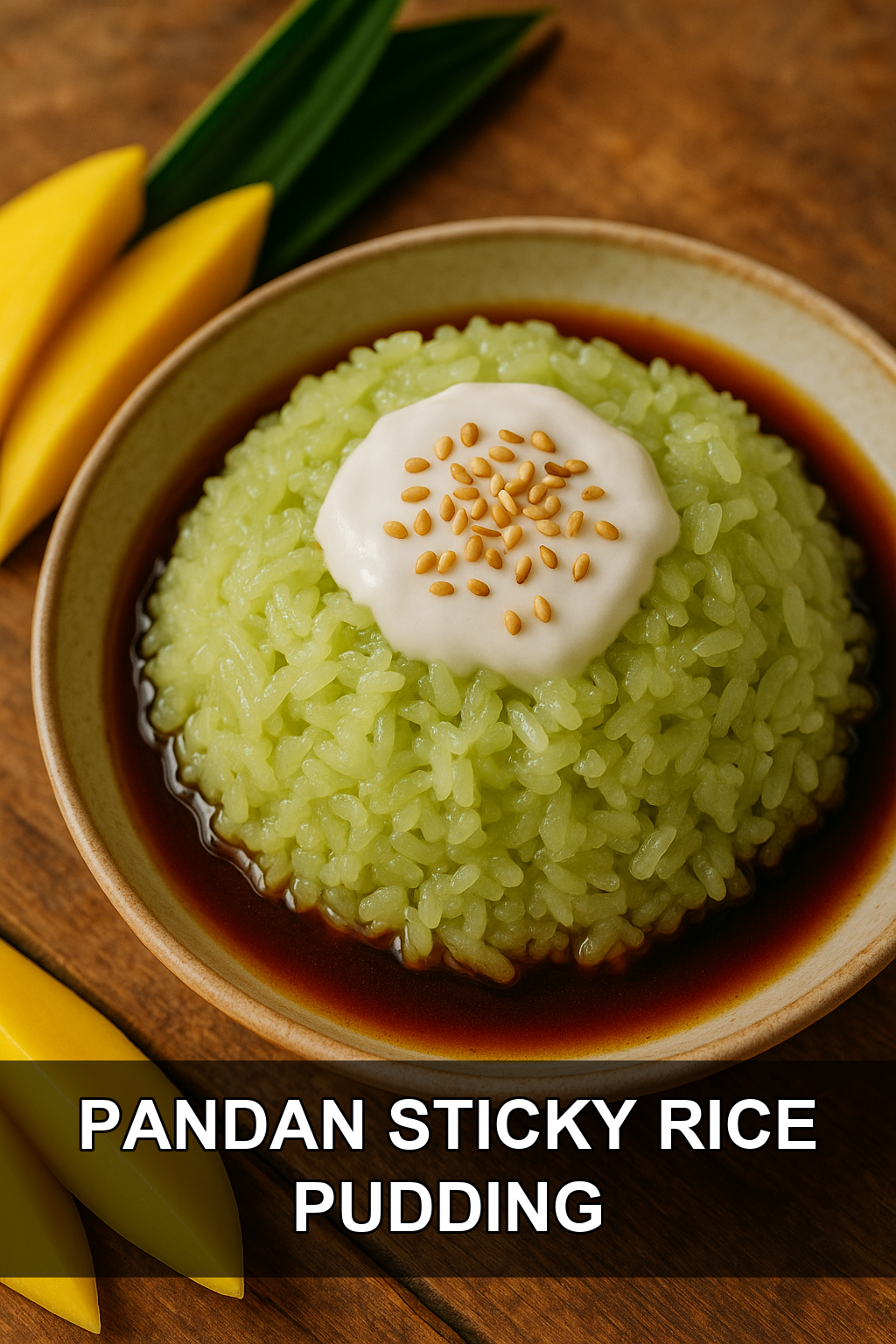
If you’ve ever fallen for the grassy-vanilla scent of pandan in a Southeast Asian dessert, this sticky rice pudding is about to become your new obsession. Glutinous rice gets steamed until impossibly chewy, bathed in pandan-infused coconut milk, then finished with a deep, smoky palm sugar caramel sauce that pulls the whole dish together.
What Is Pandan Sticky Rice Pudding?
Pandan sticky rice pudding is a coconut-based dessert built on glutinous (sticky) rice, the same starchy short-grain rice used in classic Thai mango sticky rice. Instead of pairing the rice with fresh fruit, this version steeps the rice and coconut milk with pandan leaves or extract, giving it a soft green hue and a floral, slightly nutty aroma that’s beloved throughout Thailand, Vietnam, Malaysia, and Indonesia.
The finishing touch — a palm sugar caramel sauce — is what elevates this from a simple sweet rice to something restaurant-worthy. Palm sugar caramelizes into a deeper, more complex sauce than white sugar, with notes of molasses and smoke that balance the richness of the coconut milk. Together, the chewy rice, fragrant pandan, and sticky caramel create a dessert that’s equal parts comforting and elegant.
Tips for Cooking and Prepping
#1: Soak the rice properly
Glutinous rice needs at least 4 hours (or overnight) soaking in water to hydrate the starches evenly; skipping this step leads to unevenly cooked, crunchy grains even after steaming.
#2: Steam, don’t boil, the rice
True sticky rice texture comes from steaming over simmering water rather than boiling the grains directly in liquid, which turns it mushy and gluey instead of pleasantly chewy.
#3: Use fresh or frozen pandan leaves when possible
Blending fresh or frozen pandan leaves with a little water and straining for juice gives a far more vibrant color and aroma than bottled extract, which can taste artificial in large amounts.
#4: Cook the caramel slowly and watch the color
Palm sugar burns faster than white sugar because of its lower melting point, so melt it over medium-low heat and pull it off just as it turns deep amber to avoid a bitter, burnt sauce.
#5: Reserve some coconut cream for topping
Set aside a portion of thick, unsweetened coconut cream to drizzle over the finished pudding — it adds a cool, rich contrast against the warm caramel and rice.
#6: Let the rice rest before serving
Allowing the steamed rice to sit covered for 10-15 minutes after cooking lets the coconut milk fully absorb, making the grains glossier and more cohesive when scooped.
Recipe Variations and Substitutes
No fresh pandan leaves? Pandan paste or a few drops of pandan extract mixed into the coconut milk works well as a substitute, though start with a small amount since it’s concentrated. You can also swap black glutinous rice for a nuttier, more rustic version, or fold in a handful of toasted mung beans or crushed roasted peanuts for texture. For a dairy-free caramel twist, coconut palm sugar (jaggery) can stand in for traditional palm sugar with a similar flavor profile.
Serving Suggestions
Serve the pudding warm or at room temperature in small bowls, topped generously with palm sugar caramel and a drizzle of coconut cream. It’s lovely with fresh mango or banana slices on the side, a sprinkle of toasted sesame seeds, or a few crushed peanuts for crunch. This dessert also pairs beautifully with a cup of hot jasmine tea or Vietnamese coffee to round out an Asian-inspired meal.
Storing, Make-Ahead, and Freezing Tips
Store leftover rice pudding and caramel sauce in separate airtight containers in the fridge for up to 4 days, since sticky rice firms up when chilled and reheats better without the sauce baked in. To reheat, sprinkle the rice with a splash of water or coconut milk and microwave or steam until softened again. The rice portion also freezes well for up to a month; thaw overnight in the fridge and steam briefly to restore its chewy texture before adding fresh caramel.
FAQs
Can I make pandan sticky rice pudding without a steamer?
Yes — you can rig a makeshift steamer by placing a heatproof colander or a cheesecloth-lined sieve over a pot of simmering water and covering it with a lid; just make sure the rice doesn’t touch the water directly.
Why is my sticky rice still hard after cooking?
This usually means the rice wasn’t soaked long enough or the steaming time was too short; glutinous rice needs a minimum 4-hour soak and typically 20-30 minutes of steaming to become fully tender and chewy.
What can I use instead of palm sugar for the caramel?
Dark brown sugar or coconut sugar are the closest substitutes and will still give you a rich, molasses-like caramel, though the flavor will be slightly less smoky than true palm sugar.
Is pandan sticky rice pudding gluten-free?
Yes, glutinous rice contains no gluten despite its name — it’s called ‘sticky’ or ‘glutinous’ because of its high starch content, not gluten, making this dessert naturally gluten-free.
Can I use canned coconut milk instead of fresh?
Absolutely — full-fat canned coconut milk works great and is what most home cooks use; just shake or stir it well before measuring since the cream can separate in the can.
Pandan Sticky Rice Pudding with Palm Sugar Caramel Sauce Recipe
Prep time: 30 min | Cook time: 40 min | Total time: 70 min | Servings: 6
Ingredients
For the Pandan Sticky Rice
- 2 cups glutinous (sticky) rice, soaked in water for at least 4 hours or overnight
- 1 1/2 cups full-fat coconut milk
- 1/3 cup granulated sugar
- 1/2 teaspoon salt
- 4-5 fresh or frozen pandan leaves, blended with 1/3 cup water and strained (or 1 teaspoon pandan extract/paste)
- 1 tablespoon coconut oil
For the Palm Sugar Caramel Sauce
- 1 cup grated or chopped palm sugar
- 1/4 cup water
- 1/2 cup coconut milk
- 1/4 teaspoon salt
- 1/2 teaspoon vanilla extract (optional)
For Serving
- 1/4 cup thick unsweetened coconut cream
- Toasted sesame seeds or crushed roasted peanuts
- Sliced ripe mango or banana (optional)
Instructions
- Drain the soaked glutinous rice and rinse briefly under cool water. Line a steamer basket with cheesecloth or banana leaf and spread the rice out evenly.
- Steam the rice over simmering water for 20-25 minutes, flipping it once halfway through, until the grains are tender and translucent.
- While the rice steams, warm the coconut milk, sugar, salt, and pandan juice in a small saucepan over low heat just until the sugar dissolves. Do not let it boil.
- Transfer the hot steamed rice to a large bowl and pour the warm pandan coconut milk mixture over it. Stir in the coconut oil, cover, and let it sit for 10-15 minutes so the rice absorbs the liquid and turns glossy.
- Meanwhile, make the caramel: combine palm sugar and water in a saucepan over medium-low heat, stirring occasionally until the sugar fully melts and turns a deep amber color, about 6-8 minutes.
- Reduce heat to low and carefully whisk in the coconut milk and salt (it will bubble up), stirring until smooth. Simmer 1-2 minutes to thicken slightly, then stir in vanilla extract if using. Remove from heat and let cool slightly.
- Scoop the warm pandan sticky rice into serving bowls, drizzle generously with palm sugar caramel sauce, and top with a spoonful of coconut cream.
- Finish with toasted sesame seeds or crushed peanuts and fresh mango or banana slices if desired. Serve warm or at room temperature.
For a more intense pandan flavor and color, use pandan juice from fresh blended leaves rather than extract. Leftover caramel sauce keeps well in the fridge for up to two weeks and is fantastic drizzled over ice cream or pancakes.
Leave a Reply
You must be logged in to post a comment.