
- What Is Nigerian Jollof Rice?
- Tips for Cooking and Prepping
- Recipe Variations and Substitutes
- Serving Suggestions
- Storing, Make-Ahead, and Freezing Tips
- FAQs
- Authentic Nigerian Jollof Rice Recipe
If you’ve ever wondered what all the fuss is about West African Jollof rice, this is the recipe that will show you. Smoky, spicy, deeply savory, and stained a gorgeous brick red from a rich tomato-pepper base, this Nigerian Jollof Rice is the kind of dish that turns a regular dinner into a celebration. Whether you’re cooking for a party of sixteen or just want incredible leftovers all week, this is the authentic version worth mastering.
What Is Nigerian Jollof Rice?
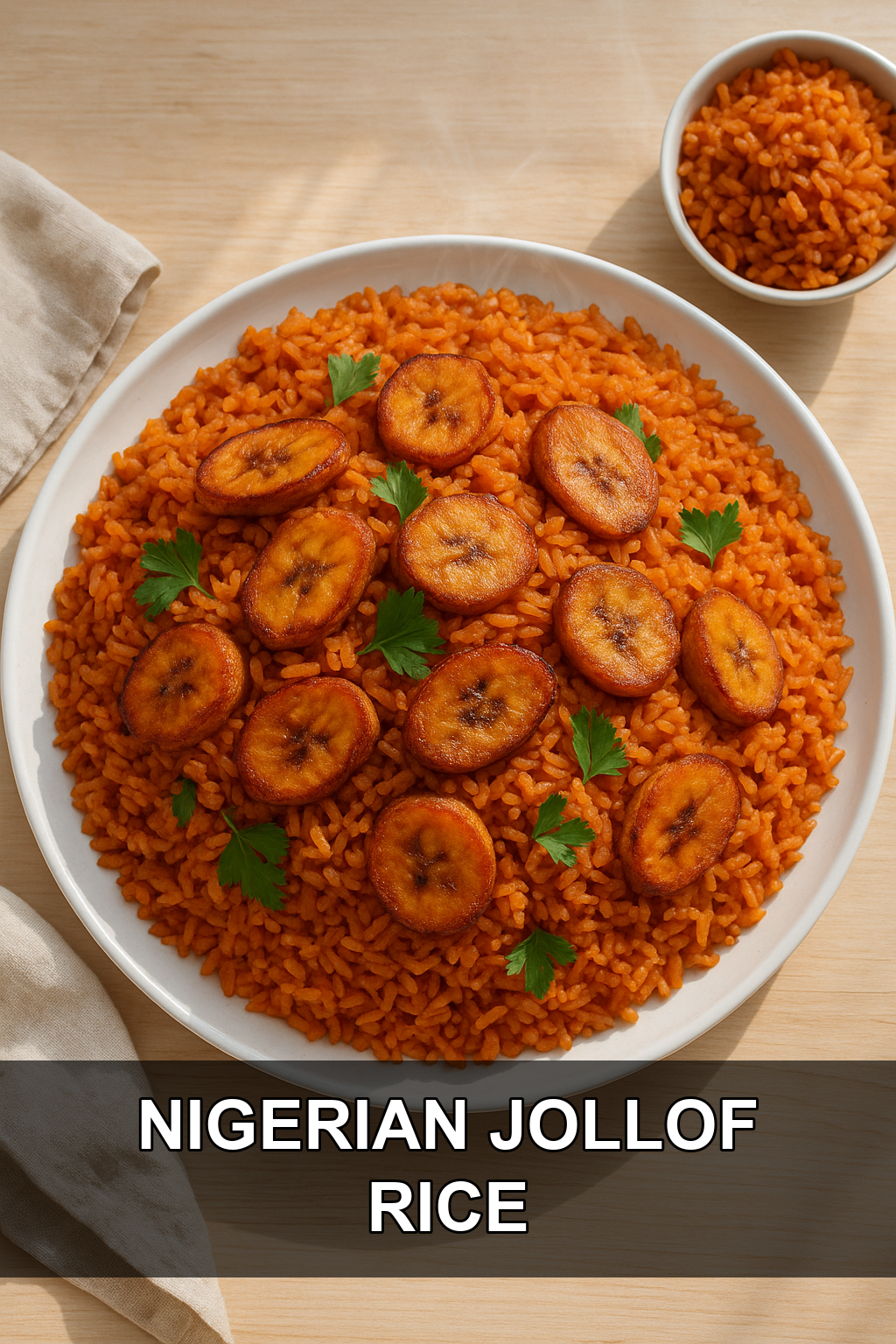
Jollof rice is a beloved one-pot rice dish found across West Africa, with Nigeria, Ghana, and Senegal each claiming their own beloved version (and plenty of friendly rivalry over whose is best). At its heart, Jollof rice is long-grain rice simmered in a blended sauce of tomatoes, onions, and peppers, seasoned with bold spices and stock until every grain soaks up that deep red color and smoky, savory flavor.
The Nigerian version is known for its intense heat from scotch bonnet or habanero peppers, its layered spice blend of curry powder, thyme, and white pepper, and that signature slightly smoky taste that comes from the rice at the bottom of the pot catching just a little char. It’s a staple at Nigerian parties, weddings, and Sunday dinners, and once you try it, you’ll understand why it has such a devoted following.
Tips for Cooking and Prepping
#1: Rinse the parboiled rice thoroughly
Rinse your parboiled rice in warm water until the water runs clear before adding it to the pot. This removes excess starch so your Jollof rice cooks up fluffy and separate instead of gummy or clumpy.
#2: Blend the pepper mixture until totally smooth
Take the full two minutes to blend your tomatoes, onion, bell pepper, and scotch bonnet peppers until completely liquified. A chunky base won’t cook down evenly and can leave your rice with an uneven texture and flavor.
#3: Control the heat with your pepper count
Scotch bonnet and habanero peppers pack serious heat, so start with fewer if you’re not used to spicy food and add more next time once you know your tolerance. You can also remove the seeds and membranes to tone things down without losing the flavor.
#4: Don’t skip stirring and taste-testing as it cooks
Jollof rice needs attention while it simmers. Stir occasionally to prevent sticking, and taste both the liquid and the rice along the way so you can adjust salt and seasoning before all the liquid is absorbed.
#5: Let a little smokiness happen at the bottom
A slightly caramelized, smoky layer at the bottom of the pot is a Jollof rice signature, not a mistake. If it starts to burn too much, add a splash more liquid, and simply discard any overly charred bits as you stir.
Recipe Variations and Substitutes
This recipe is easily adaptable to what you have on hand. Swap the chicken and beef stock combination for an all-vegetable stock to make it vegetarian, or use only chicken stock if that’s what’s in your fridge. You can also experiment with the oil: palm oil gives the most traditional, slightly earthy flavor and deep color, while olive or avocado oil offers a lighter, more neutral taste.
Serving Suggestions
Nigerian Jollof rice is traditionally served alongside fried plantains (dodo), grilled or fried chicken, beef, or fish, and a simple side salad called Nigerian coleslaw. It’s hearty enough to be the star of the plate, but it also shines as part of a bigger spread at parties and holiday gatherings.
Storing, Make-Ahead, and Freezing Tips
Jollof rice actually tastes even better the next day once the flavors have had time to meld, making it a great make-ahead dish. Store leftovers in an airtight container in the fridge for up to 4-5 days, or freeze in portioned bags or containers for up to 3 months; thaw overnight in the fridge and reheat with a splash of water or stock to bring back the moisture.
FAQs
What makes Jollof rice taste smoky?
The signature smoky flavor comes from the layer of rice at the bottom of the pot that lightly caramelizes and chars during cooking. Many Jollof lovers consider this the best part, though you can scrape it away if you prefer a milder flavor.
Can I use regular long-grain rice instead of parboiled rice?
Parboiled rice is recommended because it holds its shape and texture better during the long simmer, resulting in fluffier, less mushy Jollof rice. Regular long-grain rice can work in a pinch, but you’ll need to reduce the liquid and cooking time to avoid overcooking it.
How spicy is Nigerian Jollof rice?
Traditional Nigerian Jollof rice is quite spicy thanks to scotch bonnet or habanero peppers, but you can easily control the heat by using fewer peppers or removing the seeds. Start conservatively and add more heat next time once you know your preference.
Why is my Jollof rice mushy or too wet?
This usually happens if too much liquid was added at once or the rice wasn’t rinsed well before cooking. Rinse your parboiled rice until the water runs clear, and add extra stock or water gradually rather than all at once if the pot starts drying out too soon.
What’s the difference between Nigerian and Ghanaian Jollof rice?
While both use a similar tomato-pepper base, Nigerian Jollof typically uses parboiled rice and a heavier hand with curry powder and thyme, while Ghanaian Jollof often uses jasmine rice and leans more into a smokier, slightly sweeter profile. Both are delicious, but they have distinct textures and flavor nuances.
Authentic Nigerian Jollof Rice Recipe
Prep time: 10 min | Cook time: 40 min | Total time: 50 min | Servings: 16
Ingredients
For the Tomato-Pepper Base
- 1/2 white onion
- 7 roma tomatoes
- 1 red bell pepper
- 4 habanero or scotch bonnet peppers (use more or less depending on your heat preference)
- 1/2 cup water
For the Jollof Rice
- 8 cups parboiled rice
- 1/4-1/3 cup oil (like palm oil, olive oil, or avocado oil)
- 8 ounces tomato sauce
- 4-6 ounces tomato paste
- 4 maggi cubes, crushed into powder
- 3 cups chicken and/or beef stock
- 2 teaspoons powdered white pepper
- 2 teaspoons curry powder
- 1 bay leaf (or 1 teaspoon powdered bay leaf)
- 1 teaspoon powdered thyme
- sea salt, to taste
Instructions
- Cut the tomatoes, onion, and red bell pepper into chunks, discarding the bell pepper seeds. Add everything to a blender along with the scotch bonnet or habanero peppers and 1/2 cup water. Blend until completely liquified and uniform, about 2 minutes.
- Meanwhile, rinse the parboiled rice in plenty of warm water until the water runs clear, then drain well.
- Add the rice and oil to a large pot over medium heat, followed by the blended tomato mixture, tomato paste, tomato sauce, chicken and/or beef stock, crushed maggi cubes, white pepper, curry powder, bay leaf, salt, and thyme. Stir everything together until fully combined.
- Cook for about 40 minutes, or until the rice is fluffy and fully cooked and most of the liquid has been absorbed. Stir occasionally to prevent sticking and burning, and taste-test the liquid and rice as you go, adjusting seasoning as needed.
- If the rice at the bottom starts drying out too quickly, add a splash more liquid to prevent excessive burning. Some charring at the bottom is normal and adds a signature smoky flavor; simply discard any overly burnt bits as you stir if you’d rather not eat them.
Adjust the number of scotch bonnet or habanero peppers to control spice level, and reserve extra stock or water in case the pot needs more liquid before the rice is fully tender.
Leave a Reply
You must be logged in to post a comment.