
- What Is Maple Dijon Pork Tenderloin?
- Tips for Cooking and Prepping
- Recipe Variations and Substitutes
- Serving Suggestions
- Storing, Make-Ahead, and Freezing Tips
- FAQs
- Maple Dijon Pork Tenderloin with Roasted Brussels Sprouts Recipe
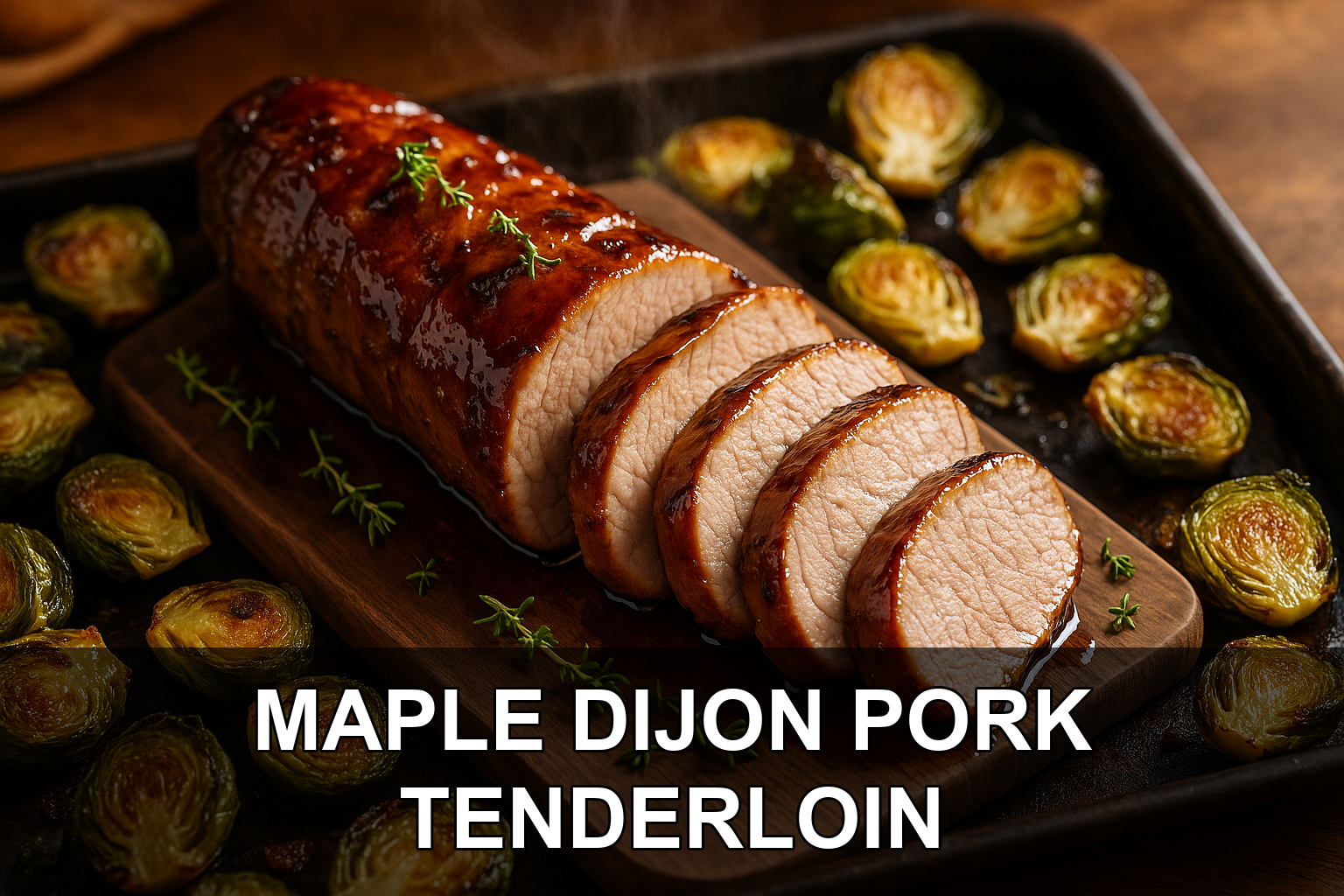
This maple Dijon pork tenderloin is the kind of recipe that makes weeknight dinners feel special without any extra effort. The sticky-sweet glaze caramelizes beautifully in the oven while the Brussels sprouts roast right alongside it, soaking up all those savory pan juices for one seriously flavorful, low-mess meal.
What Is Maple Dijon Pork Tenderloin?
Maple Dijon pork tenderloin is a classic sweet-and-savory dinner built around lean, quick-cooking pork tenderloin brushed with a glaze of maple syrup, Dijon mustard, garlic, and a splash of vinegar. The glaze caramelizes as it roasts, creating a golden, slightly sticky crust that pairs perfectly with the mild, tender pork underneath.
Roasting Brussels sprouts alongside the tenderloin turns this into a complete sheet-pan-style dinner. The sprouts crisp up at the edges and pick up flavor from the pork drippings and glaze, making them far more exciting than a plain steamed side dish. It’s an ideal fall and winter meal, but honestly good any time of year.
Tips for Cooking and Prepping
#1: Trim the silver skin before cooking
Pork tenderloin often has a thin, silvery membrane running along one side that won’t break down when cooked and can cause the meat to curl. Slide a sharp knife just underneath it and slice it away before seasoning.
#2: Sear before roasting for better color
A quick sear in an oven-safe skillet before transferring to the oven gives the tenderloin a deep golden crust that the glaze alone can’t achieve, and it locks in juices.
#3: Cut Brussels sprouts uniformly
Halve or quarter the sprouts based on size so they’re roughly the same thickness; uneven pieces mean some will burn while others stay underdone.
#4: Don’t skip the resting time
Let the pork rest for 5-10 minutes after roasting so the juices redistribute; slicing too early will leave you with a drier, less flavorful piece of meat.
#5: Pull the pork at the right internal temperature
Use a meat thermometer and remove the tenderloin at 140-145°F, since it will continue to rise a few degrees while resting and overcooking is the most common mistake with this cut.
#6: Toss Brussels sprouts in oil before adding the glaze
Coating the sprouts in olive oil and salt first helps them crisp instead of steam, then a light brush of the maple Dijon glaze near the end adds flavor without making them soggy.
Recipe Variations and Substitutes
You can swap Brussels sprouts for cubed butternut squash, carrots, or fingerling potatoes if you want a different vegetable base, just adjust roasting times accordingly. For a smokier flavor, add a pinch of smoked paprika or a few strips of cooked bacon crumbled over the sprouts, and if you don’t have Dijon on hand, whole grain mustard or a mix of yellow mustard and a touch of horseradish works in a pinch.
Serving Suggestions
This dish is hearty enough to stand on its own, but a slice of crusty bread or a scoop of garlic mashed potatoes rounds it out nicely for a bigger appetite. A simple green salad with a light vinaigrette also balances the richness of the glaze if you want something fresh on the side.
Storing, Make-Ahead, and Freezing Tips
Store leftover pork and Brussels sprouts in an airtight container in the fridge for up to 4 days; reheat gently in a skillet or low oven to avoid drying out the meat. You can mix the maple Dijon glaze up to 3 days ahead and store it in the fridge, and while the sprouts don’t freeze particularly well, sliced cooked pork can be frozen for up to 2 months in a freezer-safe bag.
FAQs
What temperature should pork tenderloin be cooked to?
Pork tenderloin is safe and juiciest when pulled from the oven at 140-145°F internal temperature, then rested for 5-10 minutes, during which it will rise to the USDA recommended 145°F.
Can I make this recipe on one sheet pan?
Yes, you can sear the pork in a skillet first for color, then transfer it to the same sheet pan as the Brussels sprouts to roast together, which cuts down on cleanup significantly.
Why is my pork tenderloin tough or dry?
This usually happens from overcooking, since tenderloin is a very lean cut with little fat to keep it moist; using a meat thermometer and resting the meat before slicing are the two biggest fixes.
Can I use pork loin instead of pork tenderloin?
Pork loin is a larger, thicker cut and will need a longer cooking time at a lower temperature, so it’s not a direct swap, but the same glaze and Brussels sprouts pairing works well if you adjust the roasting time.
How do I keep Brussels sprouts from getting soggy?
Make sure they’re patted dry after washing, spread in a single layer with space between pieces, and roasted at a high temperature like 400-425°F so they roast instead of steam.
Maple Dijon Pork Tenderloin with Roasted Brussels Sprouts Recipe
Prep time: 15 min | Cook time: 30 min | Total time: 45 min | Servings: 4
Ingredients
For the Pork
- 1 pork tenderloin (about 1.5 lbs), silver skin removed
- 1 tbsp olive oil
- Salt and black pepper, to taste
- 1/4 cup pure maple syrup
- 2 tbsp Dijon mustard
- 2 cloves garlic, minced
- 1 tbsp apple cider vinegar
- 1 tsp fresh thyme leaves (or 1/2 tsp dried thyme)
For the Brussels Sprouts
- 1 lb Brussels sprouts, trimmed and halved
- 2 tbsp olive oil
- Salt and black pepper, to taste
- 2 tbsp of the reserved maple Dijon glaze
Instructions
- Preheat the oven to 400°F and line a large sheet pan with parchment paper.
- In a small bowl, whisk together the maple syrup, Dijon mustard, minced garlic, apple cider vinegar, and thyme. Set aside about 2 tablespoons of this glaze to toss with the Brussels sprouts later.
- Pat the pork tenderloin dry and season all over with salt and pepper. Heat olive oil in an oven-safe skillet over medium-high heat and sear the tenderloin on all sides until golden brown, about 4-5 minutes total.
- Brush the seared pork generously with the maple Dijon glaze, then transfer the skillet (or move the pork to the prepared sheet pan) to the oven.
- Toss the halved Brussels sprouts with olive oil, salt, and pepper, then arrange them around the pork on the sheet pan in a single layer.
- Roast for 20-25 minutes, brushing the pork with additional glaze halfway through, until the pork reaches an internal temperature of 140-145°F and the sprouts are tender and browned at the edges.
- Remove from the oven, tent the pork loosely with foil, and let it rest for 5-10 minutes before slicing.
- Toss the roasted Brussels sprouts with the reserved 2 tablespoons of glaze, then serve alongside the sliced pork tenderloin.
For extra caramelization, broil the pan for the last 2-3 minutes of cooking, watching closely so the glaze doesn’t burn. Leftover pork makes a great addition to sandwiches or grain bowls the next day.
Leave a Reply
You must be logged in to post a comment.