
- What Is Mango Sticky Rice?
- Tips for Cooking and Prepping
- Recipe Variations and Substitutes
- Serving Suggestions
- Storing, Make-Ahead, and Freezing Tips
- FAQs
- Mango Sticky Rice Recipe
If you’ve ever had mango sticky rice at a Thai restaurant and thought about it for days afterward, you’re not alone. This simple, five-ingredient-core dessert combines warm coconut-scented sticky rice with cool, juicy mango slices, and once you learn how easy it is to make at home, it might just become your new favorite way to end a meal.
What Is Mango Sticky Rice?
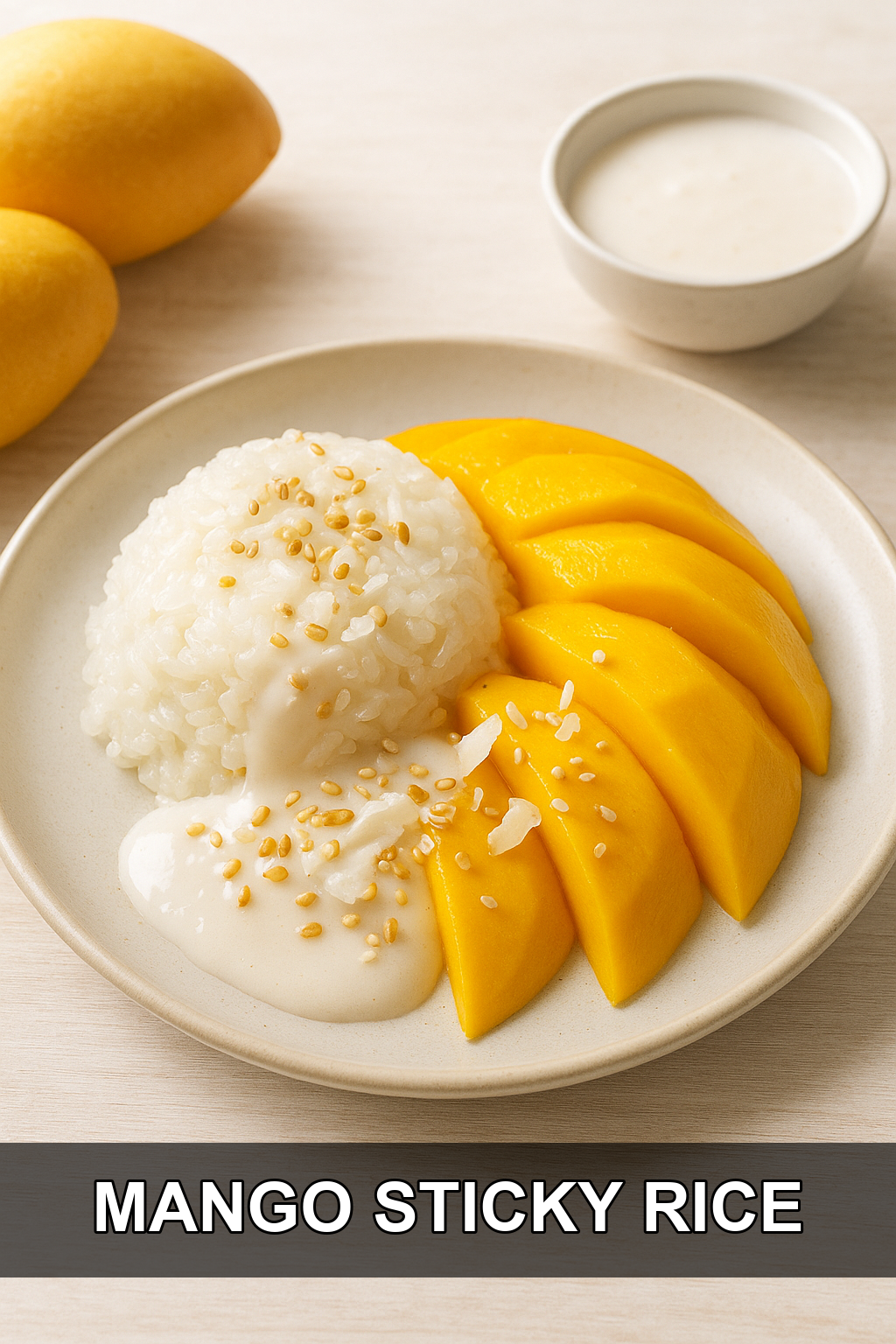
Mango sticky rice, known as khao niew mamuang in Thailand, is a beloved street food and dessert that pairs glutinous sweet rice with ripe mango and rich coconut milk sauce. It’s a study in contrasts: warm and cool, sweet and lightly salty, soft rice against juicy fruit, all tied together by that unmistakable coconut aroma.
While it looks (and tastes) like something only a restaurant could pull off, the traditional version is actually made from just a handful of pantry staples. The magic is really in the technique: using the right kind of rice, getting the coconut sauce ratios right, and letting the rice soak up all that sweetness before serving.
Tips for Cooking and Prepping
#1: Don’t skip rinsing the rice
Thai sweet rice needs a thorough rinse until the water runs clear to remove excess starch, which keeps the finished texture pleasantly sticky rather than gluey or clumped.
#2: Use real Thai sweet rice if you can find it
Also called glutinous or sticky rice, this specific variety is what gives the dish its signature chewy, sticky texture; regular long-grain or Japanese sticky rice simply won’t behave the same way.
#3: Let the rice rest in the sauce
After mixing the cooked rice with the sweet coconut sauce, resist the urge to serve it right away — letting it sit covered for at least 30 minutes allows the rice to fully absorb the coconut flavor and become tender throughout.
#4: Make two separate sauces, not one
The sweet coconut sauce gets mixed into the rice itself, while the thickened salted coconut sauce is drizzled on top just before serving — keeping them separate creates that classic sweet-and-salty balance.
#5: Choose mangoes that are truly ripe
Look for mangoes that give slightly when pressed and smell fragrant at the stem; underripe mango will taste tart and starchy next to the sweet rice instead of soft and honeyed.
Recipe Variations and Substitutes
While traditional mango sticky rice is fairly simple, there’s room to play. Swap in Japanese sticky rice if Thai sweet rice isn’t available (just know the texture will be slightly less sticky), or experiment with toppings like toasted sesame seeds, coconut flakes, or crunchy toasted mung beans for extra texture. Some cooks also add a few drops of pandan extract to the rice for a subtly floral, grassy note that’s common in Southeast Asian desserts.
Serving Suggestions
Serve mango sticky rice slightly warm alongside chilled mango slices for the best contrast in temperature and texture. It’s a lovely finish to any Thai-inspired meal — think pad Thai, green curry, or a spicy larb salad — and it also works beautifully as a light, refreshing dessert on its own for a warm-weather gathering.
Storing, Make-Ahead, and Freezing Tips
Mango sticky rice is best enjoyed the day it’s made, but leftovers can be stored in an airtight container in the fridge for up to 2 days. Reheat the rice gently in the microwave with a splash of water or coconut milk to loosen it back up, and always add fresh mango and sauce right before serving rather than storing them together.
FAQs
Can I make mango sticky rice ahead of time?
Yes, you can cook the rice and mix it with the sweet coconut sauce up to a day ahead; just store it covered in the fridge and gently reheat before serving with fresh mango and sauce.
What kind of rice do I need for mango sticky rice?
You’ll want Thai long-grain sweet rice, also labeled glutinous or sticky rice, which cooks up chewy and sticky; regular long-grain rice won’t work for this recipe.
Why is my sticky rice not sticky?
This usually happens if the wrong type of rice is used or the rice wasn’t rinsed well enough beforehand; make sure to use true Thai sweet rice and rinse it until the water runs clear.
Can I use canned mango or frozen mango instead of fresh?
Fresh, ripe mango is strongly recommended for the best flavor and texture, but if fresh isn’t available, thawed frozen mango slices can work in a pinch.
What can I use instead of coconut milk?
Full-fat coconut milk is essential for the rich, creamy sauce and can’t really be substituted without changing the dish, but you can look for a light coconut milk in a pinch, knowing the sauce will be less rich.
Mango Sticky Rice Recipe
Prep time: 15 min | Cook time: 25 min | Total time: 40 min | Servings: 4
Ingredients
For the Sticky Rice
- 1 cup Thai long-grain sweet rice (Japanese sticky rice may be substituted, but it won’t achieve the same stickiness)
- 1 cup water
For the Sweet Coconut Sauce
- 1 1/4 cups full-fat unsweetened coconut milk
- 1/4 cup sugar
- 1/8 teaspoon salt
For the Salted Coconut Sauce
- 3/4 cup full-fat unsweetened coconut milk
- 1 tablespoon sugar
- 1/8 teaspoon salt
- 1 teaspoon cornstarch
- 1 teaspoon water
For Serving
- 2 ripe mangoes, sliced
- 1/4 cup toasted mung beans
- 2 tablespoons sesame seeds
- 1/4 cup coconut flakes
Instructions
- Wash the rice: Rinse 1 cup of Thai sweet rice under cold water until the water runs clear.
- Cook the rice: Drain the washed rice and place it in your rice cooker with 1 cup of water. Cook on the normal white rice setting for about 20-25 minutes.
- Mix the salted coconut sauce: Whisk together 3/4 cup of coconut milk, 1 tablespoon of sugar, and 1/8 teaspoon of salt in a bowl. Dissolve 1 teaspoon of cornstarch in 1 teaspoon of water, stir this into the mixture, and heat gently until thickened.
- Prepare the sweet coconut sauce: In another bowl, combine 1 1/4 cups of coconut milk, 1/4 cup of sugar, and 1/8 teaspoon of salt, and heat until the sugar dissolves.
- Combine rice and sauce: Once the rice is cooked, mix it gently with the sweet coconut sauce and let it sit covered for at least 30 minutes.
- Slice the mangoes: Slice the ripe mangoes into generous pieces for serving.
- Assemble the dessert: Serve a mound of sticky rice alongside the mango slices, drizzled with the salted coconut sauce and any optional toppings like toasted mung beans, sesame seeds, or coconut flakes.
For the stickiest texture, use true Thai glutinous rice rather than a substitute, and don’t rush the resting step — it’s what allows the rice to fully soak up the coconut sauce.
Leave a Reply
You must be logged in to post a comment.