
- What Is Mango Sticky Rice?
- Tips for Cooking and Prepping
- Recipe Variations and Substitutes
- Serving Suggestions
- Storing, Make-Ahead, and Freezing Tips
- FAQs
- Mango Sticky Rice Recipe
If you’ve ever fallen in love with the sweet, creamy, and slightly salty dessert served at your favorite Thai restaurant, you’re in the right place. This Mango Sticky Rice recipe walks you through every step, from soaking the rice to drizzling on that glossy coconut sauce, so you can recreate this beloved treat right in your own kitchen.
What Is Mango Sticky Rice?
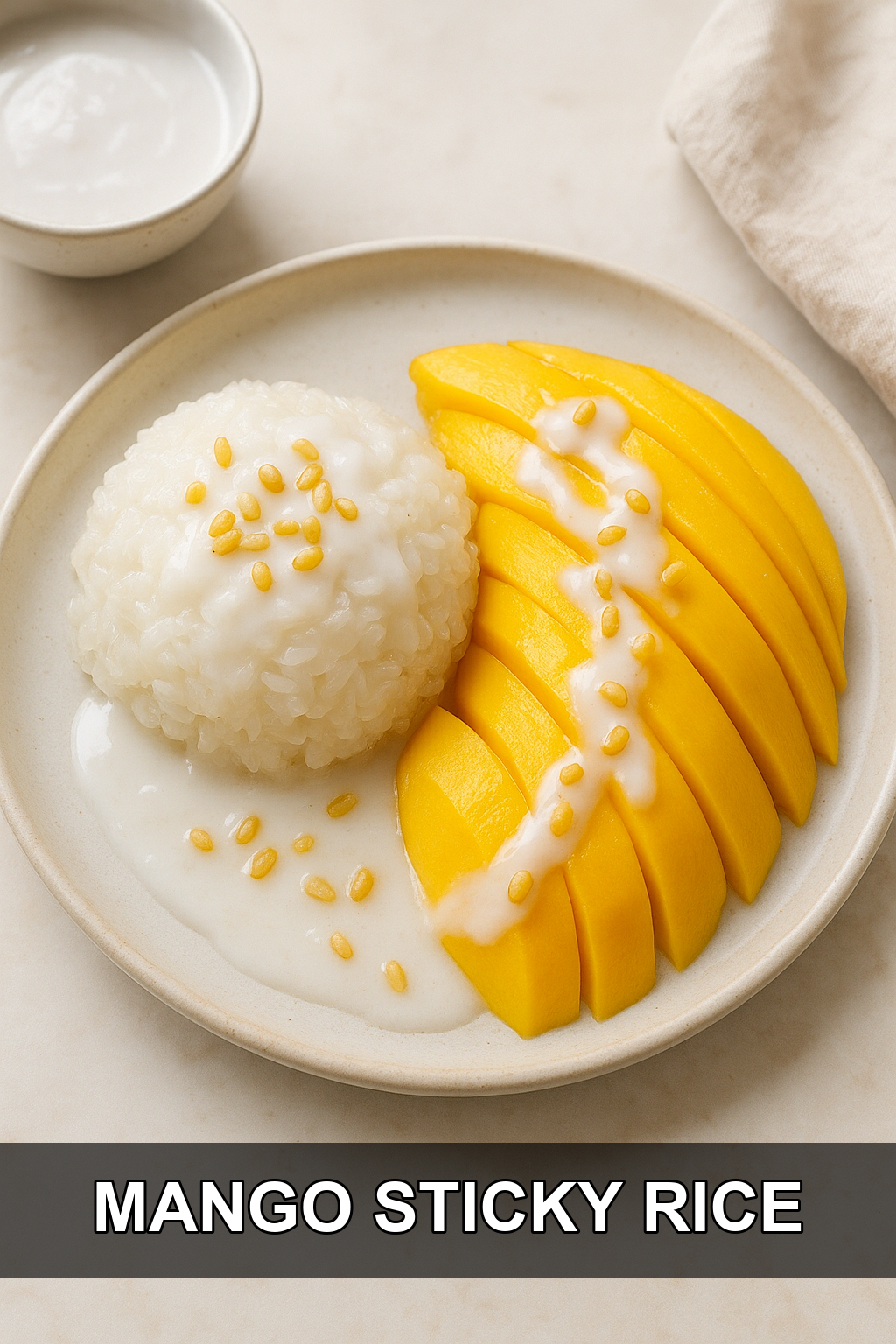
Mango Sticky Rice, known as Khao Niao Mamuang in Thailand, is a classic Southeast Asian dessert made from glutinous rice steamed until tender and then soaked in a rich, sweetened coconut milk sauce. It’s traditionally served alongside slices of ripe, juicy mango and topped with a drizzle of thickened coconut cream and a sprinkle of toasted mung beans or sesame seeds for crunch.
This dessert is beloved for its perfect balance of textures and flavors: the chewy, slightly sticky rice, the smooth and fragrant coconut sauce, and the bright, tropical sweetness of fresh mango. It’s a popular street food dish in Thailand, but it’s also surprisingly simple to make at home once you understand a few key techniques.
Tips for Cooking and Prepping
#1: Soak the rice long enough
Glutinous rice needs a proper soak of at least 3-4 hours, though overnight is best, to soften the grains fully so they steam evenly and become tender instead of chewy or undercooked.
#2: Always steam, never boil
Boiling glutinous rice turns it mushy and gluey, while steaming keeps the grains distinct, chewy, and slightly translucent, which is exactly the texture you want.
#3: Pour the sauce on while the rice is hot
Combining warm coconut sauce with hot, freshly steamed rice helps the grains absorb the liquid properly, resulting in that signature glossy, creamy finish.
#4: Don’t skip the resting time
The rice will look loose and soupy right after mixing in the sauce, but letting it sit covered for 20-30 minutes allows it to soak up the coconut milk and become rich and cohesive.
#5: Choose mangoes at peak ripeness
Look for mangoes that are fragrant and give slightly when pressed, since a ripe, sweet mango is essential for balancing the richness of the coconut rice.
#6: Watch your coconut topping consistency
The cornstarch slurry should thicken the sauce just enough to coat the back of a spoon while still being pourable; if it thickens too much, loosen it with a splash of coconut milk.
Recipe Variations and Substitutes
While the classic version sticks to coconut milk, sugar, and mango, you can experiment with a pandan leaf for extra fragrance, swap toasted mung beans for sesame seeds or crushed peanuts, or even use a mix of black and white glutinous rice for a striking visual contrast. Some cooks also add a pinch of matcha or butterfly pea flower powder to the rice for color, though this is purely optional and doesn’t change the traditional flavor much.
Serving Suggestions
Mango Sticky Rice is best enjoyed slightly warm or at room temperature, plated with generous mango slices fanned out beside a mound of rice, then finished with a spoonful of thickened coconut sauce and a sprinkle of toasted mung beans. It makes a lovely ending to any Thai-inspired meal, or serve it on its own as an afternoon treat with iced Thai tea.
Storing, Make-Ahead, and Freezing Tips
Store leftover sticky rice and sauce separately in airtight containers in the refrigerator for up to 2 days, since the rice firms up when chilled and reheats best with a splash of coconut milk. You can also freeze the cooked, sauced rice for up to a month; just thaw and gently steam or microwave it with a little extra coconut milk to restore its creamy texture before serving with freshly sliced mango.
FAQs
Can I use regular rice instead of glutinous rice?
No, regular long-grain or jasmine rice won’t give you the sticky, chewy texture that defines this dish. You need glutinous rice, sometimes labeled ‘sweet rice’ or ‘sticky rice,’ which has a different starch structure.
Why is my sticky rice hard or undercooked?
This usually means the rice wasn’t soaked long enough before steaming. Make sure to soak it for at least 3-4 hours, or ideally overnight, so the grains soften fully before cooking.
Can I make Mango Sticky Rice without a steamer?
Yes, simply use a metal sieve or colander lined with cheesecloth set over a pot of simmering water, making sure the rice doesn’t touch the water, then cover and steam as directed.
What kind of mango works best for this recipe?
Look for sweet, ripe varieties like Ataulfo, Honey, or Nam Dok Mai mangoes, which have a smooth, non-fibrous texture and rich sweetness that pairs perfectly with the coconut rice.
Can I make the coconut sauce ahead of time?
Yes, you can prepare the coconut sauce a day in advance and store it covered in the fridge; just warm it gently before pouring it over the hot steamed rice.
Mango Sticky Rice Recipe
Prep time: 20 min | Cook time: 30 min | Total time: 50 min | Servings: 3
Ingredients
For the Sticky Rice
- 1 cup glutinous rice (sticky rice) (see notes)
- Water for soaking
For the Coconut Sauce
- 1 can coconut milk (full-fat)
- 1/3 cup sugar (see notes)
- 1/2 teaspoon salt
- 1 pandan leaf (optional, see notes)
For the Coconut Topping
- 1 teaspoon cornstarch (or rice flour)
- 1 tablespoon water
For Assembly
- 2 ripe mangoes (see notes)
- 1/4 cup toasted mung beans (or sesame seeds, optional)
Instructions
- Rinse and soak the rice: Rinse the sticky rice under cold water until the water runs clear. Place it in a bowl, cover with water, and soak for at least 3-4 hours, preferably overnight. If the soaking water is still cloudy afterward, rinse the rice again.
- Steam the rice (do not boil): Drain the soaked rice well. If using a steamer, line a steamer basket with cheesecloth or a clean kitchen towel, spread the rice evenly, cover, and steam for 20-25 minutes until tender and slightly translucent. If you don’t have a steamer, place the rice in a metal sieve or colander lined with cheesecloth over a pot of simmering water, making sure the rice doesn’t touch the water, then cover and steam as directed.
- Make the coconut sauce: In a saucepan, combine the coconut milk, sugar, salt, and pandan leaf (if using). Heat gently over medium-low heat, stirring until the sugar dissolves.
- Combine rice and coconut sauce: Remove the pandan leaf if using. Pour about 2/3 of the warm coconut sauce over the hot sticky rice and gently mix until fully coated. The mixture will look loose and wet at this stage, which is exactly what you want. Cover and let sit for 20-30 minutes so the rice absorbs the liquid and becomes rich, glossy, and creamy.
- Make the coconut topping: In a small bowl, mix the cornstarch with the water to create a slurry. Add this slurry to the remaining coconut sauce and heat gently, stirring constantly, until slightly thickened. It should coat the back of a spoon but still be pourable; if it becomes too thick, add a splash of coconut milk or water to loosen it.
- Assemble: Slice the mangoes into thin strips. Place a portion of sticky rice on a plate and arrange the mango slices alongside it. Spoon the thickened coconut sauce over the rice and sprinkle with toasted mung beans or sesame seeds, if desired.
Glutinous rice is sometimes labeled ‘sweet rice’ at the store, don’t confuse it with regular sticky short-grain rice. You can adjust the sugar slightly depending on how ripe and sweet your mangoes are, and if pandan leaf isn’t available, the dish is still delicious without it.
Leave a Reply
You must be logged in to post a comment.