
- What Is Mango Sticky Rice?
- Tips for Cooking and Prepping
- Recipe Variations and Substitutes
- Serving Suggestions
- Storing and Make-Ahead Tips
- FAQs
- Mango Sticky Rice Recipe
If you’ve ever wondered why mango sticky rice shows up on every Thai restaurant dessert menu, one bite will answer the question instantly. This beloved treat combines warm, coconutty sticky rice with juicy fresh mango slices and a rich coconut sauce, and the best part is you can make it at home with just a handful of pantry staples.
What Is Mango Sticky Rice?
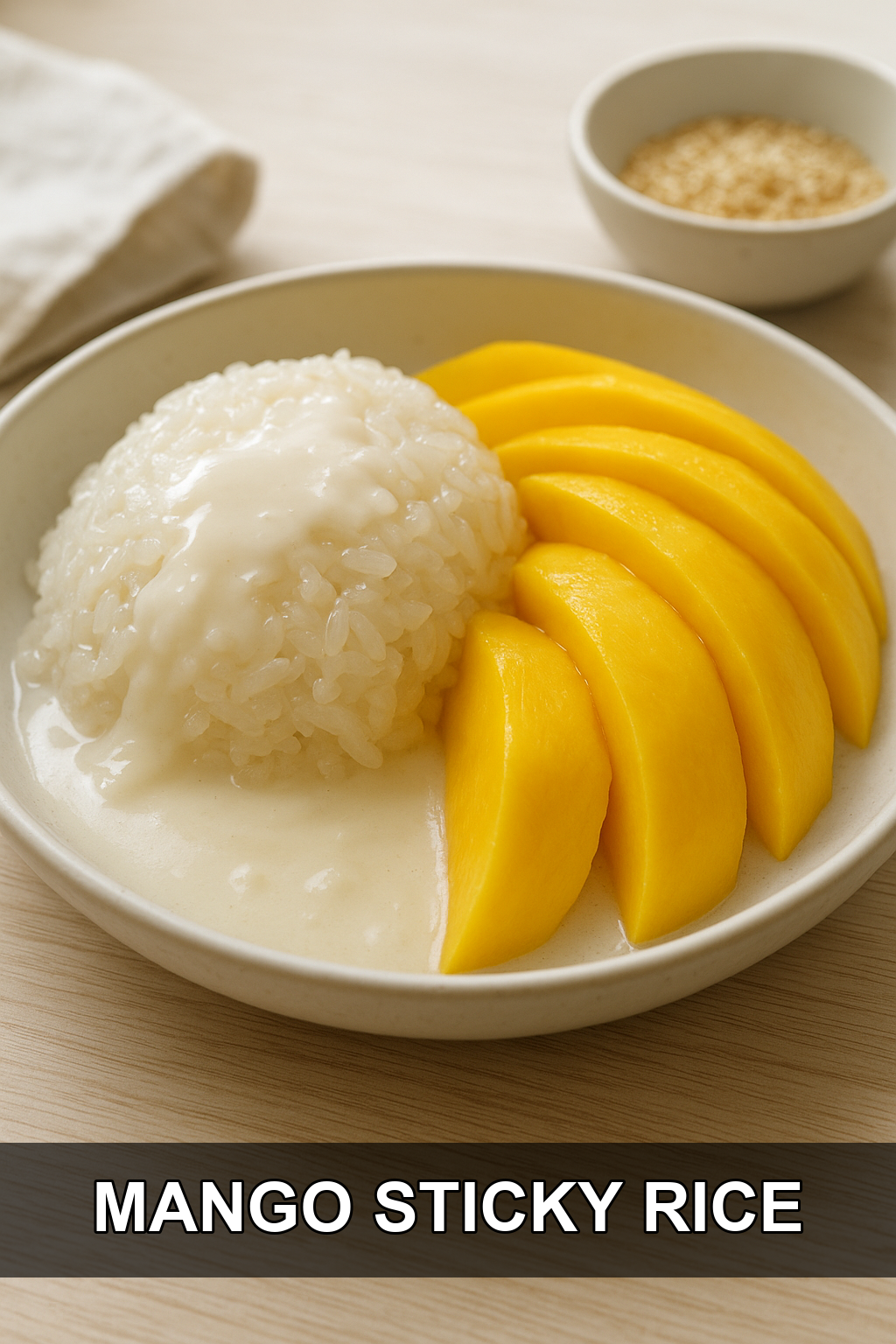
Mango sticky rice, known as khao niew mamuang in Thailand, is a traditional dessert made by steaming or simmering glutinous rice in sweetened coconut milk until tender and creamy. It’s then paired with ripe, fragrant mango slices and finished with a generous drizzle of warm coconut sauce that pools around the rice like custard.
While it’s popular year-round in Thai restaurants, mango sticky rice is especially cherished during mango season in Southeast Asia, when the fruit is at its sweetest and juiciest. It’s simple in concept but incredibly satisfying, balancing the richness of coconut with the bright, fruity sweetness of mango.
Tips for Cooking and Prepping
#1: Use real Thai sweet rice, not regular rice
Thai sweet rice (also labeled sticky rice or glutinous rice) has a unique starch content that makes it chewy and cohesive once cooked. Regular long-grain or short-grain rice won’t give you the same sticky, pillowy texture.
#2: Don’t skip the soaking step
Soaking the rice in lukewarm water for 20 to 30 minutes softens the grains so they cook evenly and become tender without turning mushy or staying too firm in the center.
#3: Keep the lid partially on while simmering
Leaving room for steam to escape prevents the pot from boiling over while still allowing the rice to absorb all that coconut milk goodness.
#4: Let the rice rest off the heat
After the coconut milk is absorbed, resting the covered pot for 5 to 10 minutes allows the rice to finish steaming gently and reach the perfect sticky consistency.
#5: Taste your coconut sauce before serving
The sauce should taste quite sweet on its own since it mellows out once it’s poured over the rice, so don’t be afraid to add extra brown sugar to taste.
#6: Choose mangoes that are fully ripe
Look for mangoes that give slightly when pressed and smell fragrant at the stem; underripe mangoes will taste tart and won’t complement the sweet rice as well.
Recipe Variations and Substitutes
While traditional mango sticky rice sticks to a simple ingredient list, there’s room to make it your own. Try swapping brown sugar for palm sugar for a more authentic, caramel-like flavor, or add a pinch of pandan extract to the rice for a fragrant twist. You can also toast some sesame seeds or crushed mung beans to sprinkle on top for extra texture, a popular garnish in Thailand.
Serving Suggestions
Mango sticky rice is best served warm or at room temperature, ideally soon after cooking for the best texture. It makes a wonderful ending to a Thai-inspired meal featuring dishes like pad thai, green curry, or spring rolls, and it also stands alone beautifully as an afternoon treat with a cup of hot jasmine tea.
Storing and Make-Ahead Tips
Mango sticky rice is best enjoyed fresh, but you can store leftover rice and sauce separately in airtight containers in the refrigerator for up to 2 days. Reheat the rice gently in the microwave with a splash of water or coconut milk to restore its soft texture, and warm the sauce separately before serving. It’s best to slice fresh mango right before serving rather than storing it ahead of time.
FAQs
Can I make mango sticky rice ahead of time?
You can cook the rice and sauce a day in advance and store them separately in the fridge, then gently reheat before assembling with fresh mango just before serving.
Can I use frozen mango instead of fresh?
Fresh ripe mango is recommended for the best flavor and texture, but if fresh isn’t available, thaw frozen mango slices completely and pat them dry before serving.
Why is my sticky rice still hard after cooking?
This usually means the rice wasn’t soaked long enough or needs a bit more simmering time; try adding a splash more liquid and covering it tightly to steam a little longer.
What can I substitute for Thai sweet rice?
Glutinous rice is essential for the right texture, so it’s best not to substitute; look for it in the international aisle of most grocery stores or at an Asian market.
Is mango sticky rice served hot or cold?
It’s traditionally served warm, with cool, fresh mango slices creating a pleasant contrast in temperature and texture.
Mango Sticky Rice Recipe
Prep time: 10 min | Cook time: 25 min | Total time: 35 min | Servings: 4
Ingredients
For the Sticky Rice
- 1 cup Thai sweet rice (aka sticky rice)
- 1 1/2 cups water, divided
- 1/2 can (13.5-ounce) coconut milk, divided
- 1/4 teaspoon salt
- 1 tablespoon brown sugar
For the Coconut Sauce
- 1/2 can (13.5-ounce) coconut milk, divided
- 3 to 4 tablespoons brown sugar, to taste
For Serving
- 1 to 2 ripe mangoes
Instructions
- Gather all the ingredients.
- Soak 1 cup sticky rice in 1 cup of lukewarm water in a medium saucepan for 20 to 30 minutes. Do not drain the rice.
- Add the remaining 1/2 cup lukewarm water, plus 1/2 can coconut milk, 1/4 teaspoon salt, and 1 tablespoon brown sugar. Stir well. Bring to a gentle boil, then partially cover with a lid, leaving some room for steam to escape. Reduce heat to medium-low, or just until you get a gentle simmer.
- Simmer until the coconut liquid has been absorbed by the rice, 20 to 30 minutes. Turn off the heat, but leave the pot on the burner with the lid on tight. Allow it to sit for 5 to 10 minutes.
- To make the sauce, warm (do not boil) the remaining 1/2 can coconut milk over medium-low heat in a small saucepan, about 5 minutes. Add 3 tablespoons brown sugar, stirring to dissolve. Taste-test the sauce for sweetness, adding more sugar if desired; note it will taste less sweet once added to the rice.
- Prepare the mangoes by cutting them open and slicing each into bite-sized pieces.
- Scoop warm rice into each serving bowl, then drizzle plenty of the sweet coconut sauce over the top so the rice is swimming in sauce, similar to an English pudding with custard. Arrange mango slices on the rice and finish with another drizzle of sauce before serving.
For extra flavor, try toasting a few sesame seeds or crushed mung beans to sprinkle on top before serving. Leftover rice and sauce keep well separately in the fridge for up to 2 days.
Leave a Reply
You must be logged in to post a comment.