
- What Is Mango Sticky Rice?
- Tips for Cooking and Prepping
- Recipe Variations and Substitutes
- Serving Suggestions
- Storing and Make-Ahead Tips
- FAQs
- Mango Sticky Rice Recipe
If you’ve ever had mango sticky rice at a Thai restaurant, you know it’s the kind of dessert that makes you close your eyes after the first bite. The good news is that this beloved treat is surprisingly simple to make at home with just a handful of pantry staples and one perfectly ripe mango. Let’s turn your kitchen into your favorite Thai street food stall for the evening.
What Is Mango Sticky Rice?
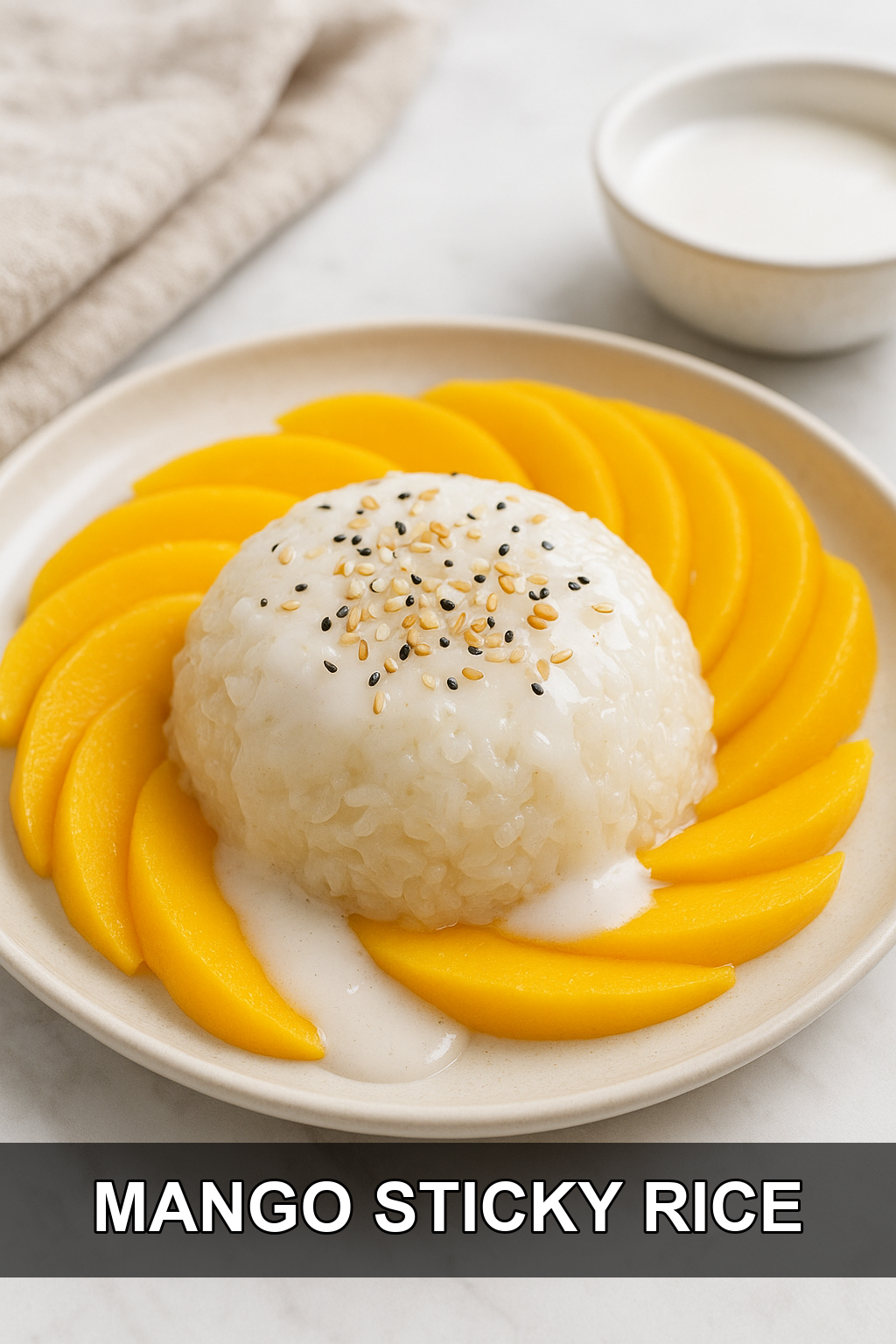
Mango sticky rice, known as khao niew mamuang in Thailand, is a classic Thai dessert made from glutinous (sticky) rice cooked and soaked in sweetened coconut milk, then paired with slices of ripe, juicy mango. It’s typically finished with a drizzle of coconut sauce and a sprinkle of toasted sesame or mung beans for crunch and contrast.
What makes this dessert so special is the balance of textures and flavors: the rice is chewy and rich, the mango is fresh and slightly tart, and the coconut sauce ties everything together with a silky sweetness. It’s a beloved street food dessert throughout Thailand and Southeast Asia, and it’s especially popular in the summer months when mangoes are at their sweetest.
Tips for Cooking and Prepping
#1: Use real sticky rice if you can find it
Glutinous rice (also labeled sticky rice or sweet rice) has a different starch structure than regular rice, which is what gives this dessert its signature chewy texture. Sushi rice or rice pudding rice works in a pinch, but true sticky rice gives the most authentic result.
#2: Rinse the rice thoroughly
Rinsing until the water runs clear removes excess surface starch and prevents the rice from turning gummy or clumping unevenly as it cooks.
#3: Let the rice fully absorb the coconut milk
Don’t rush the 30-minute soaking step after pouring the sweetened coconut milk over the cooked rice — this is when the rice really soaks up flavor and becomes rich and creamy throughout.
#4: Choose mangoes that are ripe but firm
Look for mangoes that give slightly when pressed but aren’t mushy. Ataulfo (honey) mangoes are a favorite for this dish because of their smooth, non-fibrous texture and natural sweetness.
#5: Whisk the cornflour slurry before adding it
Mix the cornflour with a small splash of water first so it dissolves smoothly into the sauce, preventing lumps in your coconut drizzle.
#6: Press the rice firmly when molding
Packing the rice tightly into your ramekin or bowl before flipping it out helps it hold that pretty dome shape when served.
Recipe Variations and Substitutes
You can swap sticky rice for sushi rice or rice pudding rice if that’s what’s available, though the texture will be slightly softer than traditional glutinous rice. For a fun twist, try adding a pinch of pandan extract to the coconut milk for a fragrant, slightly grassy note that’s traditional in many Southeast Asian versions, or swap the mango for ripe peaches or bananas when mangoes aren’t in season.
Serving Suggestions
Mango sticky rice is best served slightly warm or at room temperature, with the mango chilled for a refreshing contrast. Plate it simply on a small dish with the rice molded into a dome, extra coconut sauce drizzled over the top, and a sprinkle of toasted sesame and poppy seeds for a beautiful finishing touch.
Storing and Make-Ahead Tips
The rice and coconut sauce can be made a day ahead and stored separately in airtight containers in the fridge; just warm gently before serving since sticky rice firms up when chilled. Slice the mango fresh right before serving to keep it from browning or releasing too much juice.
FAQs
Can I make mango sticky rice without a rice cooker?
Yes, this recipe uses a simple stovetop method — just simmer the rice with water in a covered pan until the water is absorbed, no rice cooker needed.
What is the best rice to use for mango sticky rice?
Glutinous sticky rice (sometimes labeled sweet rice or sushi rice) is ideal because its high starch content creates that classic chewy, sticky texture.
Can I use frozen mango instead of fresh?
Fresh, ripe mango is best for texture and flavor, but thawed frozen mango can work in a pinch, just pat it dry first since it tends to release extra liquid.
Why is my sticky rice too hard or too dry?
This usually happens if the rice didn’t fully soak up the coconut milk mixture or was overcooked before the coconut milk was added; be sure to give it the full 30-minute soak.
Can I make the coconut sauce ahead of time?
Yes, the coconut sauce can be made a day in advance and stored in the fridge; simply reheat gently on the stove, stirring until it loosens back up.
Mango Sticky Rice Recipe
Prep time: 10 min | Cook time: 20 min | Total time: 30 min | Servings: 5
Ingredients
For the Sticky Rice
- 1 cup sticky rice (or sushi rice, rice pudding rice), 200 g
- 1 1/2 cup water, 375 ml
- 1 cup full-fat coconut milk (tinned), 250 ml
- 1/4 cup granulated sugar, 50 g
For the Coconut Sauce
- 1/2 cup coconut milk, 125 ml
- 3 tbsp granulated sugar
- 1 tsp cornflour (corn starch)
For Serving
- 1/2 tsp sesame seeds
- 1/2 tsp poppy seeds
- 2 ripe mangoes
Instructions
- Rinse the sticky rice with cold water until the water runs clear, to remove excess starch.
- Add the rinsed rice and 1 1/2 cups of water to a pan set over low to medium heat.
- Cover with a lid and cook until all the water is absorbed and the rice is tender.
- Remove the pan from the heat but keep the lid on for another 5 minutes to let the rice steam.
- In a separate pan, combine 1 cup coconut milk and 1/4 cup sugar and bring to a boil over medium heat.
- Pour the hot sweetened coconut milk over the cooked rice and stir well to combine.
- Set the rice aside for 30 minutes so it can soak up the coconut milk fully.
- To make the coconut sauce, add 1/2 cup coconut milk and 3 tbsp sugar to a pan over medium heat and bring to a boil.
- Mix the cornflour with a little water to form a slurry, then stir it into the pan.
- Cook, stirring, until the sauce thickens slightly, then remove from the heat.
- Divide the soaked rice between ramekins or small bowls, pressing down firmly with a spoon to pack it in.
- Place a small plate over each bowl and flip it over so the rice releases in a neat dome shape.
- Sprinkle sesame and poppy seeds over each rice dome, drizzle with the warm coconut sauce, and serve with fresh mango slices.
For an extra glossy presentation, brush a little coconut sauce directly onto the mango slices before serving. Leftover rice keeps well covered in the fridge for up to 2 days — just warm slightly before serving.
Leave a Reply
You must be logged in to post a comment.