
- What Is Mango Sticky Rice?
- Tips for Cooking and Prepping
- Recipe Variations and Substitutes
- Serving Suggestions
- Storing, Make-Ahead, and Freezing Tips
- FAQs
- Easy Mango Sticky Rice Recipe
If you’ve ever had mango sticky rice at a Thai restaurant and wondered if you could recreate it at home, I’ve got great news for you. This version skips the traditional overnight soak and steaming basket in favor of a simple rice cooker method, so you get that same sweet, creamy, coconutty dessert without the fuss.
What Is Mango Sticky Rice?
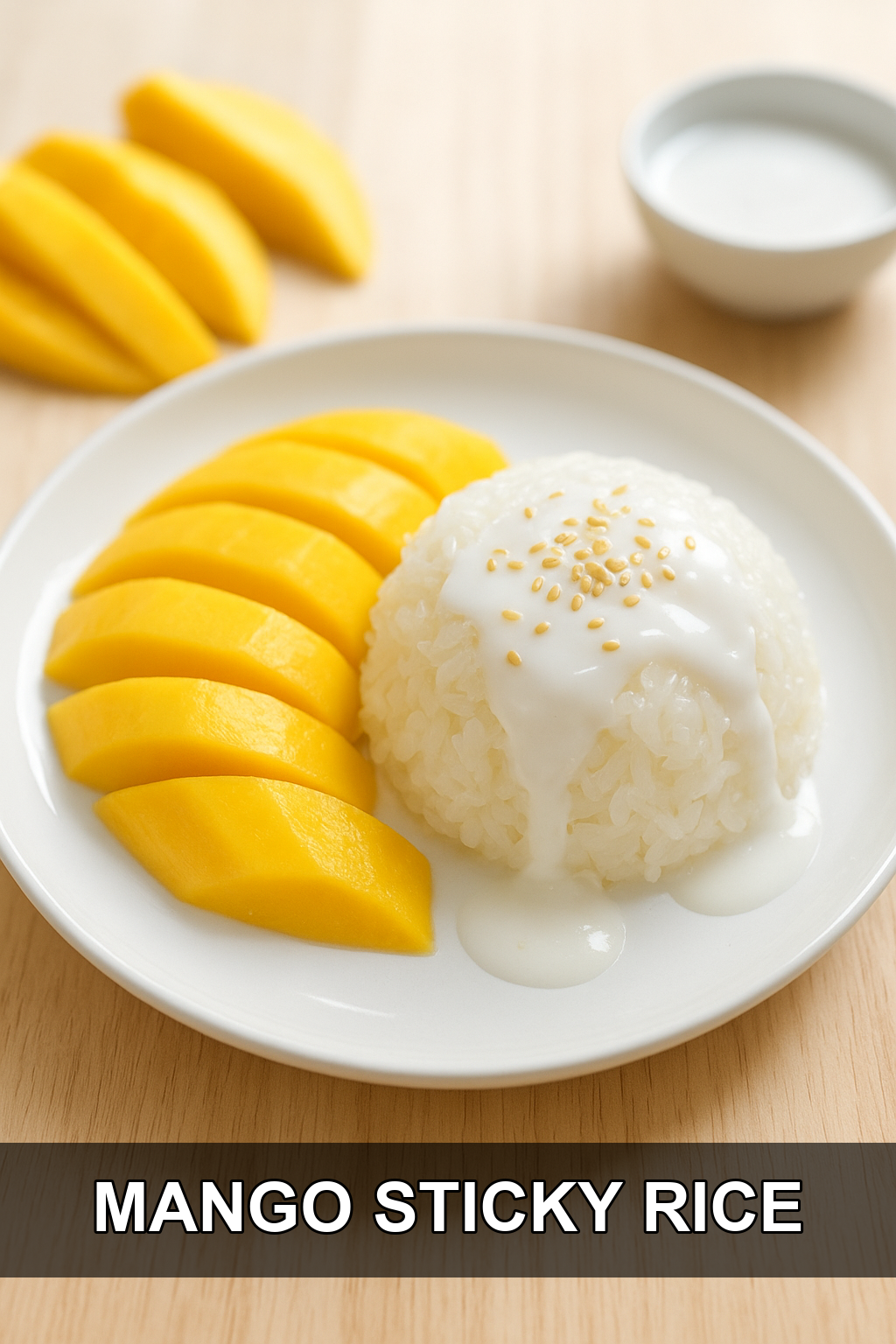
Mango sticky rice, known as khao niew mamuang in Thailand, is a beloved Thai dessert made from glutinous rice cooked with coconut milk, then paired with fresh ripe mango and a drizzle of sweet coconut cream sauce. It’s a staple at Thai restaurants and street food stalls, especially popular in the warmer months when mangoes are at their juiciest and most fragrant.
What makes this dessert so special is the balance of textures and flavors: chewy, slightly sticky rice soaked in rich coconut milk, contrasted against cool, silky slices of ripe mango. It’s simple in concept but incredibly satisfying, and it’s easier to make at home than most people expect.
Tips for Cooking and Prepping
#1: Rinse the rice until the water runs clear
Rinsing glutinous rice 6-7 times removes excess surface starch, which keeps the finished rice from turning gummy or overly clumped together.
#2: Skip the soak, but don’t skip watching the liquid
This method bypasses the traditional 8-hour soak by cooking the rice directly in coconut milk and water, but keep an eye on it since it may need an extra splash of water to fully cook through.
#3: Whisk constantly when thickening the coconut sauce
Adding cornstarch to hot coconut milk can create lumps quickly, so whisk continuously as it heats to get a silky, smooth sauce.
#4: Choose mangoes that are fully ripe
Look for mangoes that give slightly when pressed and smell fragrant at the stem; underripe mangoes will taste tart and won’t have that signature sweet, custardy texture.
#5: Cool the coconut sauce before serving
Letting the sauce cool slightly thickens it further and keeps it from immediately soaking into the rice, so your presentation stays cleaner longer.
Recipe Variations and Substitutes
While classic mango sticky rice sticks to coconut milk, sugar, and rice, you can experiment with palm sugar instead of white sugar for a deeper caramel note, or add a pinch of pandan extract to the rice for extra fragrance. Some cooks also swap sesame seeds for toasted mung beans as a garnish, which is a traditional touch found in many Thai dessert shops.
Serving Suggestions
Mango sticky rice is traditionally served as a standalone dessert, plated with the rice mounded to one side and mango slices fanned out beside it. For a fun presentation, try using a small rice mold or ice cream scoop to shape the rice into a neat dome before drizzling with sauce.
Storing, Make-Ahead, and Freezing Tips
This dessert truly shines when served fresh, since the rice will absorb the coconut sauce and lose its distinct texture over time. That said, you can store the rice and sauce separately in the refrigerator for up to 2 days and gently reheat the rice with a splash of coconut milk before serving.
FAQs
Can I make mango sticky rice without a rice cooker?
Yes, you can steam the rice in a traditional Thai steaming basket lined with cheesecloth, or cook it on the stovetop in a covered pot with a similar coconut milk and water ratio, just watch closely to avoid burning.
What type of rice should I use for mango sticky rice?
You’ll want glutinous rice, also labeled sweet rice or sticky rice, which has a higher starch content that gives it its signature chewy, sticky texture; regular long-grain or jasmine rice won’t work the same way.
Why is my sticky rice too hard or too dry?
This usually means the rice needed more liquid or cooking time; try adding a small splash of water and continuing to cook until the rice is tender and slightly translucent.
Can I use frozen mango instead of fresh?
Fresh ripe mango is best for texture and flavor, but if fresh isn’t available, thawed frozen mango slices can work in a pinch, just pat them dry before serving to avoid excess liquid on the plate.
How far in advance can I prep mango sticky rice for a party?
You can cook the rice and make the coconut sauce a few hours ahead and store them separately at room temperature or in the fridge, then reheat gently and assemble with fresh mango right before serving.
Easy Mango Sticky Rice Recipe
Prep time: 15 min | Cook time: 20 min | Total time: 35 min | Servings: 4
Ingredients
For the Sticky Rice
- 1 1/4 cups glutinous (sweet) rice
- 1/2 cup canned full-fat coconut milk (from a 14-ounce can, divided)
- 1 cup water (plus up to 1/4 cup more, if needed)
- 1/4 cup sugar (divided)
- 1/4 to 1/2 teaspoon salt
For the Coconut Cream Sauce
- Remaining heaping 1 cup canned full-fat coconut milk
- 1/4 cup sugar
- 1/2 teaspoon cornstarch
For Serving
- 2 ripe mangoes, sliced
- Sesame seeds, optional
Instructions
- Put the rice in a bowl and rinse 6 to 7 times in cold water until the water runs clear instead of milky, then drain well. This removes excess starchiness from the rice.
- Place the rinsed rice, 1/2 cup of canned coconut milk, 1 cup of water, 1/4 cup of sugar, and a pinch of salt into a rice cooker. Cook until most of the liquid is absorbed, adding up to 1/4 cup more water if needed. This method skips the traditional overnight soak and steaming step, cooking directly in the rice cooker instead, just be careful not to overcook the rice.
- While the rice cooks, make the coconut cream sauce: heat the remaining heaping 1 cup of coconut milk and 1/4 cup of sugar in a saucepan. As it starts to bubble, whisk in 1/2 teaspoon of cornstarch to slightly thicken the sauce, whisking until smooth. Set aside to cool.
- Peel the mangoes and slice along the center membrane, then place each mango half flat-side down and cut into slices.
- To serve, spoon the sticky rice onto a plate or bowl and generously drizzle with the coconut cream sauce. Arrange the sliced mangoes alongside the rice, then sprinkle with sesame seeds if desired.
- Serve warm or cold, ideally right away, since the rice will continue absorbing the coconut cream the longer it sits.
For the best texture and presentation, assemble each plate right before serving rather than letting the finished dessert sit for too long. Leftover rice and sauce can be stored separately in the fridge for up to 2 days.
Leave a Reply
You must be logged in to post a comment.