
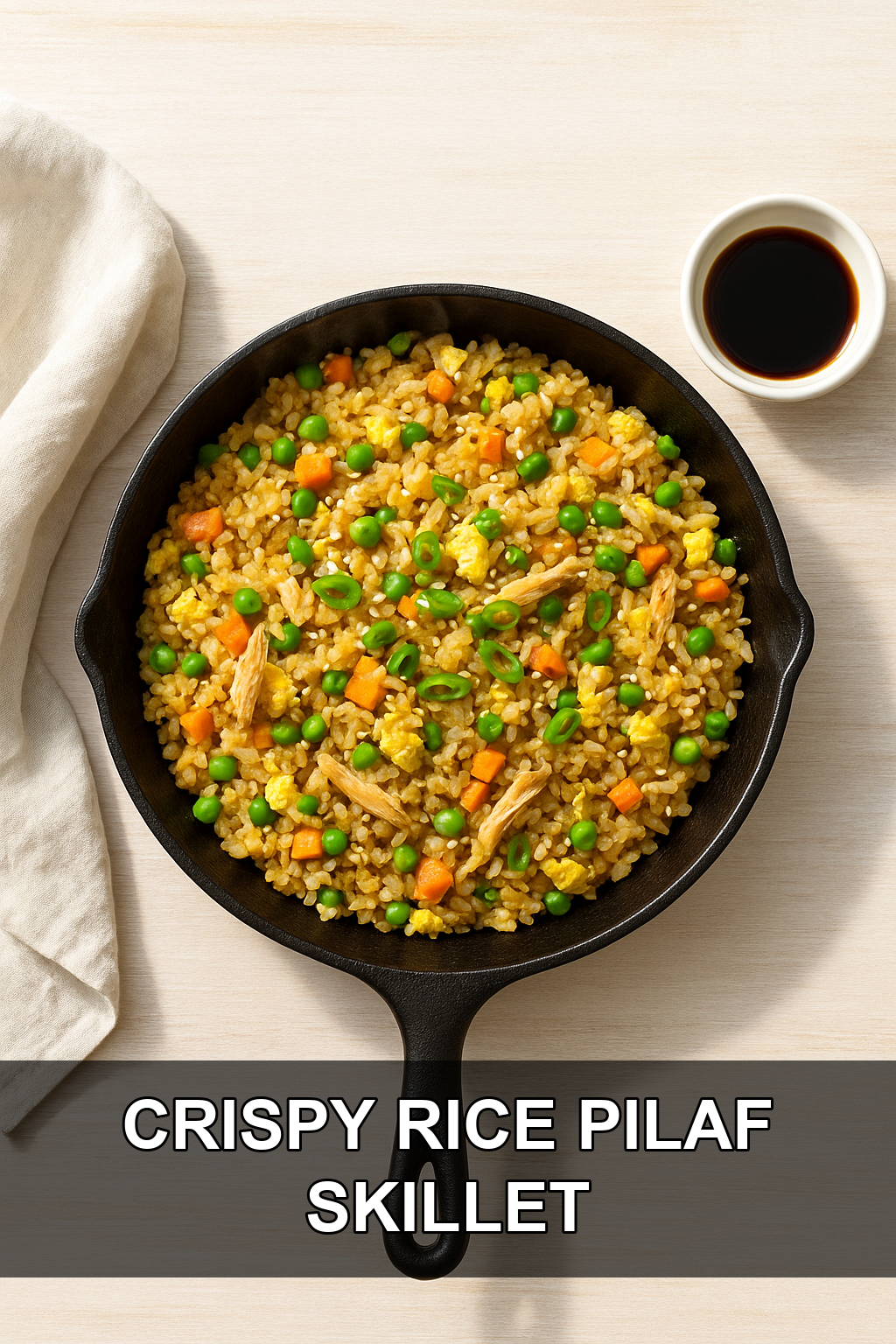
- What Is Leftover Rice Pilaf Reinvention?
- Tips for Cooking and Prepping
- Recipe Variations and Substitutes
- Serving Suggestions
- Storing, Make-Ahead, and Freezing Tips
- FAQs
- Crispy Leftover Rice Pilaf Skillet Recipe
That container of rice pilaf sitting in your fridge doesn’t have to become tomorrow’s sad reheated side dish. With a hot skillet and a few pantry staples, leftover rice pilaf transforms into a completely new meal that tastes even better than the original. Let’s talk about how to give your rice pilaf a delicious second life.
What Is Leftover Rice Pilaf Reinvention?
Rice pilaf is traditionally made by toasting rice in butter or oil before simmering it in seasoned broth, often with aromatics like onion, garlic, and herbs, plus add-ins like orzo, nuts, or dried fruit. Because the rice is already infused with flavor, it makes an incredible base for second-day cooking rather than a bland starting point like plain steamed rice.
“Reinventing” leftover rice pilaf simply means taking that already-seasoned rice and building a new dish around it — think crispy fried rice, stuffed vegetables, soups, casseroles, or savory pancakes. The pilaf’s existing flavor does a lot of the heavy lifting, so these reinvented meals come together fast and taste like you spent way more effort than you actually did.
Tips for Cooking and Prepping
#1: Cold rice fries crispier
Chilled, day-old rice pilaf has drier, firmer grains than fresh-cooked rice, which means it crisps up beautifully in a hot skillet instead of turning mushy or clumping together.
#2: Break up clumps before cooking
Rice pilaf tends to stick together as it cools, so gently fluff and separate the grains with a fork before adding it to the pan for even heating and better texture.
#3: Use high heat and don’t overcrowd the pan
A screaming-hot skillet with a thin, even layer of rice pilaf will develop golden, crispy edges; a crowded pan just steams the rice and leaves it soft.
#4: Taste before adding extra salt
Rice pilaf is already seasoned with broth, herbs, and sometimes salt, so taste it first and adjust your new dish’s seasoning accordingly to avoid an overly salty result.
#5: Add a splash of broth or water when reheating gently
If you’re using leftover pilaf in a soup, casserole, or steamed dish rather than a fried preparation, a splash of liquid helps rehydrate the grains so they don’t dry out.
Recipe Variations and Substitutes
Leftover rice pilaf is endlessly adaptable: turn it into a fried rice skillet with scrambled eggs and vegetables, stuff it into bell peppers or portobello mushrooms and bake, fold it into a creamy soup for extra body, or press it into patties and pan-fry them into crispy rice cakes. Swap the protein based on what you have — shredded chicken, crumbled sausage, tofu, chickpeas, or shrimp all work beautifully, and you can mix in whatever vegetables need using up, like spinach, peas, bell peppers, or mushrooms.
Serving Suggestions
Serve reinvented rice pilaf dishes as a full meal topped with a fried egg and a drizzle of hot sauce or soy sauce, or pair them with a simple green salad and a wedge of lemon for brightness. Rice pilaf cakes are also great alongside grilled meats or dolloped with a cooling yogurt sauce, while stuffed pepper versions pair nicely with a crisp cucumber salad.
Storing, Make-Ahead, and Freezing Tips
Store leftover rice pilaf (plain or reinvented) in an airtight container in the fridge for up to 4 days. For longer storage, spread cooked rice pilaf on a baking sheet to cool completely, then freeze in a freezer-safe bag for up to 2 months; thaw overnight in the fridge before reheating in a skillet with a little oil to restore texture.
FAQs
Can I use rice pilaf instead of plain rice for fried rice?
Yes, rice pilaf actually works wonderfully for fried rice because it’s already seasoned with aromatics and broth, giving your fried rice extra depth of flavor without additional effort.
How long does leftover rice pilaf last in the fridge?
Leftover rice pilaf stays fresh in an airtight container in the refrigerator for up to 4 days; always cool it quickly after cooking and reheat thoroughly before eating.
Why is my leftover rice pilaf mushy when I reheat it?
Mushiness usually happens when too much moisture is added during reheating or the rice is microwaved covered without ventilation; reheating in a dry, hot skillet instead helps restore a firmer, more pleasant texture.
Is it safe to reheat rice more than once?
It’s best to only reheat rice one time; divide leftovers into meal-sized portions before refrigerating so you’re not repeatedly cooling and reheating the same batch.
Can I freeze rice pilaf with vegetables and meat mixed in?
Yes, you can freeze fully cooked rice pilaf dishes with meat and vegetables, though the texture of the vegetables may soften slightly upon thawing; freeze in flat, sealed portions for the best results.
Crispy Leftover Rice Pilaf Skillet Recipe
Prep time: 10 min | Cook time: 15 min | Total time: 25 min | Servings: 4
Ingredients
For the Skillet
- 3 cups leftover rice pilaf, chilled
- 2 tablespoons olive oil or butter, divided
- 1 small onion, diced
- 2 cloves garlic, minced
- 1 cup mixed vegetables (peas, carrots, bell pepper), fresh or frozen
- 1 cup shredded cooked chicken or crumbled sausage (optional)
- 2 large eggs
- 2 tablespoons soy sauce or tamari
- 1 teaspoon sesame oil
- Salt and black pepper, to taste
For Topping
- 2 green onions, sliced
- 1 tablespoon toasted sesame seeds
- Hot sauce or extra soy sauce, for serving
Instructions
- Break up the chilled rice pilaf with a fork so the grains separate easily, and set aside.
- Heat 1 tablespoon of oil in a large nonstick or cast-iron skillet over medium-high heat. Add the onion and cook for 2-3 minutes until softened.
- Add the garlic and mixed vegetables, cooking for another 2-3 minutes until just tender.
- Push the vegetables to one side of the skillet and add the remaining oil to the empty space. Crack in the eggs and scramble until just set, then mix everything together.
- Stir in the cooked chicken or sausage, if using, along with the rice pilaf. Spread the mixture into an even layer and let it cook undisturbed for 3-4 minutes to develop a crispy bottom.
- Drizzle in the soy sauce and sesame oil, then stir everything together and cook for another 2 minutes, allowing more crispy bits to form throughout.
- Taste and season with salt and pepper as needed. Top with green onions and sesame seeds, then serve hot with extra soy sauce or hot sauce on the side.
For extra crunch, resist stirring too often — letting the rice sit undisturbed in the hot pan is the secret to getting those crispy, golden bits throughout.
Leave a Reply
You must be logged in to post a comment.