
- What Are Leftover Rice Noodles?
- Tips for Cooking and Prepping
- Recipe Variations and Substitutes
- Serving Suggestions
- Storing, Make-Ahead, and Freezing Tips
- FAQs
- Leftover Rice Noodle Stir-Fry Recipe
That container of leftover rice noodles sitting in your fridge doesn’t have to become a sad, clumpy mystery. With a hot pan, a splash of sauce, and a few pantry staples, you can transform them into a brand-new meal that tastes even better than the original takeout order.
What Are Leftover Rice Noodles?
Leftover rice noodles are simply cooked rice noodles — whether from pad thai, pho, or a homemade stir-fry — that didn’t get eaten the first time around. Made from rice flour and water, these noodles are naturally gluten-free and have a soft, slightly chewy texture that firms up and clumps together once refrigerated.
Rather than reheating them straight (which often leads to a mushy, sticky mess), leftover rice noodles are best transformed into a new dish entirely. A quick toss in a hot skillet with oil, sauce, and fresh add-ins revives their texture and gives them crispy, caramelized edges that plain reheating just can’t achieve.
Tips for Cooking and Prepping
#1: Loosen noodles with warm water first
Rice noodles clump tightly as they cool, so run them briefly under warm water or soak them for 30 seconds before cooking to separate the strands without making them soggy.
#2: Use high heat and a well-oiled pan
Rice noodles can stick and tear easily, so preheat your pan or wok until it’s very hot and coat it generously with oil to get those crispy, slightly charred edges.
#3: Don’t overcrowd the pan
Since the noodles are already cooked, they just need to be reheated and lightly crisped — a crowded pan steams them instead, so cook in batches if needed.
#4: Add sauce gradually
Leftover noodles have already absorbed moisture, so add sauce a tablespoon at a time and toss constantly to avoid an overly wet or gummy result.
#5: Chop mix-ins small and uniform
Since everything is cooking quickly over high heat, dice vegetables, proteins, and aromatics into small, even pieces so they heat through at the same rate as the noodles.
#6: Finish with fresh, raw toppings
Balance the richness of stir-fried noodles with a handful of fresh herbs, a squeeze of lime, or crunchy raw bean sprouts added right before serving.
Recipe Variations and Substitutes
This recipe is endlessly adaptable: swap chicken for shrimp, tofu, or beef, or make it vegetarian with extra mushrooms and bok choy. No fish sauce? Use soy sauce with a splash of rice vinegar, and if you’re out of rice noodles entirely, leftover lo mein or spaghetti noodles work in a pinch.
Serving Suggestions
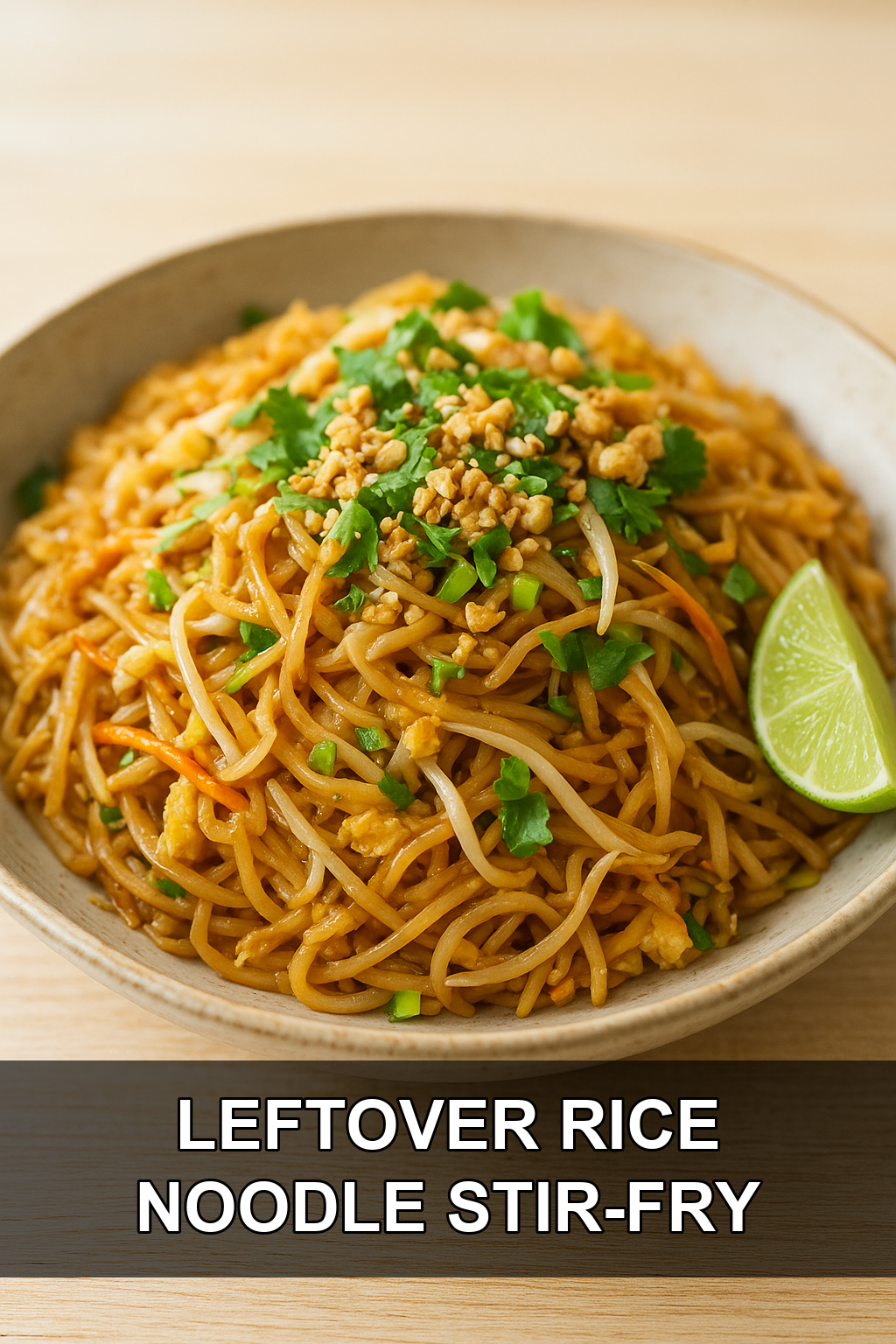
Serve your revived rice noodles hot, straight from the wok, garnished with chopped peanuts, cilantro, and a lime wedge. They pair beautifully with a simple cucumber salad, spring rolls, or a bowl of quick miso soup for a fuller meal.
Storing, Make-Ahead, and Freezing Tips
Store leftover cooked rice noodles (before or after this transformation) in an airtight container in the fridge for up to 4 days. Freezing isn’t recommended, as the noodles turn mushy and grainy once thawed, but the sauce components can be mixed ahead and stored separately for quick weeknight assembly.
FAQs
Can I reheat rice noodles in the microwave instead?
You can, but they tend to come out unevenly heated and gummy; adding a splash of water and covering them loosely helps, though pan-frying gives a much better texture and flavor.
Why do my leftover rice noodles turn mushy when I reheat them?
Rice noodles continue to absorb moisture as they sit, so reheating with too much liquid or on low heat can push them past their ideal texture — high, quick heat with minimal added liquid is key.
Can I use leftover rice noodles from pho instead of pad thai?
Absolutely — pho noodles work great here since they’re a similar rice noodle base; just drain them well first since they’re often stored in broth.
Is this dish gluten-free?
Yes, as long as you use tamari or a certified gluten-free soy sauce instead of regular soy sauce, the entire dish remains gluten-free.
How do I keep the noodles from breaking apart while stirring?
Use tongs or a wide spatula and toss gently rather than stirring vigorously, and make sure the noodles are fully separated and lightly oiled before they hit the pan.
Leftover Rice Noodle Stir-Fry Recipe
Prep time: 10 min | Cook time: 10 min | Total time: 20 min | Servings: 2
Ingredients
For the Stir-Fry
- 2 cups leftover cooked rice noodles
- 2 tablespoons vegetable oil, divided
- 1 egg, lightly beaten
- 1/2 cup cooked chicken, shrimp, or tofu, diced
- 1 cup bean sprouts
- 1/2 cup shredded carrot
- 2 green onions, sliced
- 2 cloves garlic, minced
For the Sauce
- 2 tablespoons soy sauce
- 1 tablespoon fish sauce
- 1 tablespoon brown sugar
- 1 tablespoon lime juice
- 1/2 teaspoon chili garlic sauce (optional)
For Serving
- Chopped peanuts
- Fresh cilantro
- Lime wedges
Instructions
- Run the leftover rice noodles briefly under warm water and gently separate the strands with your fingers; set aside.
- In a small bowl, whisk together soy sauce, fish sauce, brown sugar, lime juice, and chili garlic sauce; set the sauce aside.
- Heat 1 tablespoon of oil in a large skillet or wok over high heat. Pour in the beaten egg, scramble quickly, and remove to a plate.
- Add the remaining oil to the pan along with garlic, cooking for about 30 seconds until fragrant.
- Add the diced cooked protein and stir-fry for 1-2 minutes until heated through.
- Add the loosened rice noodles to the pan, tossing constantly to prevent sticking and to crisp the edges slightly, about 2-3 minutes.
- Pour the sauce over the noodles a little at a time, tossing to coat evenly.
- Add the carrots, bean sprouts, and scrambled egg back into the pan, tossing everything together for another minute.
- Remove from heat and top with green onions, chopped peanuts, and fresh cilantro.
- Serve immediately with lime wedges on the side.
For extra crispy noodles, let them sit undisturbed in the hot pan for 30-60 seconds before tossing to develop golden, slightly charred edges.
Leave a Reply
You must be logged in to post a comment.