
- What Is Leftover Cauliflower Rice Fried Rice?
- Tips for Cooking and Prepping
- Recipe Variations and Substitutes
- Serving Suggestions
- Storing, Make-Ahead, and Freezing Tips
- FAQs
- Leftover Cauliflower Rice Fried Rice Recipe
Got a container of cauliflower rice sitting in the fridge from last night’s dinner? Don’t toss it! With just a few pantry staples and ten minutes, you can transform that leftover cauliflower rice into a crave-worthy fried rice that tastes even better the second time around.
What Is Leftover Cauliflower Rice Fried Rice?
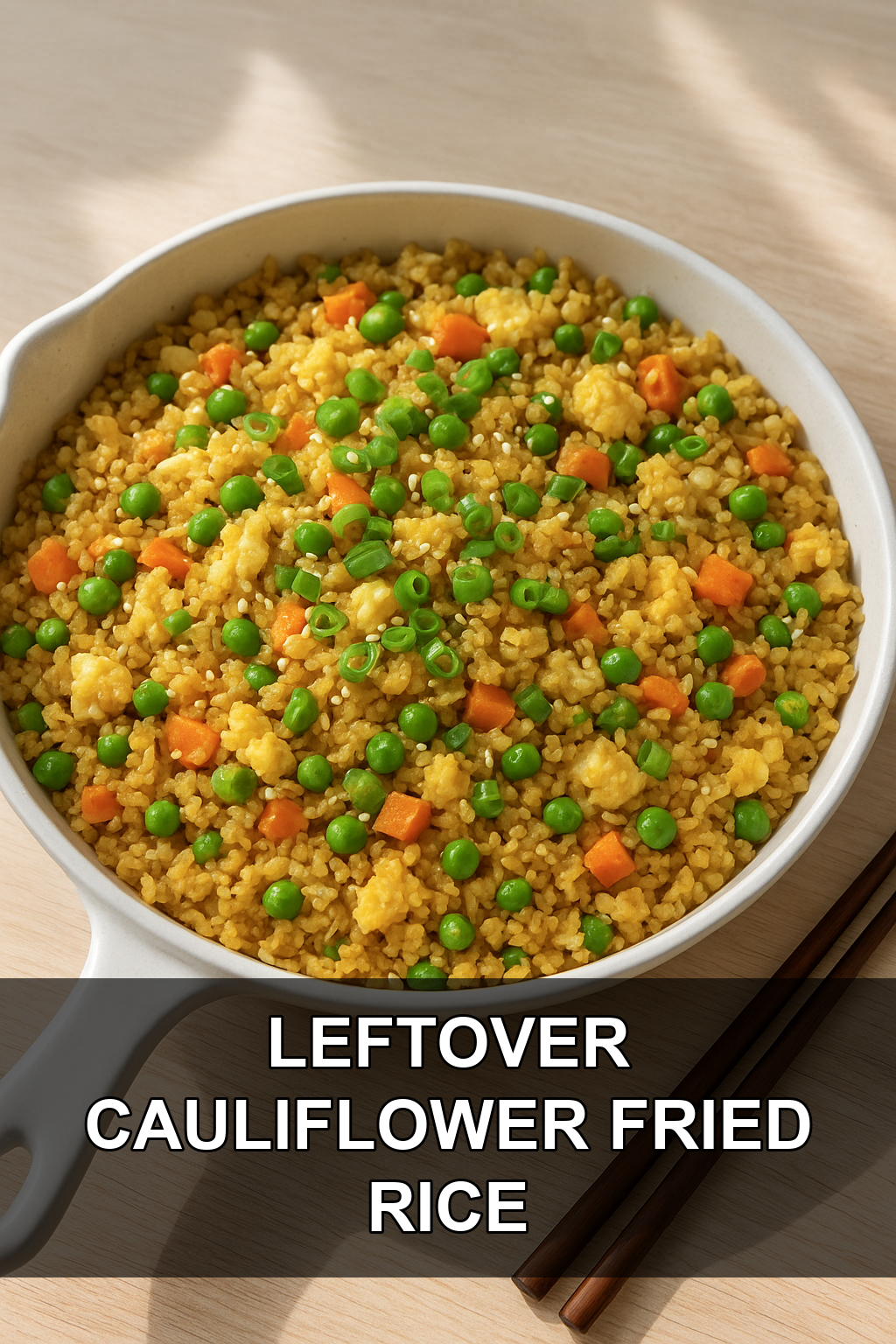
Leftover cauliflower rice fried rice is exactly what it sounds like: a quick, skillet-fried remix of already-cooked or riced cauliflower that’s been given new life with eggs, veggies, soy sauce, and a hot pan. Because cauliflower rice releases a lot of moisture when first cooked, day-old leftovers actually fry up better than fresh batches, since much of that excess water has already evaporated or drained off overnight.
This dish borrows its technique from classic fried rice, swapping grains for cruciferous veggies to create a low-carb, low-calorie side or light main that’s ready in minutes. It’s the kind of recipe that turns “what do I do with this” into “I’m making this again on purpose.”
Tips for Cooking and Prepping
#1: Let it dry out a little first
Leftover cauliflower rice tends to hold moisture, so spread it on a paper towel-lined plate for 5-10 minutes before cooking to help it fry instead of steam.
#2: Use a screaming-hot pan
A well-heated skillet or wok with a thin layer of oil is key to getting slightly crispy, caramelized edges instead of mushy, watery cauliflower rice.
#3: Don’t overcrowd the pan
Cook in batches if needed; too much cauliflower rice piled in at once traps steam and prevents that desirable fried-rice texture.
#4: Push ingredients to the side for eggs
Scramble eggs in a cleared section of the pan rather than mixing them in immediately, so they form soft curds instead of disappearing into the rice.
#5: Add sauce at the very end
Soy sauce and other liquid seasonings should go in during the last minute of cooking to prevent the cauliflower from turning soggy.
#6: Taste before adding salt
Leftover cauliflower rice may already be seasoned from its original dish, so taste first and adjust soy sauce or salt accordingly to avoid over-salting.
Recipe Variations and Substitutes
This recipe is endlessly adaptable: swap soy sauce for coconut aminos to keep it gluten-free, toss in cooked shrimp, chicken, or tofu for protein, or stir in kimchi and gochujang for a spicy Korean-inspired twist. Frozen peas, carrots, corn, or diced bell pepper all work beautifully if that’s what you have on hand, and a scrambled egg or two can easily become a fried rice omelet-style topping instead of being mixed in.
Serving Suggestions
Serve this leftover cauliflower rice fried rice as a light lunch on its own, or pair it with grilled teriyaki chicken, seared salmon, or crispy tofu for a heartier dinner. It also makes a great low-carb base under a fried egg, or a side dish alongside potstickers or spring rolls for a full takeout-style spread at home.
Storing, Make-Ahead, and Freezing Tips
Store any extra fried cauliflower rice in an airtight container in the fridge for up to 4 days, reheating in a hot skillet to revive the texture rather than using the microwave. While cauliflower rice can technically be frozen, its texture softens significantly upon thawing, so it’s best enjoyed fresh or refrigerated rather than frozen a second time.
FAQs
Can I use frozen cauliflower rice for this recipe?
Yes, but thaw and drain it well first, then pat it dry with paper towels to remove excess moisture before frying, since frozen cauliflower rice tends to be extra watery.
Why is my cauliflower rice mushy instead of crispy?
Mushy cauliflower rice usually means too much moisture, an overcrowded pan, or not enough heat; make sure your skillet is very hot and cook in smaller batches with a thin layer of oil.
Is leftover cauliflower rice still safe to eat the next day?
Yes, as long as it’s been stored in an airtight container in the refrigerator within two hours of cooking, leftover cauliflower rice is safe to eat for 3-4 days.
Can I add regular rice to stretch this dish further?
Absolutely, mixing in some leftover cooked white or brown rice is a great way to bulk up the dish while still using up your cauliflower rice, just adjust seasoning since you’ll have more volume to season.
What’s the best oil to use for frying cauliflower rice?
A neutral, high-smoke-point oil like avocado oil, vegetable oil, or peanut oil works best for achieving that classic fried rice sear without burning.
Leftover Cauliflower Rice Fried Rice Recipe
Prep time: 10 min | Cook time: 10 min | Total time: 20 min | Servings: 4
Ingredients
- 3 cups leftover cooked cauliflower rice, patted dry
- 2 tablespoons avocado oil or vegetable oil, divided
- 2 large eggs, lightly beaten
- 1/2 cup diced carrot
- 1/2 cup frozen peas
- 2 green onions, sliced, plus more for garnish
- 2 cloves garlic, minced
- 1 teaspoon fresh grated ginger
- 3 tablespoons soy sauce or coconut aminos
- 1 teaspoon toasted sesame oil
- Salt and pepper, to taste
- Sesame seeds, for garnish (optional)
Instructions
- Pat the leftover cauliflower rice dry with paper towels to remove excess moisture; set aside.
- Heat 1 tablespoon of oil in a large skillet or wok over medium-high heat. Pour in the beaten eggs and scramble until just set, then remove from the pan and set aside.
- Add the remaining tablespoon of oil to the same skillet. Add the diced carrot and cook for 2-3 minutes until slightly softened.
- Stir in the garlic, ginger, and green onions, cooking for about 30 seconds until fragrant.
- Add the cauliflower rice and frozen peas to the skillet, spreading it out in an even layer. Let it cook undisturbed for 2-3 minutes to develop some crispy edges, then stir and repeat once more.
- Return the scrambled eggs to the pan. Drizzle with soy sauce and sesame oil, then toss everything together until well combined and heated through.
- Season with salt and pepper to taste, garnish with extra green onions and sesame seeds, and serve immediately.
For extra protein, stir in cooked shrimp, diced chicken, or cubed tofu during the last few minutes of cooking. This recipe is very forgiving, so feel free to swap in whatever leftover veggies you have on hand.
Leave a Reply
You must be logged in to post a comment.