
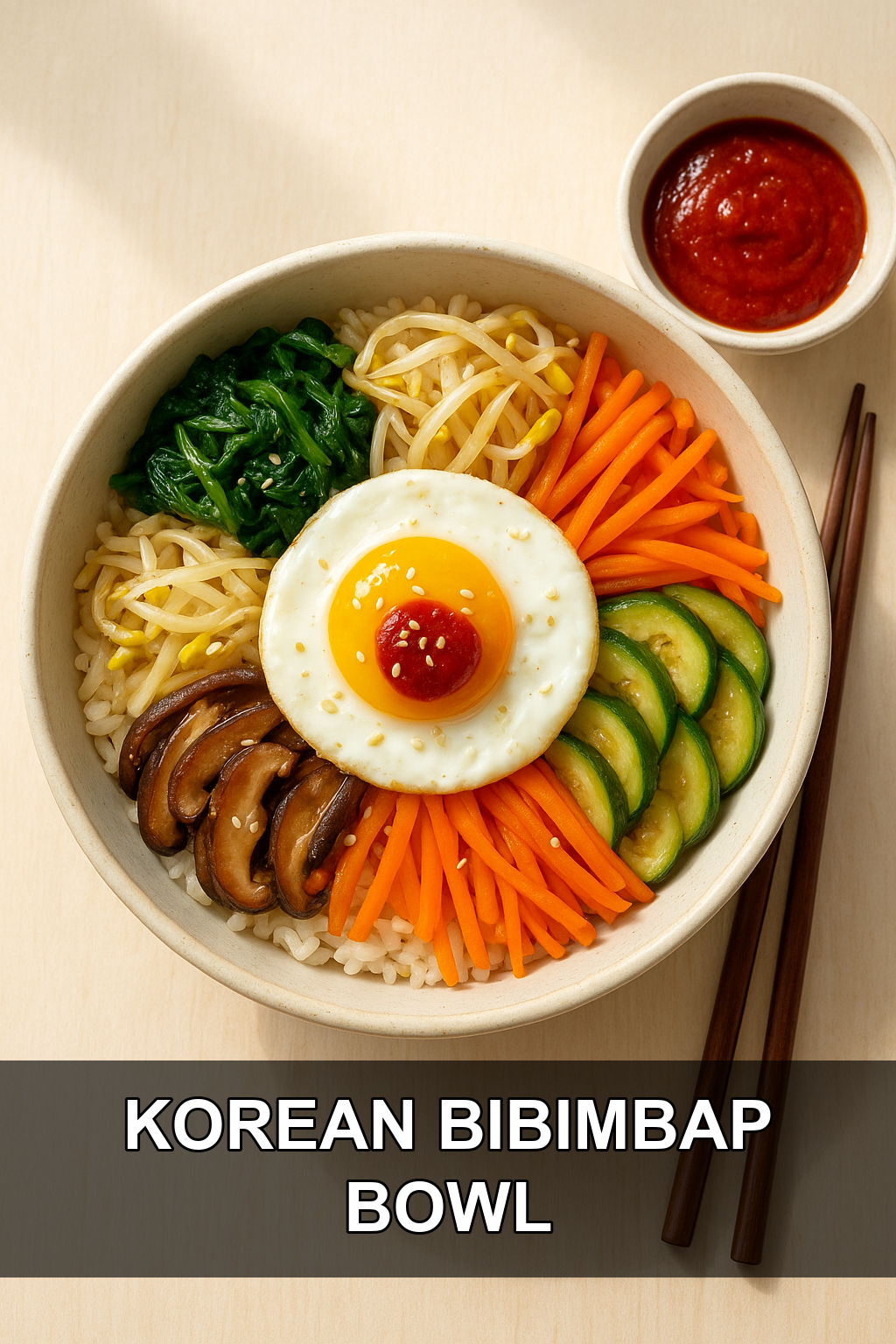
- What Is Bibimbap?
- Tips for Cooking and Prepping
- Recipe Variations and Substitutes
- Serving Suggestions
- Storing and Make-Ahead Tips
- FAQs
- Korean Bibimbap Recipe
If you’ve never made bibimbap at home, you’re in for a treat—this iconic Korean rice bowl is as fun to assemble as it is to eat. With its rainbow of seasoned vegetables, a spoonful of spicy gochujang, and a perfectly fried egg on top, it’s the kind of dish that feels special but is totally doable on a weeknight. Let’s break down exactly how to make it, step by step.
What Is Bibimbap?
Bibimbap literally translates to “mixed rice,” and that’s exactly what it is at its core: a bowl of warm rice topped with an assortment of seasoned vegetables, protein, and a fried egg, all brought together with a dollop of gochujang (Korean red pepper paste). It’s traditionally served in a hot stone bowl called a dolsot, which gives the rice on the bottom a crispy, toasted crust, though a regular bowl works just as well at home.
What makes bibimbap so beloved is its balance—crunchy, tender, savory, spicy, and comforting all in one dish. Every component is cooked separately and seasoned individually before being arranged on top of the rice, so when you dig in and mix everything together, each bite delivers a little bit of everything. It’s also wonderfully flexible, making it a favorite for using up whatever vegetables and proteins you have on hand.
Tips for Cooking and Prepping
#1: Salt and drain the cucumbers first
Sprinkling the cucumber strips with salt and letting them sit draws out excess moisture, which keeps your finished bibimbap from getting watery. Just be sure to rinse off the salt before serving.
#2: Don’t overcook the bean sprouts and spinach
Both should be blanched only briefly—30 to 60 seconds for the sprouts and 1 to 2 minutes for the spinach—so they stay tender-crisp rather than mushy. Cooling and squeezing out the water afterward keeps the seasoning from getting diluted.
#3: Cook each vegetable separately
Sautéing the carrots, mushrooms, and zucchini one at a time in the same pan (rather than all together) lets each vegetable keep its own distinct flavor and texture instead of turning into a mixed stir-fry.
#4: Season as you go
A little salt, sesame oil, and sesame seeds on each component individually is what gives bibimbap its layered flavor, so don’t skip seasoning each vegetable on its own before assembling the bowl.
#5: Use day-old rice if possible
Slightly firmer, day-old rice holds its shape better under all the toppings and won’t turn mushy once you start mixing everything together.
Recipe Variations and Substitutes
Bibimbap is endlessly adaptable, which is part of its charm. Swap in whatever vegetables you have on hand—radish, bell peppers, or bracken fern (gosari) are all traditional options—and choose your protein based on preference: thinly sliced marinated beef (bulgogi-style), ground beef, tofu, or simply a fried egg for a vegetarian version. You can also make it vegan by skipping the egg and meat entirely and adding extra sesame oil for richness.
Serving Suggestions
Bibimbap is a complete meal on its own, but it pairs nicely with a side of kimchi, a light cucumber salad, or a simple miso or seaweed soup to round things out. Set out extra gochujang and sesame oil at the table so everyone can adjust the spice and richness to their own taste before mixing everything together.
Storing and Make-Ahead Tips
Because each component is cooked and seasoned separately, bibimbap is a great make-ahead meal—just store the rice, vegetables, and any protein in separate airtight containers in the fridge for up to 3-4 days. Reheat the rice and vegetables gently before assembling, and cook the egg fresh right before serving for the best texture.
FAQs
Can I make bibimbap vegetarian or vegan?
Yes, simply skip the meat and, for a vegan version, the fried egg as well. The vegetables, rice, and gochujang provide plenty of flavor and texture on their own, or you can add extra tofu for protein.
What is gochujang and can I substitute it?
Gochujang is a fermented Korean red chili paste that’s slightly sweet, salty, and spicy, and it’s essential to bibimbap’s signature flavor. If you can’t find it, a mix of sriracha with a touch of miso or brown sugar can approximate the flavor in a pinch, though the taste won’t be quite the same.
Do I need a stone bowl to make bibimbap?
No, a hot stone bowl (dolsot) is traditional and creates a crispy rice crust, but a regular large bowl works perfectly well for home cooking. If you want a crispy bottom, you can press the rice into a hot, lightly oiled skillet for a few minutes before adding toppings.
Can I meal prep bibimbap for the week?
Absolutely. Cook and season all the vegetables and rice in advance, store them separately in the fridge, and assemble individual bowls throughout the week, cooking a fresh egg each time for the best result.
What’s the best rice to use for bibimbap?
Medium-grain Korean or Japanese rice is ideal because it’s slightly sticky and holds together well under the toppings, but any short or medium-grain white rice will work in a pinch.
Korean Bibimbap Recipe
Prep time: 30 min | Cook time: 40 min | Total time: 70 min | Servings: 4
Ingredients
For the Rice and Vegetables
- 2 cups medium-grain Korean rice, or Japanese rice
- 1 large cucumber, sliced into thin strips
- 1 1/2 cups bean sprouts, parboiled and squeezed of excess water
- 2 teaspoons salt, divided
- 2 tablespoons sesame oil, divided
- Dash sesame seeds
- 1 1/2 cups spinach, parboiled and squeezed of excess water
- 2 carrots, julienned
- 4 shiitake mushrooms, rehydrated if dried, sliced
- 1 zucchini, sliced into thin strips
For Serving
- 1/2 pound meat, optional
- Fried egg, optional
- Gochujang, or red pepper paste, for serving
Instructions
- Gather the ingredients.
- Cook the rice in a rice cooker or on the stovetop.
- Place the cucumbers in a strainer set over a bowl and sprinkle with 1/2 teaspoon salt. Toss with your hands and let stand for about 20 minutes. Rinse under running water, then drain.
- Bring a medium pot of water to a boil. Add the bean sprouts and blanch for 30-60 seconds, until slightly wilted at the tips but still crunchy. Scoop out with a slotted spoon and transfer to a small bowl. Cool until safe enough to handle, then gently squeeze of excess water over the sink. Season bean sprouts with 2 teaspoons sesame oil, 1/2 teaspoon salt, and a dash of sesame seeds.
- Return the pot of water to a boil and add the spinach in handfuls. Cook until the spinach has wilted, 1-2 minutes. Scoop out with a slotted spoon and transfer to a medium bowl. Cool until safe enough to handle, then squeeze the spinach of excess water over the sink. Season with the remaining 2 teaspoons sesame oil, the remaining 1/2 teaspoon of salt, and the remaining sesame seeds.
- Add a drizzle of oil to a pan over medium-high heat. Sauté the carrots with a dash of salt until tender, but still crunchy, about 2 minutes. Remove from pan and set aside.
- Next, sauté the mushrooms with a dash of salt, adding more oil if needed. Cook until soft and lightly browned, about 5 minutes. Remove from pan and set aside.
- Add a drizzle of oil to the pan. Sauté the zucchini with a dash of salt until tender, about 4 minutes.
- Place the cooked rice in a large bowl and arrange vegetables on top.
- If desired, beef, egg, or both can be placed in the center.
- Serve each helping with small bowls of gochujang and sesame oil.
Feel free to swap in whatever vegetables or protein you have on hand—bibimbap is meant to be flexible and is a great way to use up leftover produce.
Leave a Reply
You must be logged in to post a comment.