
- What Is Bibimbap?
- Tips for Cooking and Prepping
- Recipe Variations and Substitutes
- Serving Suggestions
- Storing and Make-Ahead Tips
- FAQs
- Korean Bibimbap Recipe
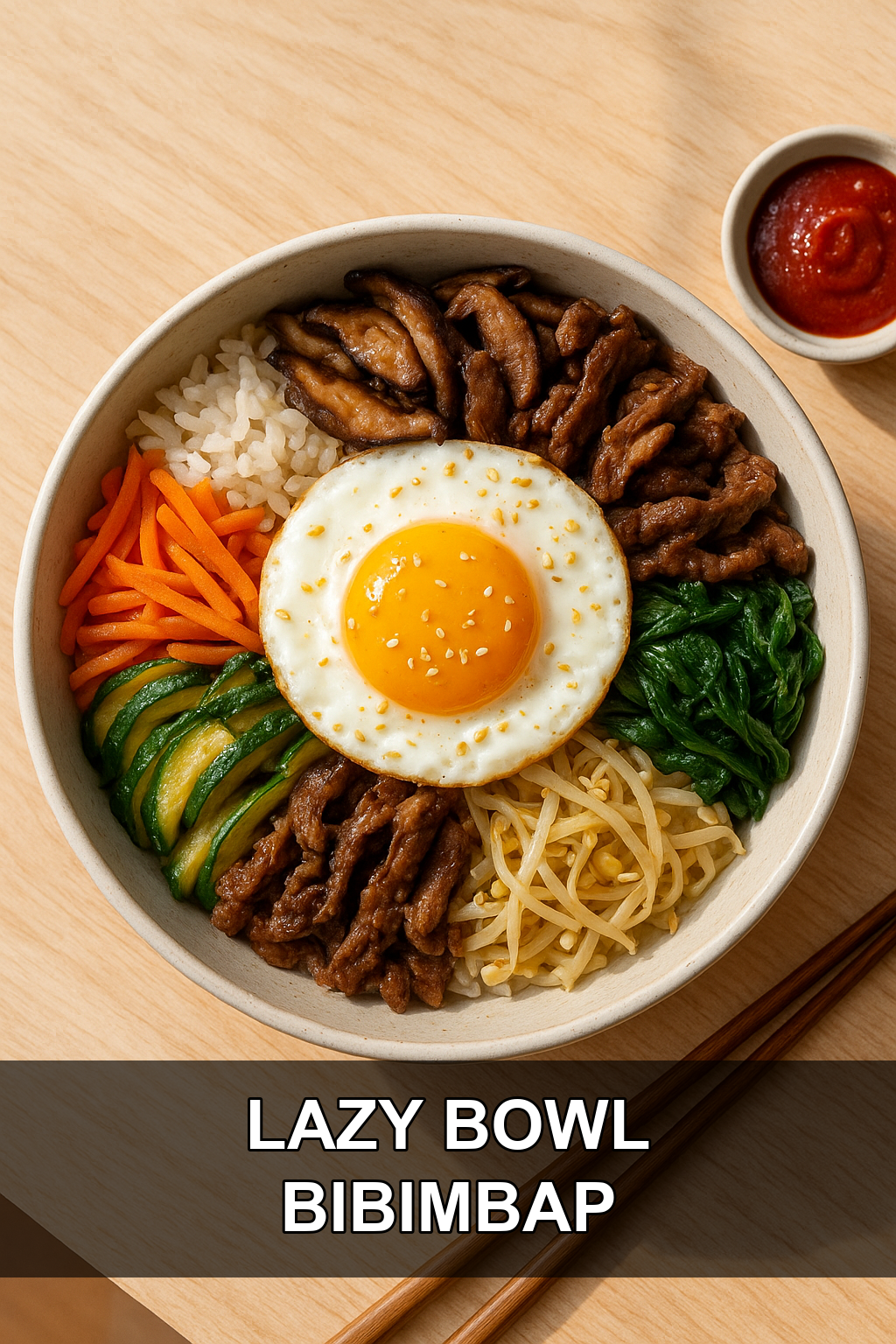
Bibimbap looks like a labor of love, and honestly, it kind of is — but this lazy bowl version breaks it into simple, manageable steps so you can pull it off any night of the week. Think tender marinated beef, a rainbow of seasoned veggies, a jammy fried egg, and a spicy-sweet gochujang sauce, all piled onto warm rice. It’s the kind of dinner that feels fancy but is really just a bunch of quick little tasks done back to back.
What Is Bibimbap?
Bibimbap literally translates to “mixed rice,” and that’s exactly what it is — a bowl of warm rice topped with an assortment of seasoned vegetables, protein (often beef), a fried or raw egg, and a spoonful of gochujang-based sauce. Once it hits the table, everything gets mixed together so every bite gets a little bit of everything: savory, sweet, spicy, and fresh.
It’s a beloved staple of Korean home cooking, traditionally served in a hot stone bowl (dolsot) that crisps up the rice on the bottom, though a regular bowl works just as well for a weeknight version. Part of the appeal is how customizable it is — you can swap vegetables based on what’s in season or in your crisper drawer, and it’s a fantastic way to use up small amounts of lots of different produce in one satisfying meal.
Tips for Cooking and Prepping
#1: Cook the vegetables in batches, not all at once
Each vegetable has a different cook time and flavor profile, so sautéing them separately (even in the same skillet) keeps their colors and textures distinct instead of turning everything into a mushy mix.
#2: Slice the beef thin, and freeze it slightly first
Popping the tenderloin or steak in the freezer for 15-20 minutes before slicing makes it much easier to get those thin, quick-cooking strips that soak up the marinade fast.
#3: Don’t skip squeezing out the spinach and bean sprouts
These two ingredients hold a surprising amount of water, and squeezing them dry after cooking prevents a watery, diluted bowl once everything is mixed together.
#4: Salt the carrots and zucchini first if you have time
A quick 20-minute salt-and-drain step pulls out excess moisture so these vegetables stay crisp-tender in the skillet instead of steaming and going soft.
#5: Use two skillets to speed things up
Since most components only need a few minutes of cooking, running two skillets side by side cuts your active cooking time nearly in half.
#6: Let the beef marinate as long as possible
Even 30 minutes makes a difference, but marinating overnight gives the grated apple, garlic, and ginger time to really tenderize and flavor the meat.
Recipe Variations and Substitutes
This bibimbap is easy to adapt to what you have on hand or your dietary preferences. Swap the beef for thinly sliced chicken, pork, or even crispy tofu for a vegetarian version (just use soy sauce instead of fish sauce in the bean sprouts). You can also rotate the vegetables seasonally — mushrooms, radish, cucumber, and bell peppers all work beautifully in place of what’s listed here.
Serving Suggestions
Serve bibimbap bowls with extra gochujang sauce on the side so everyone can spice their bowl to taste, plus a small dish of kimchi for extra tang and crunch. A cup of light miso or seaweed soup rounds out the meal nicely without competing with the bold flavors in the bowl.
Storing and Make-Ahead Tips
Bibimbap is actually a great make-ahead meal since most components are served at room temperature or lightly warm. Store the rice, beef, and each vegetable separately in airtight containers in the fridge for up to 3-4 days, then reheat gently and top with a freshly fried egg when ready to serve. The sauce keeps well in a sealed jar in the fridge for up to two weeks.
FAQs
Can I make bibimbap ahead of time for meal prep?
Yes — cook and store the rice, beef, and vegetables separately in the fridge for up to 4 days, then assemble and top with a fresh fried egg right before eating.
What can I substitute for gochujang?
If you can’t find gochujang, a mix of miso paste with a bit of chili powder or sriracha and a touch of sugar can approximate the sweet-spicy flavor, though the texture and depth will be slightly different.
Do I have to use all the vegetables listed?
Not at all — the vegetable mix is flexible, so feel free to use three or four of your favorites instead of all five if you’re short on time or ingredients.
Is bibimbap traditionally served hot or cold?
It’s typically served with warm rice and freshly fried egg, while the vegetables are meant to be room temperature or just slightly warm, so don’t worry about keeping every component piping hot.
What’s the best rice for bibimbap?
Short grain white rice is traditional because its sticky texture helps hold the mixed ingredients together nicely, but any warm cooked rice you have on hand will work in a pinch.
Korean Bibimbap Recipe
Prep time: 40 min | Cook time: 30 min | Total time: 70 min | Servings: 4
Ingredients
For the Bowls
- 4 cups cooked white rice, preferably short grain
- 4 eggs, fried to your liking
- 2 tsp sesame seeds
- Sesame oil, toasted, for drizzling
For the Beef and Marinade
- 250 g/8oz beef tenderloin or thick steak, very finely sliced
- 1/4 green apple, grated using a box grater
- 3 garlic cloves, minced
- 1 tsp minced ginger
- 1 tbsp soy sauce, light or all purpose
- 1 tbsp honey (or brown sugar)
- 2 tsp sesame oil, toasted
- 2 tsp vegetable oil, for cooking
For the Vegetables
- 2 large carrots, cut into 5 x 0.5cm/2 x 1/5″ batons
- 2 large zucchini, cut into 5 x 0.5cm/2 x 1/5″ batons
- 1 bunch spinach, cut into 5cm/2″ lengths
- 8 large dried shiitake mushrooms
- 4 cups bean sprouts
- 1/2 tsp salt (for salting carrot and zucchini)
- 1/2 tsp salt (for salting carrot and zucchini, split into two portions)
- 1.5 tsp soy sauce, light or all purpose (for shiitake)
- 1/4 tsp white sugar (for shiitake)
- 2 tsp minced garlic (for shiitake)
- 2 tsp sesame oil, toasted (for bean sprouts)
- 1 tsp minced garlic (for bean sprouts)
- 1/4 tsp fish sauce (sub soy sauce, for bean sprouts)
- 1/2 tsp minced garlic (for spinach)
- Salt, to taste (for spinach)
- 6 tsp vegetable oil, divided (for cooking shiitake, carrot, zucchini, spinach)
For the Bibimbap Sauce
- 4 tbsp gochujang paste
- 2 tbsp mirin
- 2 tbsp rice vinegar
- 1.5 tsp soy sauce
- 3 tsp white sugar
- 1 garlic clove, finely grated
- 2.5 tsp sesame oil, toasted
Instructions
- Make the Bibimbap Sauce: mix all sauce ingredients together in a bowl until the sugar is dissolved. Set aside.
- Make the marinade for the beef in a bowl, then add the sliced beef and toss to coat. Marinate for 30 minutes up to overnight in the fridge.
- Heat 2 tsp vegetable oil in a large skillet over high heat. Let excess marinade drip off the beef, then add it to the skillet. Cook for 3-4 minutes until cooked through with some caramelized bits, then remove from the skillet and keep warm.
- Soak the dried shiitake mushrooms in a large bowl of boiling water for 30 minutes, or until fully rehydrated. Drain, squeeze out excess water, then slice.
- Optional: Place the carrot and zucchini in separate bowls, sprinkle each with 1/4 tsp salt, toss, and let sit for 20 minutes, then drain off any excess liquid.
- If possible, get two skillets going at once to speed up cooking the vegetables.
- Cook the shiitake: heat 2 tsp oil in a skillet over medium-high heat. Cook the mushrooms for 2 minutes, then add 1.5 tsp soy sauce, 1/4 tsp sugar, and 1/2 tsp minced garlic. Stir for 1 minute, then remove.
- Cook the carrot: add 2 tsp oil to the skillet and cook the carrot batons until just tender, about 5-8 minutes, then remove.
- Cook the zucchini the same way as the carrot, for about 4 minutes, then remove.
- Cook the spinach: heat 2 tsp vegetable oil with a splash of sesame oil in a skillet. Sauté the spinach until just starting to wilt, add 1/2 tsp minced garlic and salt to taste, stir, then remove. Once cool, squeeze out excess liquid.
- Prepare the bean sprouts: simmer in water for 5 minutes or steam in the microwave for 3 minutes until floppy. Drain and rinse under cold water, then squeeze out excess liquid by hand. Toss with 2 tsp sesame oil, 1 tsp minced garlic, and 1/4 tsp fish sauce.
- Let the vegetables cool slightly — they’re meant to be served at room temperature or just slightly warm, not piping hot.
- Fry the eggs in a skillet to your liking (runny yolks are traditional and delicious).
- To assemble, place warm rice in each serving bowl, then arrange the vegetables and beef on top in sections. Finish with a fried egg on top of each bowl.
- Sprinkle with sesame seeds and a drizzle of toasted sesame oil. Serve with the Bibimbap Sauce on the side or spooned over the top, and mix everything together before eating.
For a vegetarian version, swap the beef for pan-fried tofu and use soy sauce instead of fish sauce in the bean sprouts. Leftover components store well separately in the fridge for easy meal prep throughout the week.
Leave a Reply
You must be logged in to post a comment.