
- What Is Kimchi Fried Rice?
- Tips for Cooking and Prepping
- Recipe Variations and Substitutes
- What to Serve with Kimchi Fried Rice
- Storing and Reheating Leftovers
- FAQs
- Kimchi Fried Rice Recipe
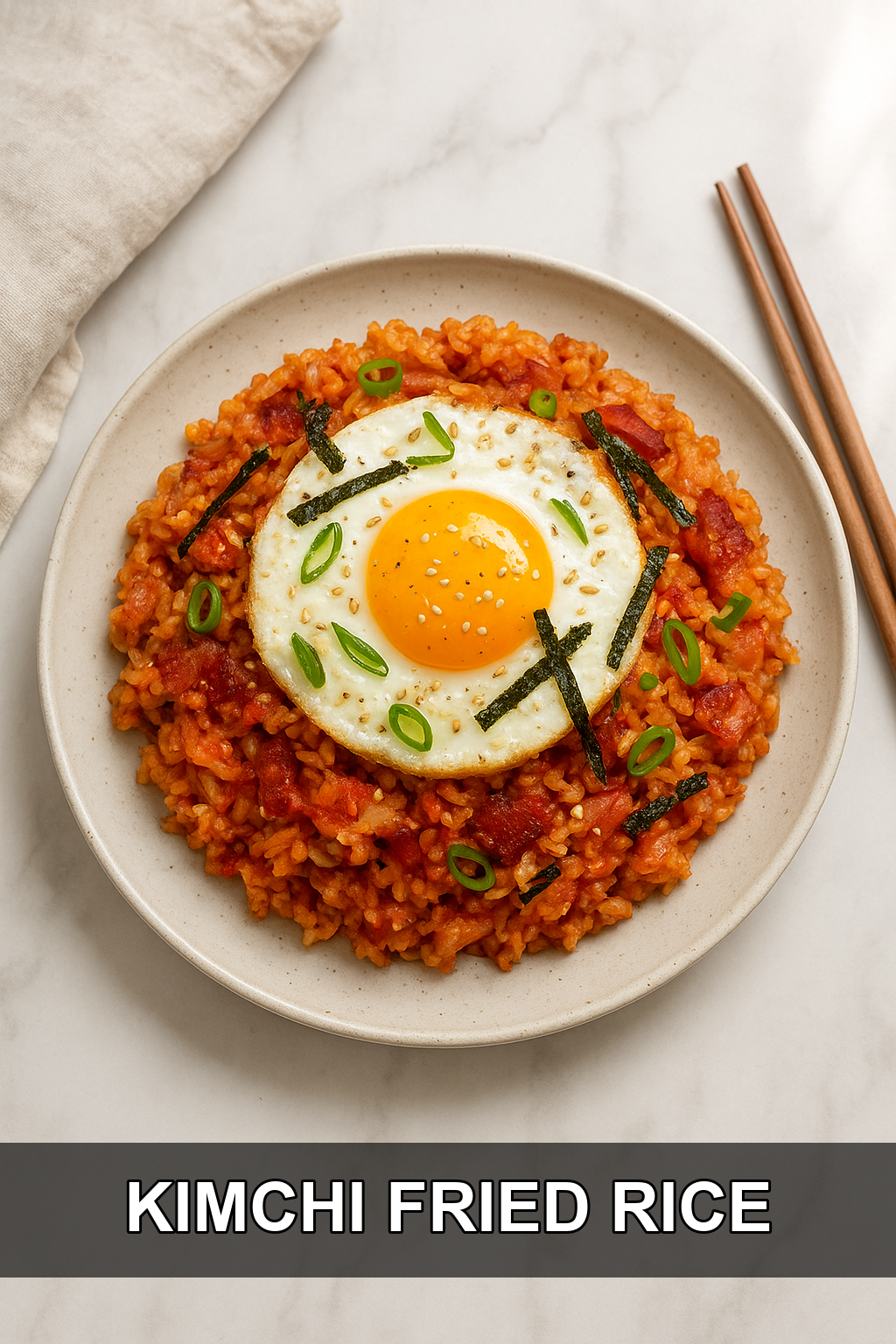
When you need dinner on the table fast and you want big, punchy flavor, kimchi fried rice is the answer. It’s smoky, spicy, savory, and topped with a golden runny egg that makes every bite feel a little indulgent – all in about 15 minutes flat.
What Is Kimchi Fried Rice?
Kimchi fried rice, known as kimchi bokkeumbap in Korean, is a beloved home-cooking staple built around one simple idea: don’t waste good kimchi. As kimchi ferments and gets older, it turns sourer and more pungent, which makes it perfect for frying up with rice, since the tanginess mellows and deepens as it cooks.
This version leans into that tradition with crispy bacon for smokiness, a splash of kimchi juice for extra depth, and a sunny-side-up egg on top that adds richness the moment you break the yolk. It’s the kind of dish found in Korean households and casual eateries alike – humble, fast, and endlessly satisfying.
Tips for Cooking and Prepping
#1: Use older, well-fermented kimchi
Kimchi that’s been sitting in the fridge for a few weeks has more sour, developed flavor and softer texture, both of which are ideal for frying. Fresh, crunchy kimchi works in a pinch, but it won’t give you the same depth.
#2: Don’t skip the kimchi juice
That funky liquid pooling at the bottom of the kimchi container is packed with flavor and helps loosen and season the rice as it fries. Save it every time you finish a jar of kimchi so you always have some on hand.
#3: Start with cold, day-old rice
Freshly steamed rice is too soft and steamy, which leads to clumpy, mushy fried rice. Cold rice that’s been refrigerated overnight separates easily and fries up with much better texture.
#4: Render the bacon fat fully
Letting the bacon get halfway cooked before adding the kimchi means its fat mingles with the kimchi as it cooks, building a smoky base flavor throughout the whole dish.
#5: Keep the egg yolk runny
A sunny-side-up egg with a jammy yolk is traditional for a reason – breaking it into the hot rice right before eating adds a silky, rich sauce that ties everything together.
Recipe Variations and Substitutes
This recipe is very forgiving, so feel free to make it your own. Swap the bacon for Spam, diced pork belly, or leave it out entirely and use extra sesame oil for a vegetarian version (just use a plant-based kimchi, since many kimchis contain fish sauce or shrimp). Add extra vegetables like zucchini, carrots, or scallions for more texture, or top with cheese for a melty, indulgent twist that’s popular in Korean home cooking.
What to Serve with Kimchi Fried Rice
Kimchi fried rice is hearty enough to be a meal on its own, but it pairs beautifully with a side of extra kimchi, a light cucumber salad, or Korean banchan like seasoned spinach or bean sprouts. A bowl of quick miso or egg drop soup on the side rounds things out nicely for a fuller spread.
Storing and Reheating Leftovers
Store leftover fried rice (without the egg) in an airtight container in the fridge for up to 3 days. Reheat in a hot pan with a splash of water or a drizzle of oil to loosen it up, and fry a fresh egg to top it right before serving.
FAQs
Can I use fresh kimchi instead of aged kimchi?
Yes, but the flavor will be milder and less tangy. If using fresh kimchi, add an extra splash of kimchi juice or a small pinch of sugar and vinegar to mimic that deeper fermented flavor.
Can I freeze kimchi fried rice?
Yes, the rice mixture (without the egg) freezes well for up to a month. Freeze it flat in a freezer bag, then reheat directly from frozen in a hot pan with a splash of water until warmed through.
Why is my fried rice mushy?
This usually happens when the rice is too fresh or warm when it hits the pan. Using cold, day-old rice and frying over medium-high heat helps each grain stay separate and slightly crisp.
Is kimchi fried rice very spicy?
It has a mild to moderate kick depending on your kimchi’s spice level, but frying mellows the heat quite a bit. If you’re sensitive to spice, use a milder kimchi or reduce the amount slightly.
Can I make this vegetarian?
Absolutely – just omit the bacon, use extra sesame oil or a neutral oil for richness, and make sure your kimchi is a vegetarian-friendly variety without fish sauce or shrimp paste.
Kimchi Fried Rice Recipe
Prep time: 5 min | Cook time: 10 min | Total time: 15 min | Servings: 4
Ingredients
- 1 cup kimchi (cut into thumbnail size pieces, *see note)
- 150 g bacon (5.3 ounces, cut into thumbnail size pieces)
- 1 pack enoki mushrooms (200 g / 7 ounces, root removed, rinsed and drained, optional)
- 3 cups steamed short grain rice
- 4 x-large eggs (cooked sunny side up or per your preference)
- 1/2 tsp minced garlic
- 1/4 cup kimchi juice (*see note – this liquid is from the bottom of the kimchi container)
- 1/2 Tbsp sesame oil
- 1 Tbsp cooking oil
For Garnish (Optional)
- 1 Tbsp toasted sesame seeds
- 1/2 stalk green onion, thinly sliced
- Roasted seasoned seaweed, shredded
Instructions
- On medium-high heat, preheat a pan or wok. Once heated, add the cooking oil and spread it evenly with a spatula.
- Add the minced garlic to the pan and stir for about 10 seconds. Add the bacon and stir until it’s half-cooked.
- Add the kimchi to the pan and stir until it’s about 80% cooked.
- If using, add the enoki mushrooms and mix well for a few seconds. Reduce the heat to medium or medium-low.
- Add the rice and kimchi juice. Mix everything together thoroughly until well combined.
- Add the sesame oil and stir to combine, then remove the pan from the heat.
- Plate the kimchi fried rice and garnish with sesame seeds, green onions, and seaweed strips, if using. Top each serving with a cooked sunny-side-up egg and enjoy immediately.
For the best flavor and texture, use kimchi that’s been fermenting for at least a few weeks, and be sure to save the juice from the bottom of the container – it’s essential for seasoning the rice.
Leave a Reply
You must be logged in to post a comment.