
- What Is Kimchi Fried Rice?
- Tips for Cooking and Prepping
- Recipe Variations and Substitutes
- Serving Suggestions
- Storing, Make-Ahead, and Freezing Tips
- FAQs
- Kimchi Fried Rice Recipe: Quick & Easy Weeknight Meal
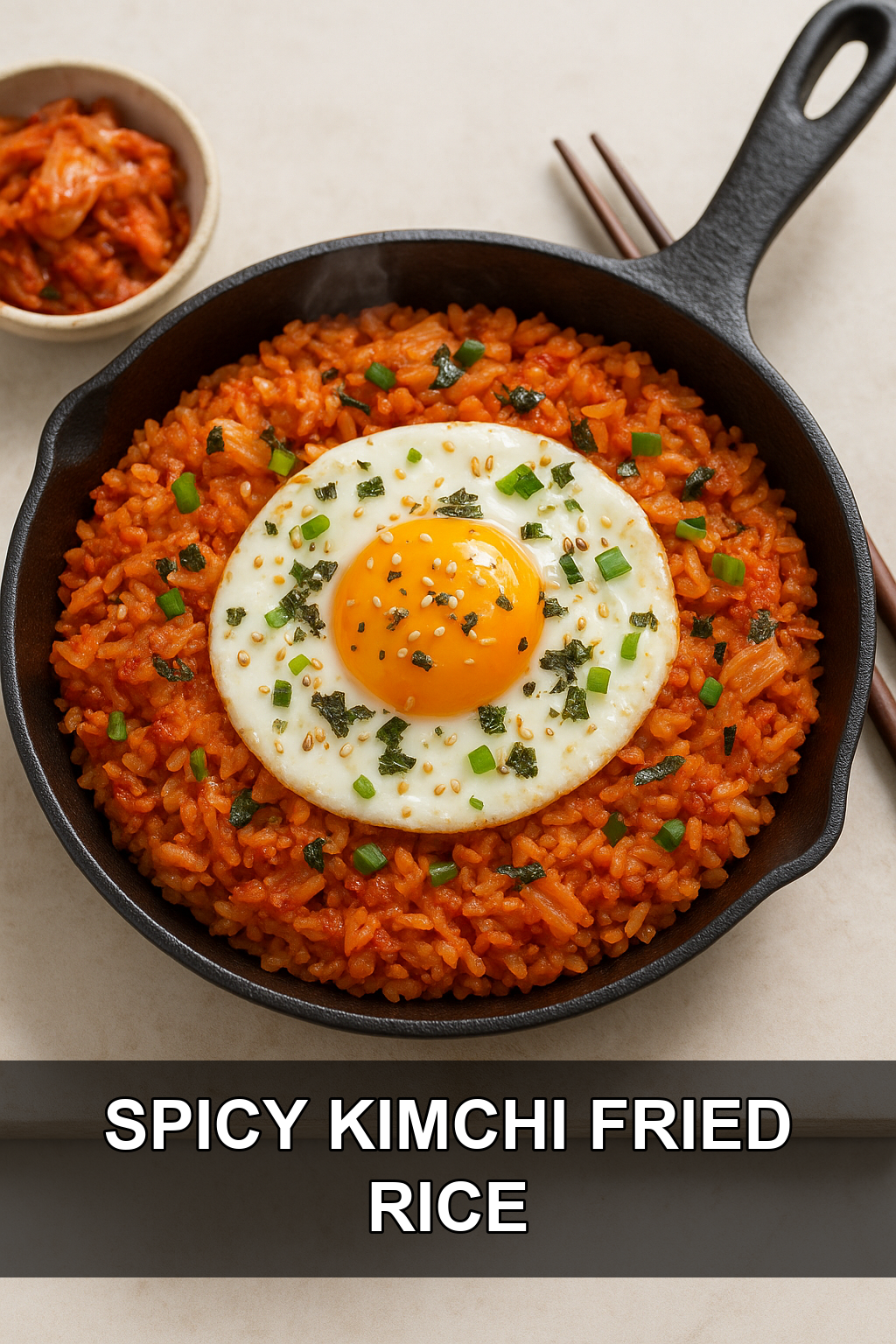
Some nights call for a dinner that comes together fast without sacrificing flavor, and this kimchi fried rice is exactly that. With tangy aged kimchi, a spoonful of gochujang, and a crispy sunny-side-up egg on top, it’s the kind of meal that turns leftover rice into something craveable in under 15 minutes.
What Is Kimchi Fried Rice?
Kimchi fried rice, known as kimchi bokkeumbap in Korean, is a beloved comfort dish built around one star ingredient: fermented, well-aged kimchi. As kimchi sits and ferments, it develops a deeper, tangier, almost effervescent flavor that becomes incredibly rich when cooked down in a hot pan with garlic, chili paste, and a splash of its own brine.
This dish is a classic way to use up kimchi that’s gotten a little too sour to eat straight from the jar, along with day-old rice that’s slightly dried out. Traditionally topped with a fried egg, sesame seeds, and seaweed flakes, kimchi fried rice is humble, endlessly adaptable, and a staple in Korean home kitchens for good reason.
Tips for Cooking and Prepping
#1: Use aged, sour kimchi for the best flavor
Fresh kimchi is milder and won’t give you that deep, tangy punch this dish is known for. Older, well-fermented kimchi (and its juice) is what makes the fried rice taste authentic.
#2: Always use cold, day-old rice
Freshly cooked rice is too moist and will turn mushy when fried. Cold rice from the fridge has firmer, separated grains that crisp up nicely and soak up the sauce evenly.
#3: Don’t skip the kimchi juice
That brine sitting in your kimchi container is packed with fermented flavor and adds moisture and tang that plain kimchi alone can’t replicate.
#4: Cook the kimchi before adding rice
Sautéing the kimchi with garlic, gochujang, soy sauce, and sugar first mellows its rawness and deepens the flavor before it ever touches the rice.
#5: Add sesame oil at the very end
Sesame oil has a low smoke point and loses its fragrant, nutty aroma if cooked too long. Drizzle it in right before you turn off the heat.
Recipe Variations and Substitutes
While this recipe uses canned tuna for an easy, pantry-friendly protein, you can easily swap it for diced Spam, cooked bacon, ground pork, shredded chicken, or crispy tofu for a vegetarian twist. For extra veggies, try stirring in chopped onion, shredded carrot, or frozen peas along with the kimchi. If you like it spicier, add an extra spoonful of gochujang or a dash of gochugaru; if you prefer it milder, cut back on the chili paste and add a touch more sugar.
Serving Suggestions
Kimchi fried rice is a complete meal on its own thanks to the protein, veggies, and rice all in one bowl, but it’s even better with a runny sunny-side-up egg on top that mixes into the rice as you eat. Serve it alongside a simple cucumber salad, extra kimchi on the side, or a quick miso soup for a heartier spread.
Storing, Make-Ahead, and Freezing Tips
Leftover kimchi fried rice keeps well in an airtight container in the fridge for up to 4 days, making it a great meal-prep option. Reheat it in a skillet with a splash of water or oil to loosen the grains, and add a freshly fried egg on top rather than reheating it with the egg already mixed in. This dish also freezes well for up to 2 months; just thaw it overnight in the fridge before reheating.
FAQs
What’s the best kimchi to use for fried rice?
Look for kimchi that’s been in the fridge for a few weeks and tastes noticeably sour or fizzy. This aged, well-fermented kimchi has the deep tang that makes kimchi fried rice taste authentic, unlike fresh kimchi which is milder and crunchier.
Can I use fresh rice instead of day-old rice?
You can, but it’s not ideal since fresh rice tends to be sticky and moist, which can make the fried rice clumpy or mushy. If you only have fresh rice, spread it on a baking sheet and let it cool and dry out for 15-20 minutes before using it.
Is kimchi fried rice very spicy?
This recipe has a moderate kick from the gochujang and kimchi, but it’s easy to adjust. Reduce the gochujang for a milder dish or add extra for more heat, depending on your spice tolerance.
Can I make this recipe vegetarian?
Yes, simply swap the tuna for crispy tofu, extra vegetables, or a plant-based protein, and double check that your kimchi and gochujang are vegetarian, since some brands use fish sauce or shrimp paste.
Why is my kimchi fried rice mushy?
Mushy fried rice usually happens when the rice is too fresh or too warm when it’s added to the skillet. Always use cold, day-old rice and break up any clumps before adding it to the pan for the best texture.
Kimchi Fried Rice Recipe: Quick & Easy Weeknight Meal
Prep time: 5 min | Cook time: 10 min | Total time: 15 min | Servings: 2
Ingredients
For the Fried Rice
- 3 tbsp cooking oil
- 3 cloves garlic, minced
- 1 green onion, chopped (divided)
- 1 can tuna, drained (or your choice of protein)
- 1 cup aged kimchi, chopped
- 2 tbsp kimchi juice (from kimchi container)
- 2 tbsp gochujang (Korean chili paste)
- 2 tbsp soy sauce
- 1/2 tsp sugar
- 2 cups cooked rice, cooled or day-old
- 1/2 tbsp sesame oil
For Topping
- Sunny-side-up egg
- Chopped green onion
- Toasted sesame seeds
- Seaweed flakes
Instructions
- Heat 3 tablespoons of cooking oil in a large skillet over medium heat. Add the minced garlic and half of the chopped green onion, cooking until fragrant and aromatic.
- Add the drained tuna and chopped aged kimchi to the skillet. Mix well to combine all ingredients evenly.
- Stir in 2 tablespoons of gochujang, 2 tablespoons of soy sauce, and 1/2 teaspoon of sugar. Continue to cook and mix the kimchi mixture for about 2 minutes until heated through and the flavors blend.
- Reduce the heat to low. Add 2 cups of cooled or day-old cooked rice along with 2 tablespoons of kimchi juice. Stir thoroughly to coat each grain of rice with the sauce and kimchi mixture.
- Drizzle 1/2 tablespoon of sesame oil over the rice and mix just before removing the skillet from heat. Garnish with a sunny-side-up egg, the remaining chopped green onion, toasted sesame seeds, and seaweed flakes if desired. Serve immediately and enjoy!
For a vegetarian version, swap the tuna for crispy tofu or extra vegetables. Adjust the amount of gochujang to control the spice level to your liking.
Leave a Reply
You must be logged in to post a comment.