
- What Is Kimchi Fried Rice?
- Tips for Cooking and Prepping
- Recipe Variations and Substitutes
- Serving Suggestions
- Storing, Make-Ahead, and Freezing Tips
- FAQs
- Kimchi Fried Rice Recipe
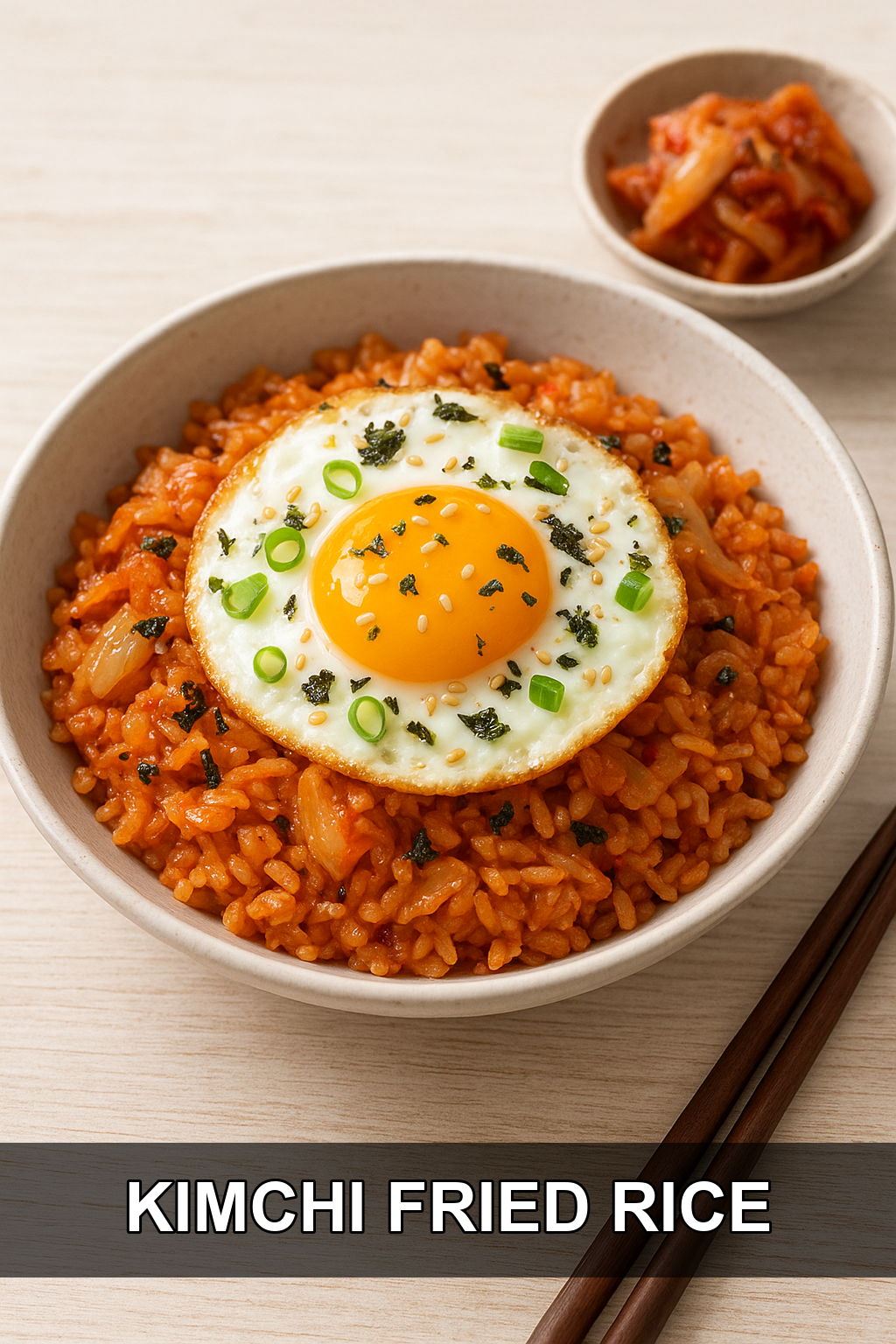
There’s a reason kimchi fried rice shows up in nearly every Korean home kitchen: it’s fast, endlessly customizable, and turns a jar of tangy fermented cabbage into something craveable. This version leans into deep, savory flavor with gochujang, kimchi juice, and a runny sunny-side-up egg on top, and it comes together in about 15 minutes using ingredients you probably already have on hand.
What Is Kimchi Fried Rice?
Kimchi fried rice, known as kimchi bokkeumbap in Korean, is a beloved comfort dish built around one key ingredient: well-fermented, sour kimchi. As kimchi ages in the fridge, it develops a deeper, tangier flavor that’s actually less ideal for eating fresh but perfect for cooking, since heat mellows the sourness and concentrates its umami punch.
Traditionally, this dish was a clever way to use up kimchi that had gone past its prime, along with leftover rice that needed a second life. Home cooks would toss both into a hot pan with whatever protein was available, a spoonful of gochujang for heat, and a drizzle of sesame oil, then finish it all off with a fried egg. It’s humble, budget-friendly food that somehow always tastes like more than the sum of its parts.
Tips for Cooking and Prepping
#1: Use rice that’s a day old (or older)
Freshly cooked rice is too moist and will turn mushy when fried. Cold, day-old rice has dried out slightly and its grains separate easily, giving you that classic fried rice texture.
#2: Reach for the sourest kimchi in your fridge
Well-aged, tangy kimchi has way more flavor than fresh kimchi once it hits the pan. If your kimchi is still young, let it sit out at room temperature for a day or two before cooking with it.
#3: Don’t skip the kimchi juice
That brine at the bottom of the container is packed with fermented flavor. Adding a couple tablespoons to the rice helps season it evenly and adds moisture without making it soggy.
#4: Cook the kimchi before adding rice
Sautéing the kimchi with gochujang, soy sauce, and sugar first lets the sugars caramelize slightly and mellows the raw sourness, which builds a much deeper flavor base than dumping everything in at once.
#5: Keep the heat at medium, not high
Gochujang and sugar can scorch quickly if the pan is too hot. A moderate flame gives you enough sizzle to develop flavor without burning the sauce.
Recipe Variations and Substitutes
This recipe is written with canned tuna, but it’s really just a starting template. Swap in diced Spam, ground pork, chopped bacon, shredded chicken, or tofu for a different protein, or leave it out entirely for a vegetarian version (just double check your gochujang and kimchi brands, since some contain fish sauce or shrimp). You can also stir in a handful of frozen peas and carrots, or top the finished dish with a slice of melty cheese if you want a richer, more indulgent spin.
Serving Suggestions
Kimchi fried rice is hearty enough to be a full meal on its own, especially topped with that sunny-side-up egg, but it also pairs beautifully with a side of crispy mandu (dumplings) or a light cucumber salad to balance the spice. A cup of miso soup or a simple egg drop soup on the side rounds things out nicely for a more complete Korean-inspired dinner.
Storing, Make-Ahead, and Freezing Tips
Leftover kimchi fried rice keeps well in an airtight container in the fridge for up to 4 days, making it a great meal-prep option. Reheat it in a skillet over medium heat with a small splash of water to loosen the grains, and add a fresh fried egg on top when serving. It also freezes surprisingly well for up to 2 months; just thaw overnight in the fridge before reheating so the texture stays as close to fresh as possible.
FAQs
What kind of kimchi is best for fried rice?
Older, well-fermented kimchi with a strong sour tang works best because cooking mellows that sourness into deep flavor. Fresh, mild kimchi will make the dish taste flat by comparison.
Can I make kimchi fried rice without gochujang?
Yes, you can skip it or substitute a bit of gochugaru (Korean chili flakes) mixed with a touch of extra soy sauce and sugar, though the flavor will be slightly less rich and glossy without the paste.
Why is my kimchi fried rice mushy?
Mushy fried rice almost always comes down to using freshly cooked, warm rice instead of cold, day-old rice. The extra moisture in fresh rice makes it clump and steam rather than fry.
Is kimchi fried rice very spicy?
It has a moderate kick from the gochujang and kimchi, but it’s more savory-tangy than fiery. You can easily reduce the gochujang or use a milder kimchi if you’re sensitive to heat.
What protein works best in this recipe?
Canned tuna is a quick, budget-friendly option used in this version, but Spam, bacon, pork belly, chicken, or tofu are all popular and delicious substitutes.
Kimchi Fried Rice Recipe
Prep time: 5 min | Cook time: 10 min | Total time: 15 min | Servings: 2
Ingredients
- 3 tbsp cooking oil
- 3 cloves garlic, minced
- 1 green onion, chopped (divided)
- 1 can tuna, drained (or choice of protein)
- 1 cup aged kimchi, chopped
- 2 tbsp kimchi juice from the kimchi container
- 2 tbsp Gochujang (Korean chili paste)
- 2 tbsp soy sauce
- 1/2 tsp sugar
- 2 cups cooked rice, cooled or day-old
- 1/2 tbsp sesame oil
For Serving
- Sunny-side-up egg
- Additional green onion
- Toasted sesame seeds
- Seaweed flakes
Instructions
- Heat cooking oil in a large skillet over medium heat. Add minced garlic and half of the chopped green onion. Sauté until fragrant and aromatic, approximately 1-2 minutes.
- Stir in drained tuna (or your choice of protein) and chopped aged kimchi. Combine well and cook until heated through, about 2 minutes.
- Add Gochujang, soy sauce, and sugar to the skillet. Mix thoroughly and cook for about 2 minutes, allowing the kimchi to cook through and flavors to meld.
- Reduce heat to low. Add cooled or day-old cooked rice along with kimchi juice. Stir continuously to evenly coat rice grains with the sauce and incorporate all ingredients.
- Drizzle sesame oil over the fried rice, stir once more, then remove from heat. Serve garnished with a sunny-side-up egg, remaining green onion, toasted sesame seeds, and/or seaweed flakes as desired.
For the best texture, use rice that has been refrigerated overnight so the grains stay separate and fry up nicely instead of turning mushy.
Leave a Reply
You must be logged in to post a comment.