
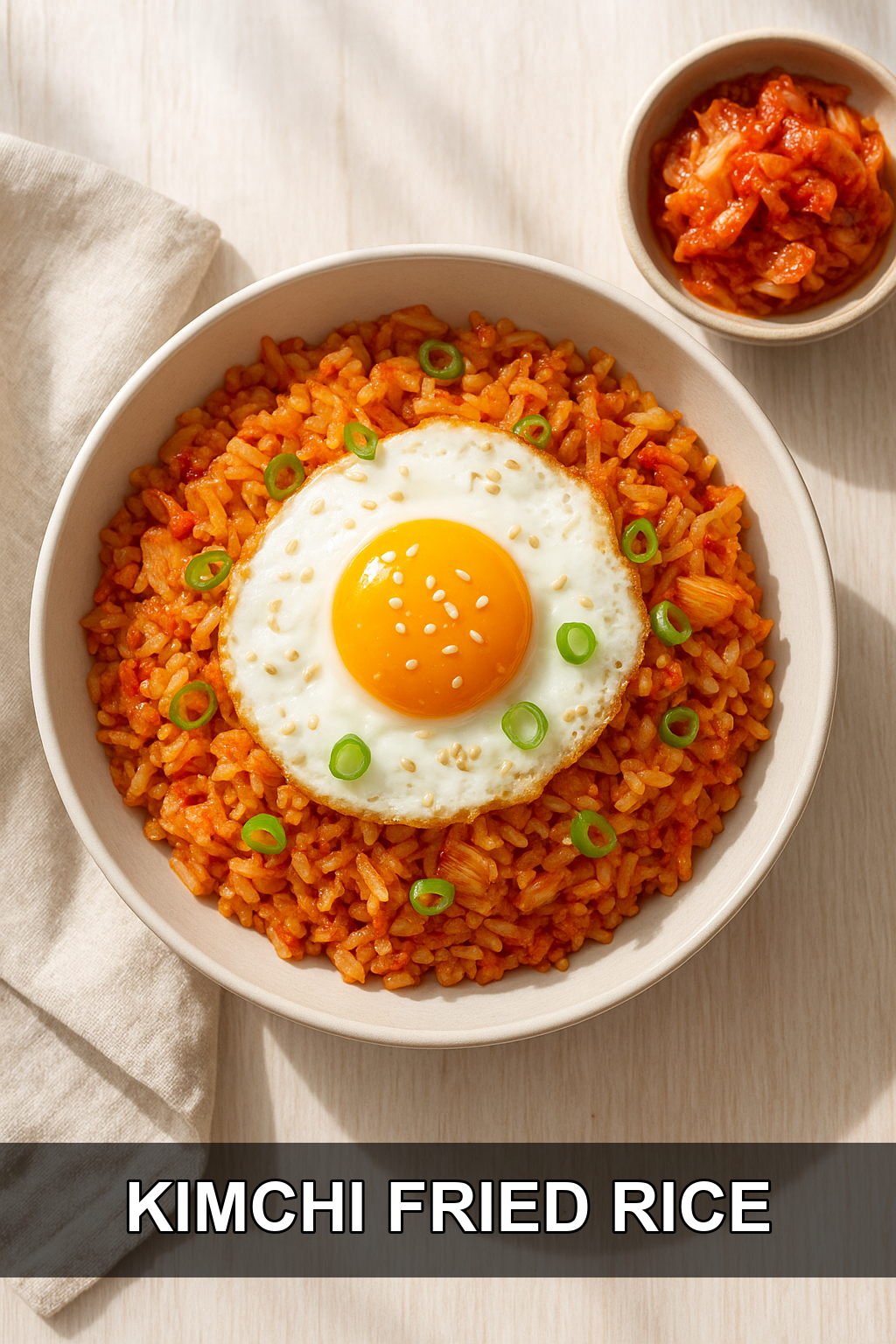
- What Is Kimchi Fried Rice?
- Tips for Cooking and Prepping
- Recipe Variations and Substitutes
- Serving Suggestions
- Storing, Make-Ahead, and Freezing Tips
- FAQs
- Kimchi Fried Rice Recipe
If you’ve got a jar of kimchi in the fridge and some leftover rice on the counter, you’re about 20 minutes away from one of the most satisfying dinners you’ll make all week. This kimchi fried rice recipe is spicy, savory, a little tangy, and endlessly customizable, making it the perfect way to use up whatever odds and ends you have on hand.
What Is Kimchi Fried Rice?
Kimchi fried rice, known as kimchi bokkeumbap in Korean, is a quick skillet dish made by stir-frying rice with chopped kimchi, its flavorful brine, and usually some kind of protein like pork, bacon, or spam. It’s a beloved staple in Korean home cooking, often thrown together on busy weeknights or the morning after a big meal, since it’s a fantastic way to use up kimchi that’s gotten a little too fermented and sour to eat on its own.
Tips for Cooking and Prepping
#1: Use day-old, cold rice
Freshly cooked rice is too soft and steamy, which leads to a mushy, clumpy stir-fry. Cold, day-old rice has dried out slightly, so the grains separate easily and fry up nice and firm.
#2: Cook off the kimchi first
Sauté the chopped kimchi in oil for a few minutes before adding the rice to mellow out its raw sharpness and deepen its flavor, which makes a noticeably tastier final dish.
#3: Don’t skip the kimchi juice
That brine sitting at the bottom of the jar is packed with flavor, so spoon a few tablespoons into the skillet along with the kimchi itself for extra tang and depth.
#4: Use well-fermented kimchi
Kimchi that’s been sitting in the fridge for a couple of weeks and gotten extra sour is actually ideal for frying, since its bolder flavor holds up better than fresh, mild kimchi.
#5: Fry over high heat in a wide pan
A hot wok or wide skillet lets moisture evaporate quickly and gives the rice slightly crispy, charred edges instead of steaming it into a soft, sticky mess.
#6: Finish with sesame oil off the heat
Toasted sesame oil turns bitter if cooked too long at high heat, so stir it in right at the end for the best aroma and flavor.
Recipe Variations and Substitutes
This dish is incredibly forgiving, so feel free to swap in whatever protein you have: diced spam, bacon, ground pork, chicken, tofu, or even canned tuna all work beautifully. For a vegetarian version, skip the meat and add mushrooms or extra vegetables, and use a vegan-friendly kimchi and swap the egg for a drizzle of chili crisp. You can also stir in a spoonful of gochujang for extra heat and depth, or mix in frozen peas and carrots for a heartier, veggie-packed meal.
Serving Suggestions
Kimchi fried rice is traditionally topped with a fried egg with a runny yolk, which adds richness and helps mellow the spice when stirred in. Serve it with a sprinkle of toasted sesame seeds, sliced green onions, and a side of extra kimchi, or pair it with a light cucumber salad or seaweed soup for a more complete Korean-inspired meal.
Storing, Make-Ahead, and Freezing Tips
Leftover kimchi fried rice keeps well in an airtight container in the fridge for up to 4 days, making it a great meal-prep option for quick lunches. It also freezes surprisingly well for up to 2 months; just thaw it in the fridge overnight and reheat in a hot skillet with a splash of water or oil to bring back its texture, then top with a freshly fried egg.
FAQs
What kind of rice is best for kimchi fried rice?
Cold, day-old white rice works best because it’s firmer and less sticky than freshly cooked rice, which helps it fry up light and separate instead of turning gummy. Short-grain or medium-grain rice, like the kind used for sushi or steamed Korean rice, gives the most authentic texture.
Is kimchi fried rice supposed to be spicy?
It has a mild to moderate kick depending on how spicy your kimchi is, but it’s not usually intensely hot. You can easily adjust the heat by adding more or less kimchi, or stirring in gochujang or gochugaru for extra spice.
Can I make this without meat?
Absolutely, kimchi fried rice is delicious as a vegetarian dish. Just use a plant-based kimchi, sauté some extra vegetables like mushrooms or zucchini, and top it with a fried egg or crispy tofu for protein.
Why is my kimchi fried rice mushy?
Mushy fried rice is almost always caused by using freshly cooked, warm rice or overcrowding the pan, both of which trap excess moisture. Stick with cold, dried-out rice and fry in batches over high heat in a wide skillet for the best texture.
What’s the best kimchi to use for frying?
Older, well-fermented kimchi that has turned quite sour is ideal for cooking, since its bold, tangy flavor intensifies beautifully when fried and stands up well to the other ingredients. Fresh, mild kimchi can be used too, but the flavor won’t be quite as deep.
Kimchi Fried Rice Recipe
Prep time: 10 min | Cook time: 15 min | Total time: 25 min | Servings: 4
Ingredients
For the Fried Rice
- 2 tablespoons vegetable oil, divided
- 1 cup chopped kimchi, plus 3 tablespoons kimchi juice
- 1/2 cup diced bacon, spam, or pork belly (optional)
- 3 cloves garlic, minced
- 4 cups cold, day-old cooked rice
- 1 tablespoon soy sauce
- 1 teaspoon gochujang (optional, for extra heat)
- 2 green onions, thinly sliced
- 1 teaspoon toasted sesame oil
For Topping
- 4 fried eggs
- 1 tablespoon toasted sesame seeds
- Extra sliced green onions
- Extra kimchi, for serving
Instructions
- Heat 1 tablespoon of oil in a large skillet or wok over medium-high heat. If using bacon, spam, or pork, add it now and cook until browned and slightly crispy, about 3-4 minutes.
- Add the chopped kimchi to the pan and stir-fry for 2-3 minutes until it softens slightly and becomes fragrant.
- Stir in the garlic and cook for 30 seconds until fragrant, then push everything to one side of the pan.
- Add the remaining tablespoon of oil to the empty side of the pan, then add the cold rice, breaking up any clumps with your spatula.
- Mix the rice together with the kimchi mixture, then pour in the kimchi juice, soy sauce, and gochujang if using. Stir-fry everything together over high heat for 4-5 minutes, pressing the rice into the pan occasionally to let it crisp up in spots.
- Stir in the sliced green onions and drizzle with sesame oil, tossing to combine, then remove the pan from the heat.
- While the rice cooks, fry the eggs in a separate nonstick pan until the whites are set but the yolks are still runny.
- Divide the fried rice among bowls, top each with a fried egg, and sprinkle with sesame seeds and extra green onions. Serve hot with extra kimchi on the side.
For an extra crispy bottom layer, press the rice firmly into the skillet and let it sit undisturbed for a minute before stirring. Leftover kimchi fried rice reheats beautifully in a hot skillet with a splash of water to loosen it up.
Leave a Reply
You must be logged in to post a comment.