
- What Is Kimbap?
- Tips for Cooking and Prepping
- Recipe Variations and Substitutes
- Serving Suggestions
- Storing, Make-Ahead, and Freezing Tips
- FAQs
- Kimbap Recipe: Failproof Homemade Rolls
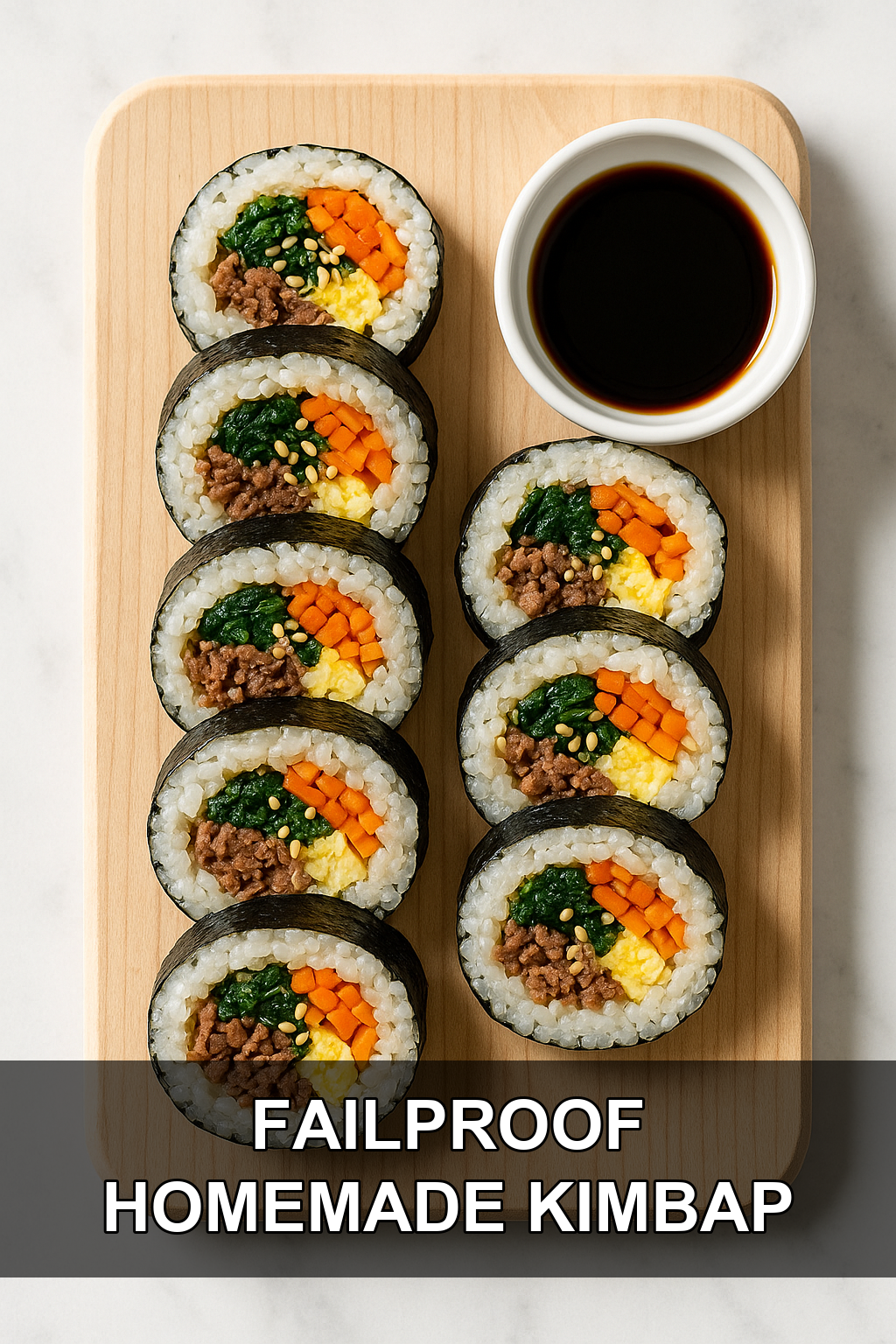
There’s something so satisfying about slicing into a perfectly tight kimbap roll and seeing all those colorful layers stacked inside. This failproof homemade version walks you through every step, including a simple trick that guarantees your rolls stay sealed instead of falling apart on the cutting board.
What Is Kimbap?
Kimbap is a beloved Korean dish made by rolling seasoned rice and an assortment of vegetables, egg, and meat inside a sheet of nori (dried seaweed), then slicing it into bite-sized pieces. While it looks similar to Japanese sushi, kimbap has its own distinct identity: the rice is seasoned with sesame oil instead of vinegar, and the fillings lean toward Korean staples like pickled radish, bulgogi, and blanched spinach.
Kimbap is a go-to for picnics, packed lunches, and casual gatherings across Korea, prized for being portable, colorful, and endlessly customizable. Once you get the hang of rolling technique and the right rice-to-filling ratio, it becomes one of those recipes you can whip up from memory anytime you have leftover veggies and rice on hand.
Tips for Cooking and Prepping
#1: Season the rice while it’s still warm
Mixing in the sesame oil and salt right after cooking helps the flavor absorb evenly and keeps the rice from getting sticky and clumpy once it cools.
#2: Spread rice thin and leave that top border
A thick layer of rice makes rolling difficult and leads to bulky, uneven kimbap, so aim for a thin, even layer and always leave about an inch bare at the top edge of the nori.
#3: Don’t skip the sealing trick
Lightly wetting the top edge of the nori with your finger before the final roll is what actually locks everything in place, so don’t rush past this step even if it feels minor.
#4: Line up fillings near the bottom edge
Placing carrots, spinach, egg, radish, and beef in tight, even lines close to the bottom edge of the nori makes it much easier to roll tightly without fillings shifting or spilling out.
#5: Use a clean, wet knife for slicing
Wiping your knife with a damp cloth between cuts prevents the rice from sticking and tearing the roll, giving you clean, photo-worthy slices every time.
#6: Press firmly while rolling
Applying steady, even pressure with the bamboo mat as you roll compacts the ingredients so each slice holds its shape instead of falling apart.
Recipe Variations and Substitutes
Kimbap is wonderfully flexible, so feel free to swap in whatever you have on hand. Try a plant-based version by skipping the bulgogi and adding sautéed mushrooms, tofu, or extra vegetables like cucumber and bell pepper, or make a tuna mayo kimbap by mixing canned tuna with a bit of mayonnaise for the filling.
Serving Suggestions
Serve sliced kimbap with a small bowl of soy sauce for dipping, and pair it with a simple side like kimchi, pickled radish, or a light cucumber salad. It also makes a fantastic lunchbox addition or picnic centerpiece alongside miso soup or a cold noodle salad.
Storing, Make-Ahead, and Freezing Tips
Kimbap is best enjoyed the day it’s made since the nori can soften and the rice can harden in the fridge, but if you need to store it, wrap rolls tightly in plastic wrap and refrigerate for up to a day, then bring to room temperature before serving. Freezing isn’t recommended for assembled rolls, though you can prep and freeze cooked bulgogi or blanched spinach ahead of time to speed up assembly later.
FAQs
Why does my kimbap fall apart when I slice it?
This usually happens when the roll isn’t sealed tightly enough or the nori wasn’t moistened at the top edge before the final roll. Make sure to press firmly while rolling and always use the water-sealing trick to lock everything in place.
Can I make kimbap ahead of time for lunch the next day?
You can prep the fillings and rice a day ahead and store them separately in the fridge, but it’s best to assemble and roll the kimbap the day you plan to eat it since the nori softens over time. If you must roll ahead, keep it tightly wrapped and eat within 24 hours.
What is danmuji and can I substitute it?
Danmuji is a sweet, tangy pickled yellow radish that’s a classic kimbap filling for its crunch and brightness. If you can’t find it, pickled cucumber, daikon pickles, or even a lightly pickled carrot can work in a pinch.
Do I need a bamboo mat to make kimbap?
A bamboo mat makes rolling much easier and helps create an even, tight roll, but in a pinch you can use a clean kitchen towel or even a sheet of plastic wrap laid flat as a substitute.
Is kimbap the same as sushi?
While they look similar, kimbap and sushi are different dishes; kimbap rice is seasoned with sesame oil rather than vinegar, and it typically includes cooked fillings like bulgogi, egg, and pickled radish instead of raw fish.
Kimbap Recipe: Failproof Homemade Rolls
Prep time: 25 min | Cook time: 10 min | Total time: 35 min | Servings: 4
Ingredients
For the Rice
- 3 cups cooked short-grain rice
- 2 tablespoons sesame oil
- Pinch of salt
For the Fillings
- 5 sheets nori seaweed
- 1 cup carrots, julienned
- 1 cup spinach, blanched and seasoned
- 2 eggs, beaten and cooked into a thin omelet, sliced
- 1/2 cup yellow radish (danmuji), pickled and sliced
- 1 cup seasoned beef bulgogi or plant-based alternative
For Finishing
- 1 tablespoon sesame seeds, for garnish
- Soy sauce, for dipping
Instructions
- Prepare the rice: Cook short-grain rice according to package directions. While still warm, gently mix in a drizzle of sesame oil and a pinch of salt.
- Prepare the fillings: Julienne the carrots, blanch and season the spinach, cook and slice the egg omelet, slice the yellow radish, and prepare the bulgogi.
- Assemble the kimbap: Place a sheet of nori on a bamboo rolling mat. Spread a thin layer of rice evenly over the nori, leaving about an inch of space at the top edge.
- Add fillings: Arrange lines of carrots, spinach, egg, yellow radish, and beef (or alternative) across the rice, near the bottom edge of the nori.
- The Sealing Trick: Before rolling, use your finger to lightly moisten the top edge of the nori with water. This is KEY to creating a tight seal that prevents unraveling.
- Roll the kimbap: Using the bamboo mat, tightly roll the kimbap away from you, tucking in the fillings as you go. Press firmly to seal the roll.
- Slice and serve: Brush the finished kimbap rolls with sesame oil and sprinkle with sesame seeds. Slice into bite-sized pieces and serve with soy sauce for dipping.
Feel free to swap in any vegetables you have on hand, or use a plant-based protein instead of bulgogi for a vegetarian version. For the cleanest slices, wipe your knife with a damp cloth between cuts.
Leave a Reply
You must be logged in to post a comment.