
- What Is Kimbap?
- Tips for Cooking and Prepping
- Recipe Variations and Substitutes
- Serving Suggestions
- Storing and Make-Ahead Tips
- FAQs
- Kimbap Recipe: Easy On-The-Go Meal Idea
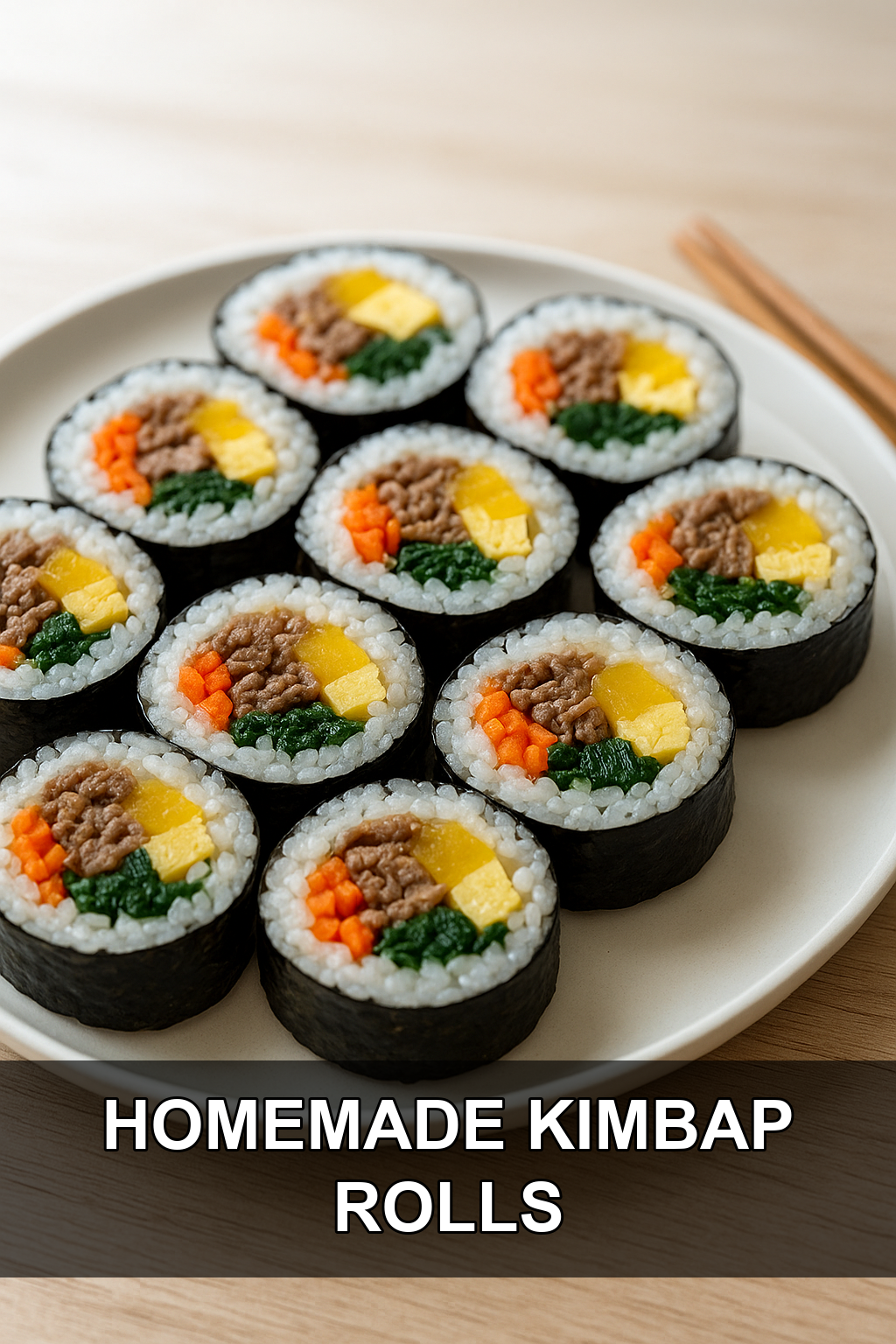
If you’ve ever wandered past a Korean deli case and eyed those neat little seaweed rolls sitting next to the sushi, you’ve met kimbap’s charm already. This homemade version is packed with savory beef, crisp vegetables, and fluffy seasoned rice, all rolled up into a portable meal that’s just as good cold from the fridge as it is fresh off the cutting board.
What Is Kimbap?
Kimbap (also spelled gimbap) is a beloved Korean staple made of seasoned rice and various fillings rolled tightly in sheets of dried seaweed, then sliced into bite-sized pieces. While it looks similar to Japanese sushi rolls, kimbap is a distinct dish with its own flavor profile — the rice is seasoned with sesame oil and salt instead of vinegar, and the fillings usually include cooked, seasoned vegetables, meat, and egg rather than raw fish.
Kimbap has long been the go-to picnic and lunchbox food in Korea, prized for being portable, filling, and endlessly customizable. Whether you’re packing it for a school lunch, a road trip, or a quick weekday dinner, it delivers a satisfying balance of protein, veggies, and carbs in one neat little roll.
Tips for Cooking and Prepping
#1: Season the rice while it’s still warm
Mix the sesame oil and salt into the rice right after cooking so it absorbs the flavor evenly and stays soft enough to spread without clumping.
#2: Don’t skip drying the spinach and veggies
Squeezing excess water from the spinach and letting stir-fried carrots cool slightly prevents soggy rolls that fall apart when sliced.
#3: Leave a border of bare seaweed
Always leave about 1.5 inches of seaweed uncovered at the top edge so you have a clean spot to seal the roll shut.
#4: Keep your knife oiled between cuts
A little sesame oil on the blade keeps the rice from sticking and gives you clean, neat slices every time.
#5: Roll with firm, even pressure
Use a bamboo mat (or foil in a pinch) and press firmly and evenly as you roll to keep the filling tightly packed and prevent gaps.
Recipe Variations and Substitutes
Kimbap is incredibly flexible, so feel free to swap in what you have on hand. Try ground beef instead of sliced beef, tuna mayo or spicy pork for a different protein, or skip the meat entirely and load up on extra vegetables for a vegetarian version. If burdock root or pickled radish isn’t available locally, you can find them at most Korean grocery stores, or substitute with pickled cucumber for a similar tangy crunch.
Serving Suggestions
Kimbap is delicious on its own, but it pairs beautifully with a side of kimchi, a light cucumber salad, or a warm bowl of miso or seaweed soup. It also makes a great addition to a Korean-style lunch spread alongside japchae or mandu.
Storing and Make-Ahead Tips
Kimbap is best enjoyed the day it’s made since the rice can harden in the fridge, but you can store leftovers in an airtight container for up to a day. To make ahead, prep all the fillings and seasoned rice separately and refrigerate, then roll everything together right before serving for the freshest texture.
FAQs
Can I freeze kimbap?
Freezing isn’t recommended because the rice texture becomes hard and grainy once thawed. It’s best made fresh or stored briefly in the fridge for same-day or next-day eating.
Why does my kimbap fall apart when I slice it?
This usually happens if the roll wasn’t packed tightly enough or the rice layer was too thick. Make sure to press firmly while rolling and use a light hand with sesame oil on your knife for clean cuts.
Can I make kimbap ahead of time for lunch the next day?
Yes, though the seaweed can soften over time. Wrap each roll tightly in plastic wrap and refrigerate, then let it sit at room temperature for a few minutes before eating for the best texture.
What’s the difference between kimbap and sushi?
The main differences are the seasoning and fillings — kimbap rice is seasoned with sesame oil and salt rather than vinegar, and it’s typically filled with cooked ingredients like beef, egg, and sautéed vegetables instead of raw fish.
Do I need a bamboo mat to make kimbap?
A bamboo mat makes rolling easier and helps create a tighter roll, but you can substitute a piece of aluminum foil or a clean kitchen towel if you don’t have one.
Kimbap Recipe: Easy On-The-Go Meal Idea
Prep time: 25 min | Cook time: 20 min | Total time: 45 min | Servings: 4
Ingredients
For the Rice
- 1.5 cups uncooked short grain rice (standard measuring cup, not the one from a rice cooker)
- 1 tablespoon sesame oil
- Salt to taste (about 1/2 teaspoon, start with less)
For the Beef
- 8 ounces lean tender beef, cut into thin strips (or bulgogi meat or ground beef)
- 2 teaspoons soy sauce
- 1 teaspoon rice wine (or mirin)
- 1 teaspoon sugar
- 1 teaspoon sesame oil
- 1/2 teaspoon minced garlic
For the Spinach
- 1 bunch spinach, about 8 ounces
- 1 teaspoon sesame oil
- Salt to taste, about 1/4 teaspoon
For the Fish Cake
- 1 or 2 (if small) sheets fish cake (eomuk)
- 1 teaspoon soy sauce
- 1/2 teaspoon sugar
- 1/2 teaspoon sesame oil
Other Fillings and Assembly
- 4 gim (dried seaweed sheets)
- Cooking oil, as needed
- 2 medium carrots, julienned (or cut into 1/2-inch thick long strips)
- 4 strips pre-cut pickled radish (danmuji), white or yellow
- 4 strips prepared burdock root (ueong)
- 2 large eggs
- Extra sesame oil, for brushing rolls and knife
Instructions
- Cook the rice using a little less water than usual so it’s firm but not sticky. Keep it warm until all the filling ingredients are ready.
- Cut the beef into thin strips (about 1/2-inch thick) and mix well with the soy sauce, rice wine, sugar, sesame oil, and minced garlic. Set aside to marinate.
- Bring a large pot of water to a boil and prepare a cold water bath. Blanch the spinach briefly, transfer immediately to the cold water, then squeeze out excess water. Season with sesame oil and salt.
- Beat the eggs in a bowl with a pinch of salt. Heat a small non-stick pan over medium-low heat and pour in the eggs. When the bottom sets but the top is still slightly runny, fold it over in thirds to form a thick omelette. Cool, then slice lengthwise into 1/2-inch strips.
- Julienne the carrots. Heat a lightly oiled pan over medium-high heat and stir-fry the carrots until softened, seasoning lightly with salt. Transfer to a plate.
- Cut the fish cake lengthwise into 3/4-inch strips. Heat about 1 teaspoon of oil in a pan over medium heat and stir-fry the fish cake with soy sauce, sugar, and sesame oil until softened, about 2 minutes.
- Stir-fry the marinated beef over medium-high heat until fully cooked, about 2 to 3 minutes.
- Arrange all the prepared fillings together on a plate for easy assembly.
- While the rice is still warm, mix in the sesame oil and salt, folding gently with a rice paddle until evenly seasoned. Taste and add more salt if needed.
- Place a seaweed sheet shiny side down on a cutting board or bamboo mat, with the longer side facing you. Spread 3/4 to 1 cup of rice evenly over the seaweed, leaving about 1.5 inches bare at the top.
- Lay the beef, spinach, egg, carrots, radish, burdock, and fish cake in a line across the rice, leaving the top edge uncovered for sealing.
- Lift the bottom edge with both hands and roll away from you, tucking the filling in tightly with your fingers. Use the bamboo mat to apply firm, even pressure as you continue rolling.
- Brush the finished roll with a little sesame oil for shine and flavor. Lightly oil a sharp knife and slice the roll into 1/2-inch pieces, re-oiling the blade as needed for clean cuts.
For extra ease, prep all fillings a day ahead and refrigerate separately, then assemble the rolls fresh right before serving for the best texture.
Leave a Reply
You must be logged in to post a comment.