
- What Is Japanese Chicken Curry?
- Tips for Cooking and Prepping
- Recipe Variations and Substitutes
- Serving Suggestions
- Storing, Make-Ahead, and Freezing Tips
- FAQs
- Japanese Chicken Curry Recipe
If you’ve never had Japanese curry, get ready for a cozy surprise: it’s thicker, sweeter, and milder than Indian or Thai curries, with a deeply savory broth that clings to every bite of chicken and vegetable. This is the kind of dish my family requests on repeat, and once you taste that glossy, slightly sweet sauce over a mound of fluffy rice, you’ll understand why it’s a beloved comfort food across Japan.
What Is Japanese Chicken Curry?
Japanese curry (kare) traces its roots back to British curry powder introduced to Japan in the Meiji era, which the Japanese eventually adapted into a thicker, sweeter, roux-based stew that bears little resemblance to South Asian curries. Instead of a heavy blend of raw spices, Japanese curry relies on a pre-made roux block—a mix of flour, fat, curry powder, and seasonings—that melts into simmering broth to create a silky, deeply savory sauce.
Chicken curry, or chicken kare, is one of the most popular home-style versions, simmered low and slow with onions, carrots, and potatoes until everything is tender and the flavors meld together. It’s often dressed up with a few “secret” ingredients like grated apple, honey, and ketchup, which round out the sauce with a subtle sweetness and tang that balances the warm curry spice.
Tips for Cooking and Prepping
#1: Cut vegetables for maximum flavor absorption
Cutting the carrots into rolling wedges (rangiri) and the chicken diagonally (sogigiri) increases surface area, which helps everything cook faster and soak up more of the curry sauce.
#2: Soak your potatoes
Soaking the cut Yukon gold potatoes in water for 15 minutes removes excess starch so they hold their shape in the simmering broth instead of turning mushy or clouding the sauce.
#3: Don’t rush the onions
Sautéing the onions until translucent and lightly golden (about 5-10 minutes without constant stirring) builds a deep, sweet base flavor that you simply can’t skip in this dish.
#4: Skim the scum after boiling
Once the broth comes to a boil, use a fine-mesh strainer to skim off the foam that rises to the surface for a cleaner-tasting, less cloudy final curry.
#5: Add the roux off the heat
Turn off the heat before dissolving the curry roux cubes in a ladleful of hot broth; this prevents the roux from clumping or scorching on the bottom of the pot.
#6: Watch the bottom of the pot
Once the roux is stirred in, keep stirring frequently as the curry thickens over medium-low heat, since roux-thickened sauce can easily catch and burn on the pot’s base.
Recipe Variations and Substitutes
This curry is easy to customize: swap the chicken thighs for chicken breast, pork, or beef, or use russet potatoes instead of Yukon gold (just add them later in cooking since they break down faster). You can also adjust the sweet-savory balance by experimenting with the honey, soy sauce, and ketchup amounts, or use your own homemade curry roux for a lower-sodium, made-from-scratch version.
Serving Suggestions
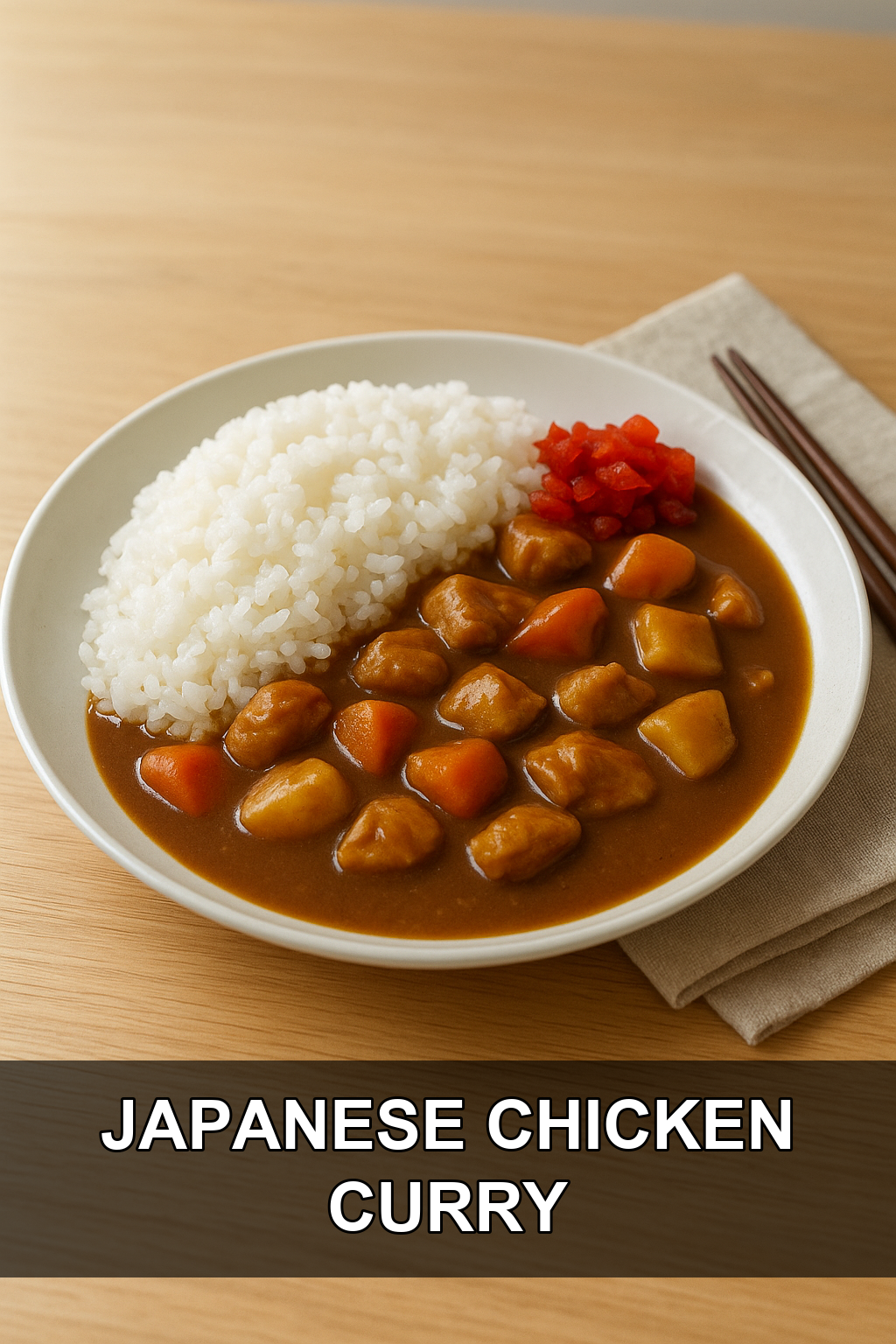
Japanese chicken curry is traditionally served ladled over freshly steamed Japanese short-grain rice, with a small scoop of fukujinzuke (sweet-tangy red pickled vegetables) on the side to cut through the richness. It also pairs nicely with a simple side salad or miso soup for a more complete meal.
Storing, Make-Ahead, and Freezing Tips
Leftover curry keeps well in a glass airtight container in the fridge for up to 3 days or in the freezer for up to a month (though it’s best to remove the potatoes before freezing, since their texture suffers). When reheating, stir in extra water since the sauce thickens significantly as it cools, then warm gently over low heat to avoid scorching.
FAQs
What is Japanese curry roux made of?
Japanese curry roux is a solid block made from flour, fat, curry powder, and seasonings, sold in individual cubes within a package. It dissolves into hot broth to instantly thicken and flavor the curry, similar to how a bouillon cube works but for curry.
Why do you add apple and honey to Japanese curry?
Grated apple and honey add natural sweetness and a subtle fruity depth that balances the savory broth and mild curry spice, which is characteristic of the sweeter Japanese style of curry compared to other cuisines.
Can I make this curry without store-bought roux?
Yes, many home cooks make an unsalted homemade curry roux with flour, butter, and curry powder as a lower-sodium alternative; just remember to season the finished curry with salt to taste since homemade roux typically doesn’t include any.
Why is my curry too thin or too thick?
If the curry is too thick after adding the roux, simply stir in a little extra water while simmering; if it’s too thin, continue simmering uncovered until it reduces to your desired consistency.
Can I use chicken breast instead of thighs?
Yes, boneless skinless chicken breast works as a substitute, though thighs are recommended because their higher fat content keeps them juicy and tender during the longer simmer time.
Japanese Chicken Curry Recipe
Prep time: 20 min | Cook time: 50 min | Total time: 70 min | Servings: 8
Ingredients
For the Curry
- 2 large onions (1.5 lb / 670 g)
- 2 carrots (6.7 oz / 190 g)
- 3 Yukon gold potatoes (15 oz / 432 g)
- 1 tsp ginger, grated
- 2 cloves garlic
- ½ apple (6 oz / 170 g)
- 1½ lb boneless, skinless chicken thighs (see Notes for substitutions)
- freshly ground black pepper
- 1½ Tbsp neutral oil, for cooking
- 4 cups chicken stock/broth (for lower sodium, use water only or half stock and half water)
- 1 Tbsp honey
- 1 Tbsp soy sauce
- 1 Tbsp ketchup
- 1 package Japanese curry roux
For Serving
- 8 servings cooked Japanese short-grain rice
- fukujinzuke (Japanese red pickled vegetables)
Instructions
- Gather all the ingredients: onions, carrots, potatoes, ginger, garlic, apple, chicken, and the seasonings—honey, soy sauce, and ketchup—that give this curry its signature flavor.
- Cut the onions into thick wedges for a chunkier texture, or mince/thinly slice them if you’d prefer them to melt into the sauce.
- Peel the carrots and cut them into rolling wedges (rangiri) to increase surface area for faster cooking and better flavor absorption.
- Peel the potatoes and cut them into quarters, then soak them in water for 15 minutes to remove excess starch. (If using russet potatoes, cut into 6 pieces each and add later in cooking since they break down faster.)
- Grate the ginger and measure 1 teaspoon with its juice; set aside. Mince the garlic and set aside.
- Cut the apple into quarters, remove the core, and peel the skin.
- Grate the apple and set aside.
- Trim excess fat from the chicken thighs and discard it, then cut the chicken into bite-sized pieces, cutting diagonally (sogigiri) to create more surface area. Season with freshly ground black pepper.
- Heat the neutral oil in a large pot over medium heat and add the onions.
- Sauté the onions, stirring occasionally (not too often), until translucent and tender, about 5 minutes—longer if you have time, for extra flavor and color.
- Add the minced garlic and grated ginger, and mix well with the onions.
- Add the chicken and cook, stirring frequently, until no longer pink on the outside. Lower the heat if the onions start browning too much.
- Add the chicken stock/broth (or water, or a mix) to the pot.
- Add the grated apple, honey, soy sauce, and ketchup, and stir to combine.
- Add the carrots and potatoes. The broth should barely cover the ingredients; extra liquid will release from the meat and vegetables as they cook.
- Simmer covered over medium-low heat for 15 minutes, stirring occasionally (simmer uncovered if ingredients are fully submerged).
- Once boiling, skim the scum and foam from the surface using a fine-mesh strainer.
- Continue cooking covered until a wooden skewer easily pierces the carrots and potatoes.
- Turn off the heat. Dissolve 1-2 cubes of Japanese curry roux at a time in a ladleful of the hot cooking liquid, then stir into the pot. Repeat until all the roux is incorporated.
- Simmer uncovered over medium-low heat, stirring frequently, until the curry thickens, about 5-10 minutes. Add water if it becomes too thick, and keep the bottom of the pot clear to prevent burning.
- If using unsalted homemade roux, taste and season with salt to your liking.
- Serve the curry over steamed Japanese short-grain rice, garnished with fukujinzuke if desired.
Store leftovers in a glass airtight container in the fridge for up to 3 days or freeze for up to a month (remove potatoes before freezing). When reheating, stir in extra water to loosen the thickened sauce before warming gently over low heat.
Leave a Reply
You must be logged in to post a comment.