
- What Is Japanese Chicken Curry?
- Tips for Cooking and Prepping
- Recipe Variations and Substitutes
- Serving Suggestions
- Storing, Make-Ahead, and Freezing Tips
- FAQs
- Japanese Chicken Curry Recipe
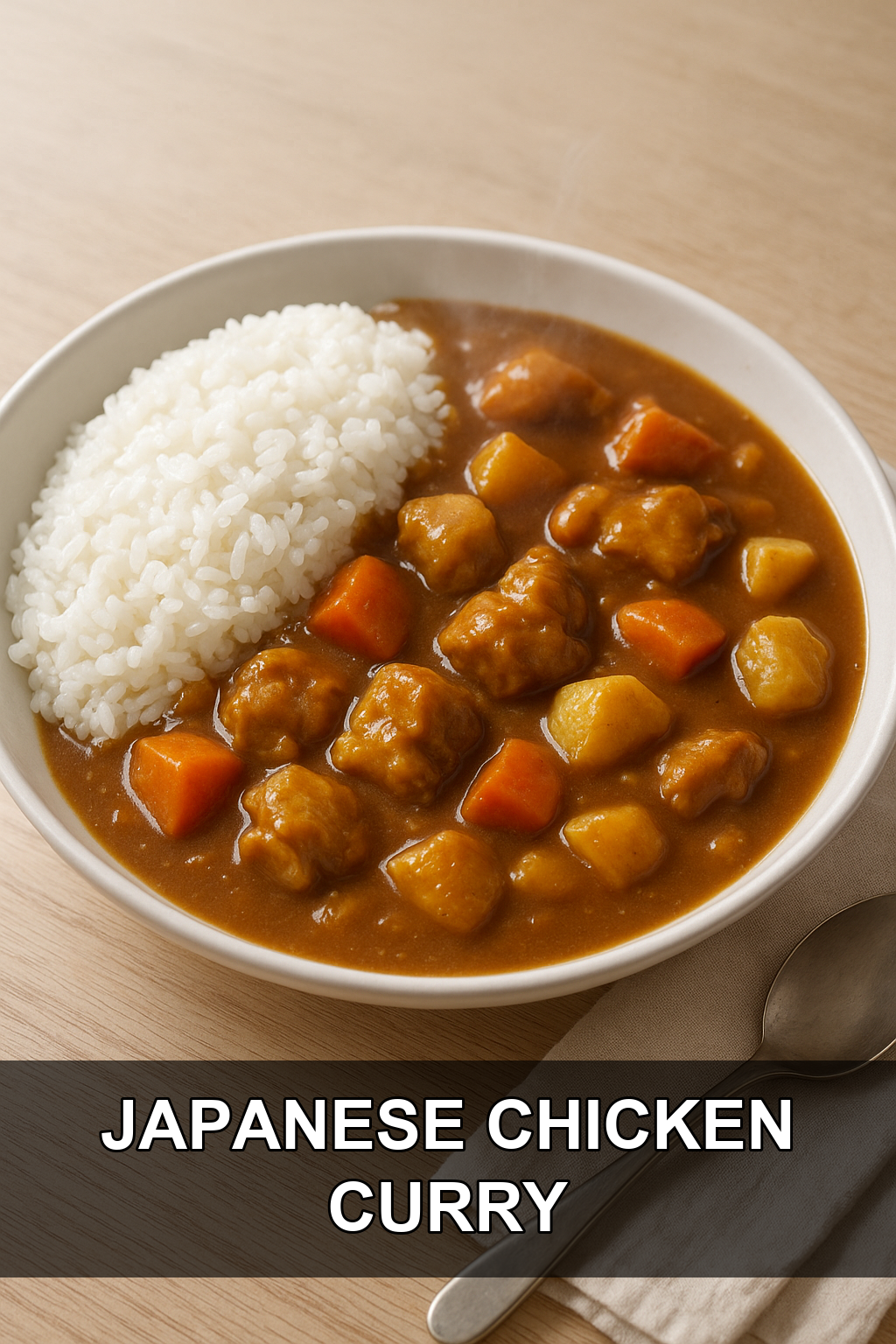
There’s something about a bubbling pot of Japanese curry that instantly makes a kitchen feel warmer. This version is thick, glossy, and just a little sweet, with tender chicken thighs and vegetables soaking up all that curry roux goodness over a bowl of steamed rice.
What Is Japanese Chicken Curry?
Japanese curry is a beloved comfort food dish that’s quite different from Indian or Thai curries. It’s thicker, milder, and sweeter, thanks to a roux base that usually includes flour, fat, and a blend of curry spices pressed into convenient store-bought blocks. The dish became a household staple in Japan after being introduced by the British in the late 1800s, and it’s since evolved into something distinctly its own, often served over rice with tender meat and root vegetables.
This chicken version leans into cozy flavors with grated apple and a touch of honey, soy sauce, and ketchup added to the broth. Those small additions round out the roux’s spice blend, giving the sauce a deep sweetness and umami richness that makes it so craveable, especially on a chilly evening when you want something warm and filling.
Tips for Cooking and Prepping
#1: Grate the apple, don’t chop it
Grating the apple lets it melt into the sauce as it cooks, adding natural sweetness and thickness without any noticeable chunks of fruit in your curry.
#2: Cut vegetables to a similar size
Chop the carrots and potatoes into roughly equal pieces so they finish cooking at the same time and stay tender rather than mushy or undercooked.
#3: Let the liquid just barely cover everything
Adding too much broth will dilute the curry and keep it from thickening properly, so aim for the liquid level described in the recipe rather than filling the pot to the top.
#4: Break the roux into pieces before adding
Curry roux blocks dissolve much faster and more evenly when broken into smaller chunks first, so you won’t end up with lumps sitting at the bottom of the pot.
#5: Brown the chicken, don’t fully cook it
You only need to lightly brown the chicken thighs before adding the broth, since they’ll continue cooking through during the simmer and stay juicier that way.
#6: Stir occasionally during simmering
Since the curry thickens as it cooks, stirring every few minutes prevents the potatoes and roux from sticking or scorching on the bottom of the pot.
Recipe Variations and Substitutes
You can easily swap boneless chicken thighs for chicken breast if you prefer leaner meat, though thighs stay juicier during the simmer. Feel free to add other vegetables like mushrooms, bell peppers, or peas, or use sweet potatoes in place of Yukon golds for a slightly different texture and sweetness. If you can’t find Japanese curry roux, a mix of curry powder, flour, and a bit of butter can work in a pinch, though the flavor will be milder.
Serving Suggestions
This curry is traditionally ladled over fluffy Japanese short-grain rice, but it’s also delicious with udon noodles for a curry udon twist. A side of quick pickled cucumbers, Japanese pickled radish (fukujinzuke), or a simple green salad helps balance the richness of the sauce.
Storing, Make-Ahead, and Freezing Tips
Japanese curry actually tastes better the next day once the flavors have had time to meld, so it’s a great make-ahead dinner option. Store leftovers in an airtight container in the fridge for up to 4 days, or freeze in individual portions for up to 3 months, thawing overnight in the fridge before reheating gently on the stove.
FAQs
What is Japanese curry roux made of?
Japanese curry roux blocks typically contain flour, fat, curry powder, and other seasonings pressed into a solid form, making it easy to melt into broth for a thick, flavorful sauce.
Can I make this curry less sweet?
Yes, simply reduce or omit the honey, and choose a spicier curry roux blend (many brands offer mild, medium, and hot versions) to cut down on the overall sweetness.
Why is my curry too thin or too thick?
If your curry is too thin, simmer it uncovered a bit longer to let it reduce; if it’s too thick, stir in a splash of extra broth or water until you reach your desired consistency.
Can I make this in a slow cooker or Instant Pot?
Yes, you can brown the chicken and onions first, then transfer everything except the roux to a slow cooker on low for 4-6 hours, stirring in the roux during the last 20 minutes until dissolved.
Do I need to use Japanese short-grain rice?
Short-grain rice is traditional because its sticky texture pairs perfectly with the thick curry sauce, but any rice you have on hand will still work well.
Japanese Chicken Curry Recipe
Prep time: 10 min | Cook time: 30 min | Total time: 40 min | Servings: 6
Ingredients
- 1 ½ tablespoons vegetable oil
- 2 cups onion, chopped
- 2 carrots, chopped
- 3 Yukon potatoes, chopped
- 1 teaspoon fresh ginger, grated
- 2 cloves garlic, minced
- 1 apple, grated
- 1 ½ pounds boneless skinless chicken thighs, chopped
- 4 cups chicken broth
- 1 tablespoon honey
- 1 tablespoon soy sauce
- 1 tablespoon ketchup
- 1 package (3 ounces) Japanese curry roux
- Cooked Japanese short-grain rice, for serving
Instructions
- Heat the vegetable oil in a large pot over medium heat. Add the onions and cook for 5 minutes until soft and translucent. Stir in the garlic and ginger and cook for 1 minute until fragrant.
- Add the chicken and cook until lightly browned on the outside.
- Pour in the chicken broth, then add the grated apple, honey, soy sauce, and ketchup. Stir well to combine.
- Add the curry roux and stir until fully dissolved into the broth.
- Add the carrots and potatoes. The liquid should just cover the ingredients in the pot.
- Cover and simmer over medium-low heat for 15 to 20 minutes, stirring occasionally.
- Continue cooking until the vegetables are tender and the curry has thickened to your liking.
- Serve hot over steamed Japanese short-grain rice.
For a deeper flavor, let the finished curry sit off the heat for 10-15 minutes before serving, or refrigerate overnight and reheat the next day.
Leave a Reply
You must be logged in to post a comment.