
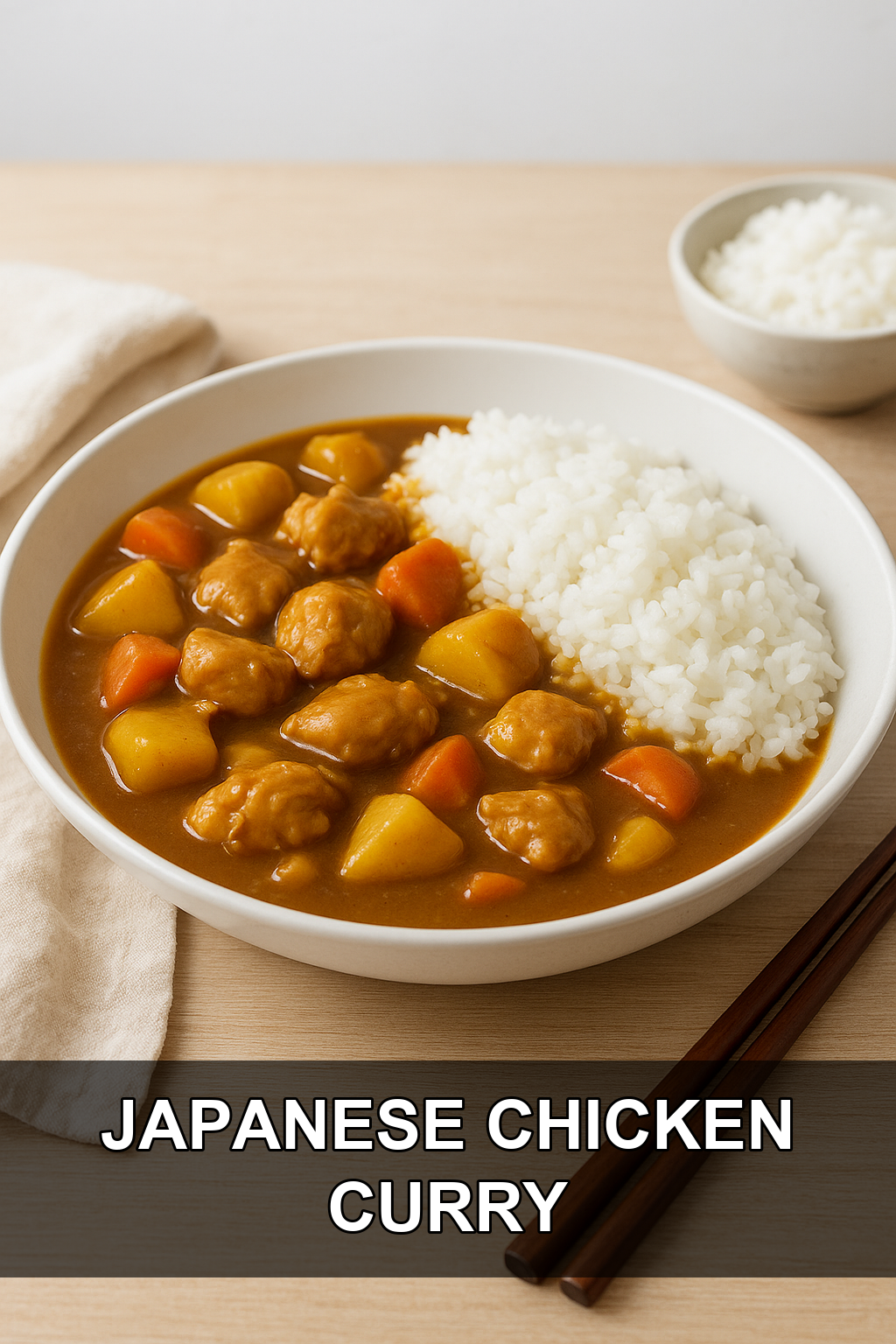
- What Is Japanese Chicken Curry?
- Tips for Cooking and Prepping
- Recipe Variations and Substitutes
- What to Serve with Japanese Curry
- Storing, Make-Ahead, and Freezing Tips
- FAQs
- Japanese Chicken Curry Recipe
There’s a reason Japanese curry shows up on dinner tables all over the world—it’s rich, cozy, and just a little bit sweet in the best way. This version comes together in one pot with tender chicken thighs, soft potatoes and carrots, and a deeply flavorful sauce you can adjust to your spice preference. Trust me, once you make this, it’s going into permanent weeknight rotation.
What Is Japanese Chicken Curry?
Japanese curry, or karē, is quite different from Indian or Thai curries even though it shares the same root spice blend history. It’s thicker, milder, and slightly sweeter, usually built on a base of curry powder, flour (for that signature glossy, gravy-like consistency), and root vegetables simmered until tender. It’s become such a staple in Japan that you’ll find it served in home kitchens, school cafeterias, and casual restaurants alike, almost always spooned generously over a mound of steamed rice.
This homemade version skips the store-bought curry roux blocks (though you could use them) and instead builds the sauce from scratch using curry powder, garam masala, soy sauce, and a grated apple for natural sweetness and body. The result is a deeply savory, subtly fruity curry that feels like the ultimate bowl of comfort food, no matter the season.
Tips for Cooking and Prepping
#1: Grate the apple, don’t dice it
Grating the apple lets it melt right into the sauce, adding natural sweetness and thickness without leaving chunky bits behind. If you’re short on time, you can blend it with the rest of the sauce ingredients instead.
#2: Brown the chicken and onion before adding liquid
Letting the chicken thighs and onion cook for those first 5-6 minutes builds a deeper, more savory base for the whole pot, so don’t rush this step.
#3: Whisk the curry sauce smooth before adding it
Combining the flour, curry powder, garam masala, soy sauce, apple, and water in a separate bowl first prevents lumps from forming once it hits the hot pot.
#4: Cut vegetables into similar sizes
Keeping your potato and carrot pieces roughly the same size ensures they finish cooking at the same time, so nothing turns to mush while other pieces are still firm.
#5: Adjust the spice level with your curry powder amount
Oriental curry powder tends to run spicier than standard Western curry powder, so start with a little less if you’re feeding a heat-sensitive crowd, then add more to taste.
#6: Simmer uncovered to thicken
The final uncovered simmer is what gives the curry its glossy, gravy-like texture, so resist the urge to put the lid back on during this stage.
Recipe Variations and Substitutes
Swap the chicken thighs for chicken breast or even cubed pork or beef if that’s what you have on hand—just adjust the simmer time slightly for tougher cuts. You can also use sweet potato instead of regular potato, or add mushrooms, peas, or bell peppers for extra vegetables. If you don’t have garam masala, a pinch of curry powder alone will still give you a tasty, if slightly less complex, curry.
What to Serve with Japanese Curry
Steamed short-grain rice is the classic pairing and does a wonderful job soaking up the thick sauce. For a fun twist, try it over udon noodles (curry udon), tucked into a bread roll as a curry bun, or alongside a simple cucumber salad and pickled vegetables to balance the richness.
Storing, Make-Ahead, and Freezing Tips
Japanese curry is famously even better the next day, since the flavors continue to meld as it sits—store leftovers in an airtight container in the fridge for up to 4 days. It also freezes beautifully for up to 3 months; just thaw overnight in the fridge and reheat gently on the stove, adding a splash of water if it’s thickened up too much.
FAQs
Can I use store-bought curry roux blocks instead of making the sauce from scratch?
Yes, you can substitute a few cubes of Japanese curry roux for the homemade sauce mixture if you prefer, just add them after the vegetables have simmered and stir until melted and thickened.
Is Japanese chicken curry spicy?
It’s generally mild to medium, especially compared to Indian or Thai curries; this recipe uses oriental curry powder which lands on the medium side, but you can reduce the amount for a gentler flavor.
Why is my curry too thin or too thick?
If it’s too thin, simmer uncovered a bit longer to let it reduce; if it’s too thick, stir in a splash of water until it reaches your desired consistency.
Can I make this curry gluten-free?
Absolutely, just use gluten-free all-purpose flour and swap the soy sauce for tamari, both of which are already noted as options in the ingredient list.
What cut of chicken works best?
Boneless skinless chicken thighs are ideal because they stay juicy and tender through the simmering process, though chicken breast can be used if you prefer leaner meat.
Japanese Chicken Curry Recipe
Prep time: 10 min | Cook time: 27 min | Total time: 37 min | Servings: 6
Ingredients
For the Curry Sauce
- 3 tbsp all-purpose flour (gluten-free or regular)
- 3 tbsp oriental curry powder (or regular curry powder; this will be medium spicy, use less for a milder curry)
- 3 tbsp soy sauce or tamari (tamari is gluten-free)
- 1 tsp garam masala
- 1 apple, cored and grated
- 1/2 tsp ground black pepper
- 1 cup water
For the Curry
- 1 tbsp avocado oil (or any neutral cooking oil)
- 1½ lb boneless skinless chicken thighs, cut into bite-sized pieces
- 1 large onion, diced
- 1 lb potatoes, peeled and cubed
- 2 carrots, cut into 1/2 inch pieces
- 4 garlic cloves, minced
- 2 cups water
Instructions
- Combine all the curry sauce ingredients (flour, curry powder, soy sauce, garam masala, grated apple, black pepper, and 1 cup water) in a bowl and whisk until smooth. To save time, you can cut the apple into chunks and blend all the sauce ingredients together instead of grating and whisking.
- Heat the avocado oil in a large pot or Dutch oven over medium-high heat.
- Add the chicken and onion, and cook, stirring occasionally, for 5-6 minutes until the chicken is browned on the outside.
- Add the potatoes, carrots, and garlic, and stir together for about 1 minute.
- Pour in the 2 cups of water and bring to a boil. Reduce the heat to a simmer, cover, and cook for 10 minutes.
- Uncover the pot and stir in the prepared curry sauce. Simmer uncovered for 15-20 minutes, stirring occasionally, until the sauce has reduced and thickened to your liking.
- Taste the curry and add more soy sauce if needed, or a touch of honey or sugar if you’d like it sweeter.
- Serve warm over steamed rice.
For a milder curry, reduce the curry powder slightly; for extra richness, stir in a splash of coconut milk at the end. Leftovers taste even better the next day once the flavors have had time to meld.
Leave a Reply
You must be logged in to post a comment.