
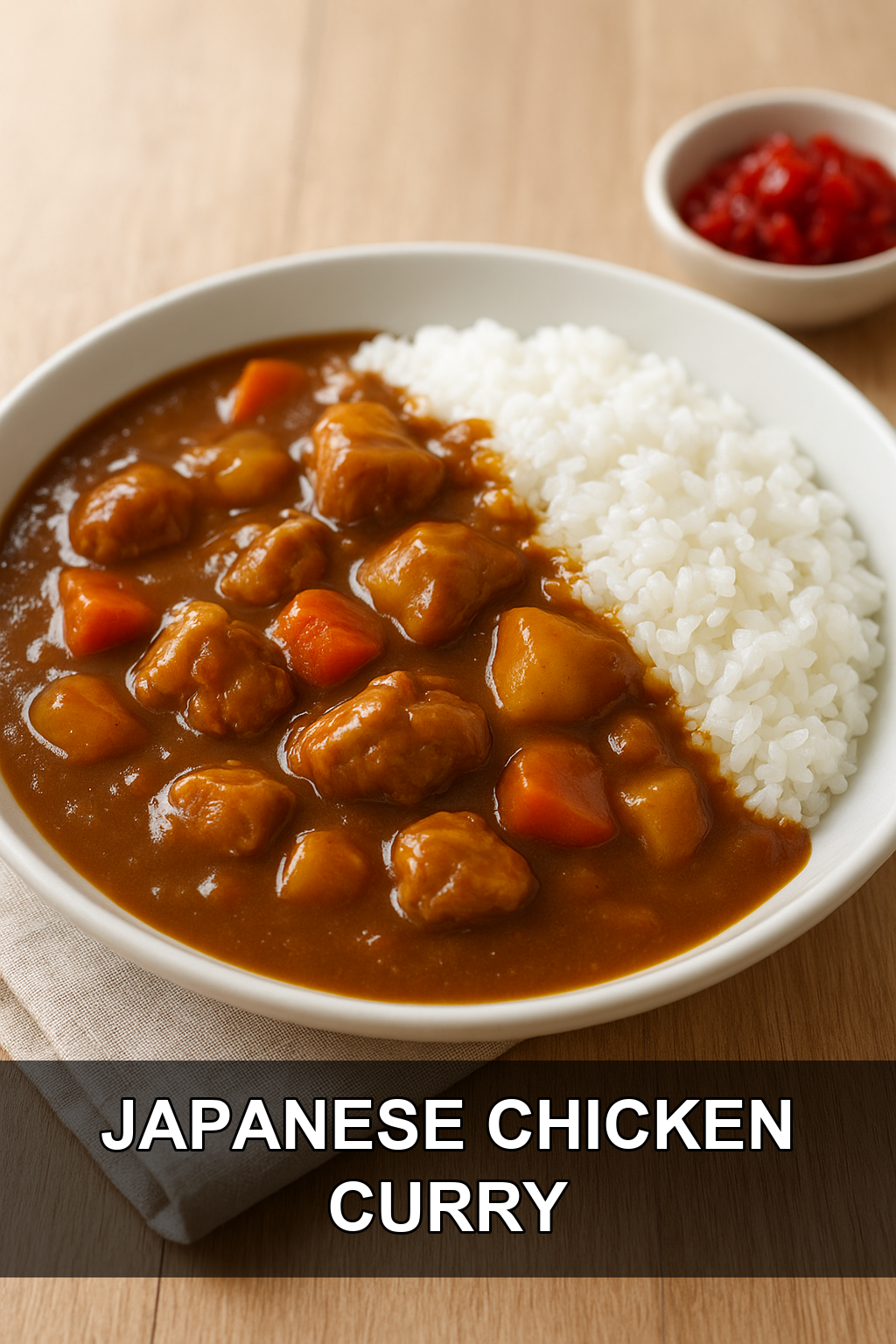
- What Is Japanese Chicken Curry?
- Tips for Cooking and Prepping
- Recipe Variations and Substitutes
- Serving Suggestions
- Storing, Make-Ahead, and Freezing Tips
- FAQs
- Authentic Japanese Chicken Curry Recipe
If your only experience with Japanese curry has been the instant roux cubes, this homemade version is about to change everything. It’s deeply savory, subtly sweet, and packed with layers of flavor that come from real caramelization, not shortcuts — and it’s easier to make than you’d think.
What Is Japanese Chicken Curry?
Japanese curry, or kare raisu, is a beloved comfort food in Japan that arrived via British naval curry in the late 1800s and evolved into something entirely its own. Unlike the brighter, spicier curries of India or Thailand, Japanese curry is thick, mellow, and almost gravy-like, built on a base of deeply caramelized onions, warming curry powder, and a touch of sweetness from fruit and vegetables.
While boxed curry roux blocks are the most common shortcut in Japanese kitchens today, this recipe builds that same iconic flavor from scratch using real Japanese curry powder, a proper fond from browned chicken, and a handful of umami boosters like soy sauce, tomato paste, and cocoa powder. The result is a curry that tastes like it simmered all day at a specialty curry shop.
Tips for Cooking and Prepping
#1: Don’t skip the baking soda trick
The baking soda and salt solution added to the onions helps break them down faster and encourages deeper caramelization in less time, which is key to building that signature rich curry flavor.
#2: Get a real sear on the chicken skin
Browning the chicken thighs skin-side down undisturbed for a few minutes creates a flavorful fond at the bottom of the pot that becomes the foundation of the entire sauce.
#3: Caramelize the onions properly
Be patient through the steaming and boiling-off stage; you’re looking for a cinnamon-brown color and jammy texture before adding the curry powder, since underdone onions will leave the curry tasting flat.
#4: Toast the curry powder briefly
Stirring the curry powder into the hot pot for about a minute wakes up its essential oils and deepens the spice flavor, but watch closely since it can scorch quickly.
#5: Blend the banana right into the base
Pureeing the banana with the stock and aromatics adds natural sweetness and body to the sauce without making the curry taste like fruit — it’s a classic Japanese curry trick for balance.
#6: Stir often during the simmer
Because this curry thickens into a heavy gravy, it’s prone to sticking; stirring every 10 minutes during the hour-long simmer prevents scorching on the bottom of the pot.
Recipe Variations and Substitutes
You can easily swap the chicken thighs for chicken breast, pork, or beef stew meat, adjusting the simmer time as needed for tenderness. If you don’t have chunou sauce (a Japanese Worcestershire-style blend), a mix of Worcestershire sauce and a touch of ketchup works in a pinch, and any curry powder can substitute for Japanese curry powder if you add a pinch of sugar to mimic its milder sweetness.
Serving Suggestions
The classic way to serve this dish is spooned generously over fluffy Japanese short-grain rice, often molded into a neat dome for a restaurant-style presentation. It also pairs beautifully with a side of fukujinzuke (Japanese pickled vegetables), a simple green salad, or a soft-boiled egg on top for extra richness.
Storing, Make-Ahead, and Freezing Tips
Like most curries, this one tastes even better the next day once the flavors have had time to meld, so don’t hesitate to make it ahead. Store leftovers in an airtight container in the fridge for up to 4 days, or freeze in portioned containers for up to 3 months, thawing overnight in the fridge before reheating gently on the stovetop.
FAQs
What makes Japanese curry different from Indian curry?
Japanese curry is thicker, milder, and sweeter than most Indian curries, relying on caramelized onions and fruit for sweetness rather than a complex blend of fresh spices and chiles.
Can I use curry roux blocks instead of curry powder?
Yes, but this recipe is designed to build authentic flavor from scratch using curry powder plus umami boosters like soy sauce and tomato paste, so using roux blocks will change the texture and taste significantly.
Why does this recipe include a banana and cocoa powder?
Both ingredients are classic additions in scratch-made Japanese curry that add natural sweetness and subtle depth without making the curry taste like chocolate or fruit — they simply round out the savory-sweet balance.
Can I make this curry ahead of time?
Absolutely, this curry is an excellent make-ahead dish since the flavor deepens after resting overnight in the fridge.
What can I use instead of chunou sauce?
If you can’t find chunou sauce, a combination of Worcestershire sauce and a small amount of ketchup makes a close substitute in terms of tang and sweetness.
Authentic Japanese Chicken Curry Recipe
Prep time: 10 min | Cook time: 90 min | Total time: 100 min | Servings: 6
Ingredients
For the Chicken
- 1 tablespoon vegetable oil
- 800 grams boneless skin-on chicken thighs, cut into large bite-size pieces
- 30 grams ginger, grated
- 20 grams garlic, grated
- 1/4 cup water
- 1 teaspoon salt
- 1/8 teaspoon baking soda
For the Curry Base
- 600 grams onions (2 large, minced)
- 70 grams carrot, grated
- 24 grams Japanese Curry Powder (about 3 tablespoons)
- 4 cups vegetable stock
- 1 banana
For the Simmer
- 400 grams potatoes
- 300 grams carrots
- 1 bay leaf
- 1 star anise
- 2 tablespoons soy sauce
- 1 tablespoon chunou sauce
- 1 tablespoon tomato paste
- 2 teaspoons cocoa powder
- Salt and cayenne pepper, to taste
For Serving
- Cooked Japanese short-grain rice
Instructions
- Add 1 teaspoon salt and 1/8 teaspoon baking soda to 1/4 cup water and mix until dissolved. Set aside.
- Heat 1 tablespoon vegetable oil in a heavy-bottomed pot, such as a Dutch oven, over medium-high heat until shimmering but not smoking.
- Add the chicken thighs in a single layer, skin-side down, and fry undisturbed until the skin is browned and crisp, about 3 minutes. Flip and brown the second side.
- Remove the chicken from the pot and add the grated ginger and garlic. Sauté until a thick layer of brown fond forms on the bottom of the pot and the mixture caramelizes.
- Add the minced onions along with the baking soda solution, stirring quickly to coat the onions evenly. Cover with a lid, reduce heat to low, and let steam for 10 minutes.
- Remove the lid, turn heat to medium-high, and boil the mixture until very little liquid remains.
- Add the grated carrot and fry, stirring and then spreading into an even layer, repeating until the onions are fully caramelized and the mixture turns cinnamon brown.
- Add the Japanese curry powder and stir for about 1 minute until very fragrant, being careful not to burn it.
- Add the vegetable stock and banana, then use a stick blender to puree the mixture until smooth.
- Return the chicken to the pot along with the potatoes, carrots, soy sauce, chunou sauce, tomato paste, bay leaf, star anise, and cocoa powder.
- Adjust the heat to maintain a gentle simmer and cook for about 1 hour, until the carrots and potatoes are tender, stirring every 10 minutes to prevent burning on the bottom.
- The curry is done when the chicken and vegetables are tender and the sauce resembles a thick gravy. Taste and adjust seasoning with salt and cayenne pepper, adding water or stock if you prefer a thinner consistency.
- Serve the curry hot over Japanese short-grain rice.
For an even deeper flavor, make the curry a day ahead and refrigerate overnight before reheating — the flavors continue to develop as it rests.
Leave a Reply
You must be logged in to post a comment.