
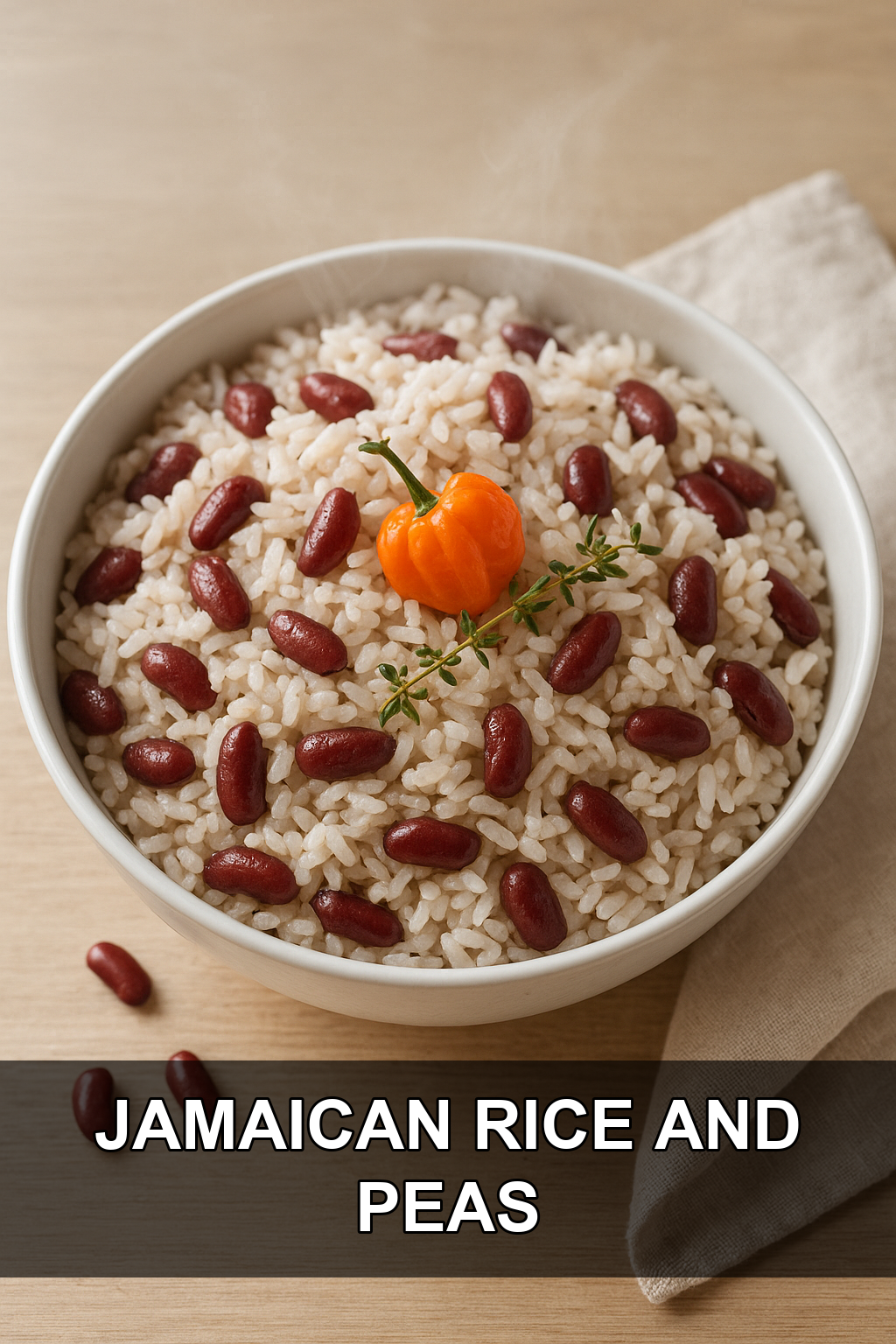
- What Is Jamaican Rice and Peas?
- Tips for Cooking and Prepping
- Recipe Variations and Substitutes
- What to Serve with Rice and Peas
- Storing, Make-Ahead, and Freezing Tips
- FAQs
- Jamaican Rice and Peas Recipe
If you’ve ever wondered how Caribbean restaurants get their rice and peas so fragrant, creamy, and full of flavor, today’s your lucky day. This classic Jamaican rice and peas recipe uses coconut milk, kidney beans, scotch bonnet pepper, and a handful of aromatics to create a dish that’s every bit as good as what you’d find on the island.
What Is Jamaican Rice and Peas?
Despite the name, Jamaican rice and peas is actually made with kidney beans, not peas—the term “peas” refers to the beans in traditional Jamaican and broader Caribbean vernacular. It’s a beloved staple across the island, often served alongside jerk chicken, curry goat, or oxtail, and it shows up on Sunday dinner tables and at celebrations alike.
What makes this dish so distinctive is the way rice is cooked directly in coconut milk along with beans, allspice, thyme, and scotch bonnet pepper, allowing the grains to soak up all that rich, spiced flavor as they steam. The result is a fragrant, slightly creamy rice with a subtle heat and a deep savory-sweet backbone that’s hard to replicate any other way.
Tips for Cooking and Prepping
#1: Crush, don’t grind, the allspice berries
Lightly crushing whole allspice berries releases their aromatic oils into the butter without turning your rice gritty or overly peppery. Whole spices also make it easy to fish them out before serving.
#2: Keep the scotch bonnet whole
Adding the scotch bonnet pepper whole (and only half at that) lets it perfume the dish with heat and fruitiness without overwhelming it. If you like things spicier, pierce the skin slightly with a knife; for a milder dish, remove it early.
#3: Toast the rice before adding liquid
Stirring the rice in the seasoned butter for a couple of minutes until it turns translucent at the edges helps prevent clumping and gives the finished dish a nuttier, more developed flavor.
#4: Resist the urge to stir while it simmers
Once the lid goes on, leave the pot alone. Stirring disrupts the steam pockets that cook the rice evenly, which can lead to mushy or unevenly cooked grains.
#5: Always let it rest before fluffing
The 10-minute rest after cooking is not optional—it allows residual steam to finish cooking the rice and lets the texture set so the grains stay distinct instead of turning gluey.
Recipe Variations and Substitutes
While kidney beans are the traditional choice, you can swap in pigeon peas (gungo peas) for a more old-school Jamaican preparation, or use black beans in a pinch. If you can’t find scotch bonnet pepper, habanero is the closest substitute in both heat and flavor, though it will lack some of the fruity nuance. For a dairy-free version, simply swap the butter for coconut oil or a neutral vegetable oil.
What to Serve with Rice and Peas
This dish is a natural partner for jerk chicken, curry goat, brown stew fish, or oxtail, and it’s equally delicious alongside grilled shrimp or roasted vegetables for a lighter meal. A simple side of fried plantains or a fresh cabbage slaw rounds out the plate beautifully.
Storing, Make-Ahead, and Freezing Tips
Leftover rice and peas keeps well in an airtight container in the fridge for up to 4 days, and it reheats nicely with a splash of water or stock to loosen it back up. For longer storage, freeze in individual portions for up to 3 months and thaw overnight in the fridge before reheating on the stove or in the microwave.
FAQs
Why is it called rice and peas if there are no peas in it?
In Jamaican culinary tradition, the word “peas” is used broadly to refer to legumes like kidney beans or pigeon peas, not just green peas. So the name reflects the beans used, even though it sounds like it should include actual peas.
Can I use dried kidney beans instead of canned?
Yes, but you’ll need to soak and cook them separately until tender before adding them to the rice, since dried beans won’t soften enough in the 20-25 minute simmer time. Using canned beans, as in this recipe, keeps things quick and simple.
How do I make this less spicy?
Use less of the scotch bonnet pepper, or omit it entirely and rely on the jerk seasoning for a milder background heat. You can also remove the pepper partway through cooking once it’s infused enough flavor for your taste.
Can I make this rice and peas recipe vegan?
Absolutely—just substitute the butter with coconut oil or a plant-based butter alternative, and make sure your vegetable stock is free of any animal products. Everything else in the recipe is already plant-based.
Why is my rice mushy or gummy?
This usually happens from stirring during cooking or using too much liquid. Stick to the liquid measurements given, keep the lid on tight, and avoid lifting it or stirring until the rice has finished steaming and resting.
Jamaican Rice and Peas Recipe
Prep time: 20 min | Cook time: 40 min | Total time: 60 min | Servings: 4
Ingredients
- 15 oz kidney beans
- 2 cups long-grain white rice
- 13.5 oz coconut milk
- 4 whole fresh thyme sprigs
- 4 whole scallions
- 4 cloves garlic cloves
- 2 tsp jerk seasoning
- 1.5 tsp salt
- 0.5 tsp black pepper
- 1.5 cups vegetable stock
- 3 whole allspice berries
- 0.5 whole scotch bonnet pepper
- 2 tbsp butter
Instructions
- In a large pot, melt the butter over medium heat. Add the scallions, garlic cloves, thyme sprigs, allspice berries, and scotch bonnet pepper. Sauté for 3-4 minutes until the scallions soften and the garlic becomes fragrant. This aromatic base is crucial for authentic Jamaican flavor. Lightly crush the allspice berries to release their oils without grinding them to powder. The scotch bonnet should perfume the butter but not dominate—remove it if the heat becomes too intense.
- Add the rice to the pot and stir to coat in the infused butter. Cook for 2 minutes, stirring constantly, until the rice becomes translucent at the edges and smells nutty. This toasting step prevents the grains from clumping together. Sprinkle in the jerk seasoning, salt, and black pepper, and stir thoroughly to distribute the spices evenly throughout the rice. The seasoning should create a visible dusting over the grains, ensuring every bite carries authentic flavor.
- Pour in the coconut milk and vegetable stock. Stir well to combine, then add the kidney beans. The liquid should cover the rice by about ½ inch—if it looks low, add a splash more stock. The coconut milk creates a rich, creamy base while the stock provides depth; use full-fat coconut milk for the proper texture and mouthfeel. The kidney beans should be submerged to absorb the flavors as they cook.
- Bring the mixture to a boil, then reduce heat to low, cover with a tight-fitting lid, and simmer for 20-25 minutes. Do not stir during cooking—this disturbs the steam pocket that’s crucial for even cooking. You’ll know it’s done when the liquid has been fully absorbed and the rice is tender with no chalky center. The surface should have small steam holes, and the grains should be distinct yet cohesive. If the top looks dry but the rice isn’t done, add ¼ cup water and continue cooking.
- Remove from heat and let stand covered for 10 minutes. This final rest allows the rice to steam in its own moisture, ensuring perfect texture, and the beans should be plump and infused with the coconut and spices. After resting, fluff gently with a fork, lifting from the bottom to separate the grains. The rice should glisten slightly from the coconut milk, with each grain distinct yet bound by the creamy sauce. Serve immediately while hot for the best experience.
Remove the thyme sprigs, allspice berries, and scotch bonnet pepper before serving if desired, though many Jamaican cooks leave them in for presentation and let guests remove them at the table.
Leave a Reply
You must be logged in to post a comment.