
- What Is Jamaican Rice and Peas?
- Tips for Cooking and Prepping
- Recipe Variations and Substitutes
- Serving Suggestions
- Storing, Make-Ahead, and Freezing Tips
- FAQs
- Jamaican Rice and Peas Recipe
If you’ve ever wondered why Jamaican rice and peas tastes so much richer than plain rice, the secret is coconut milk, allspice, and a whole scotch bonnet pepper simmered right in the pot. This is the real deal recipe, made with dried kidney beans (called “peas” in Jamaica) for the deepest flavor, and it’s simpler to pull off than you might think.
What Is Jamaican Rice and Peas?
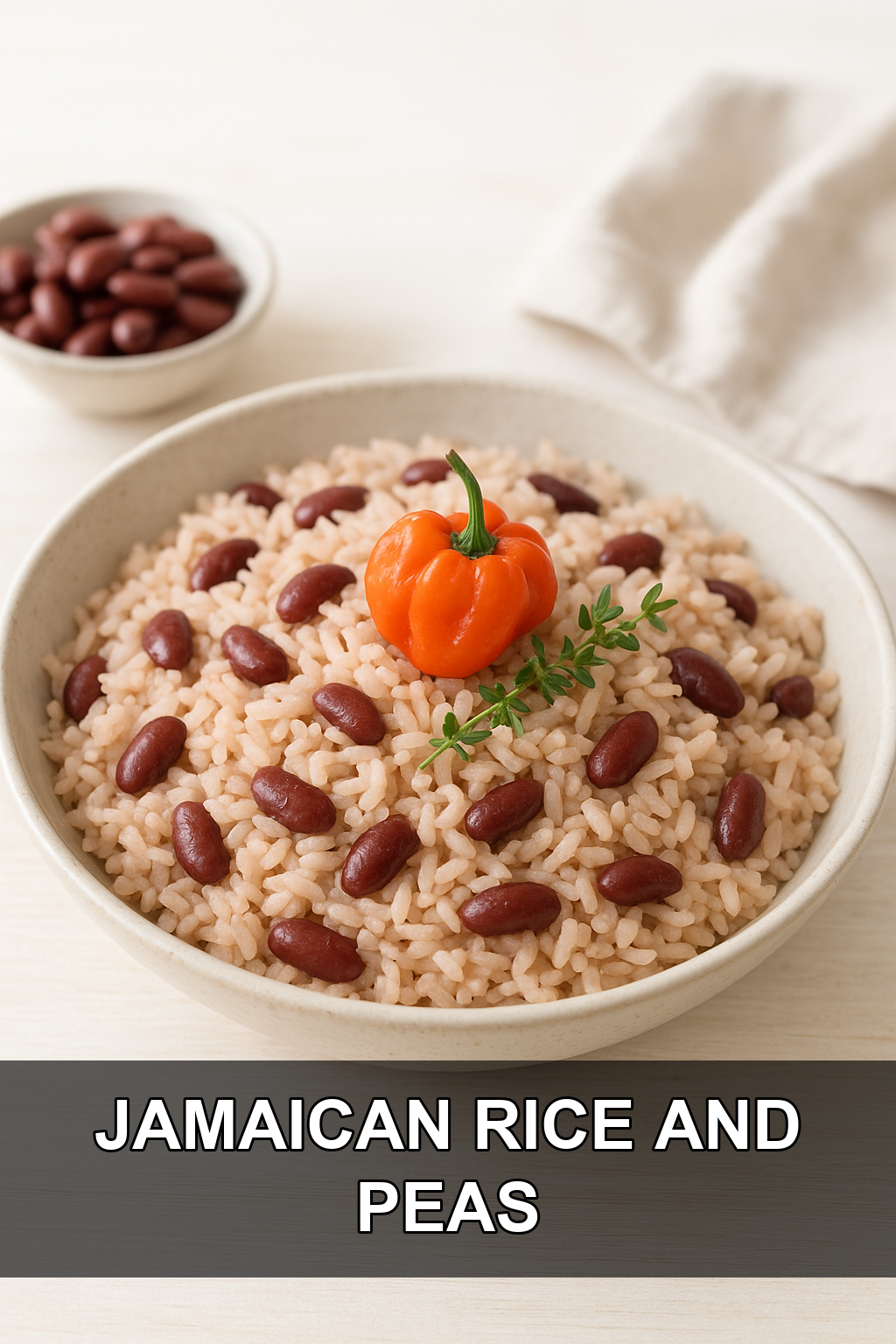
Jamaican rice and peas is a staple side dish found on nearly every dinner table across the island, especially on Sundays alongside stewed chicken, curry goat, or oxtail. Despite the name, the “peas” are actually red kidney beans, a naming convention that traces back to older Caribbean cooking traditions. The dish gets its signature richness from coconut milk and its warmth from thyme, scallion, allspice (pimento berries), garlic, and a whole scotch bonnet pepper that infuses the pot with heat and fragrance without ever breaking open.
Tips for Cooking and Prepping
#1: Soak your kidney beans ahead of time
Dried kidney beans need at least two hours of soaking, but overnight is best for even cooking and a shorter simmer time. This step also helps the beans hold their shape instead of turning mushy.
#2: Keep the scotch bonnet whole
Drop the scotch bonnet pepper into the pot whole and uncut so it perfumes the rice with heat and fruity aroma without making the dish blazing hot. If it bursts, the dish can turn very spicy very fast.
#3: Use homemade or full-fat coconut milk
Rich, full-fat coconut milk is what gives this rice its signature creamy texture and slightly sweet flavor, so avoid light or watered-down versions if you can.
#4: Don’t skip the pimento berries and ginger
Allspice berries and a small piece of fresh ginger are what give Jamaican rice and peas its distinct warm, slightly peppery background flavor, so keep them in the pot while everything simmers.
#5: Let the rice steam undisturbed
Once the water level drops and the heat is turned down, resist the urge to lift the lid and stir. Letting the rice steam quietly ensures fluffy, evenly cooked grains.
Recipe Variations and Substitutes
If you’re short on time, canned kidney beans work as a quick shortcut: simply skip the soaking and pressure cooking, and simmer the drained canned beans directly with the coconut milk, aromatics, and water before adding the rice. You can also swap long grain rice for basmati (use about 1½ times the amount), or use black-eyed peas or pigeon peas in place of kidney beans for a different regional spin on the dish.
Serving Suggestions
Rice and peas is the quintessential partner to Jamaican jerk chicken, curry goat, brown stew chicken, or oxtail, but it’s equally delicious alongside grilled fish or fried plantains for a simpler weeknight plate. A side of steamed cabbage or coleslaw rounds out the meal beautifully.
Storing, Make-Ahead, and Freezing Tips
Leftover rice and peas keeps well in an airtight container in the fridge for up to 4 days and reheats nicely with a splash of water or coconut milk to loosen it back up. It also freezes beautifully for up to 3 months, making it a great make-ahead side for busy weeks; just thaw overnight in the fridge before reheating on the stove or in the microwave.
FAQs
Why is it called rice and peas if it has kidney beans?
In Jamaican and broader Caribbean cooking, kidney beans (and other dried beans) are traditionally referred to as “peas,” which is simply a regional naming tradition rather than a reflection of the actual ingredient.
Can I use canned kidney beans instead of dried?
Yes, canned kidney beans make a great shortcut version of this dish since you skip the soaking and long simmering; just simmer them briefly with the coconut milk and seasonings before adding the rice.
Is Jamaican rice and peas spicy?
Not typically, since the scotch bonnet pepper is left whole and removed before serving, giving the dish a gentle warmth and fruity aroma rather than intense heat.
What can I use instead of coconut milk?
While coconut milk is essential to the authentic flavor and creaminess of this dish, in a pinch you could use a light coconut milk, though the texture and richness won’t be quite the same.
Do I need a pressure cooker to make this recipe?
No, a pressure cooker just speeds things up; if you don’t have one, simply simmer the soaked dried beans on the stovetop for 45-50 minutes until tender before proceeding with the recipe.
Jamaican Rice and Peas Recipe
Prep time: 5 min | Cook time: 45 min | Total time: 50 min | Servings: 3
Ingredients
For the Beans
- 100 g dry red kidney beans (peas)
- 2 garlic cloves, crushed
- 5 pimento berries (allspice)
- A very small piece of ginger
- 1 tsp salt
- 1.12 L water
For the Rice
- 231 ml homemade coconut milk
- 263 g long grain rice (or 317 g / 1½ cups basmati rice)
- ½ red onion, chopped
- 1 stalk scallion, chopped
- 4 sprigs of thyme
- 1 scotch bonnet pepper, left whole
Instructions
- Wash the dry kidney beans, then soak them in fresh water for at least 2 hours, preferably overnight.
- Drain the soaked beans and add them to a pressure cooker with the garlic, pimento berries, ginger, salt, and about 1.12 L of water. Pressure cook for 20 minutes (or simmer on the stovetop for 45-50 minutes if you don’t have a pressure cooker).
- Once the beans are tender, stir in the coconut milk, thyme, scallion, chopped onion, and the whole scotch bonnet pepper. Cover the pot and bring to a boil, then taste the liquid and adjust seasoning if needed.
- Wash the rice and add it to the pot. Cover, bring back to a boil, then reduce the heat to low and let the rice steam until all the liquid has evaporated. Turn off the heat and let the pot sit, covered, for another 3 minutes.
- Remove the thyme stems, scotch bonnet pepper, and ginger before fluffing the rice and serving warm.
For a quicker version, use 1 can of drained kidney beans instead of dried: simmer them with 319 ml water, half a can of coconut milk, and all the same aromatics before adding the rice, skipping the soaking and pressure cooking steps entirely.
Leave a Reply
You must be logged in to post a comment.