
- What Is Sticky Rice?
- Tips for Cooking and Prepping
- Recipe Variations and Substitutes
- Serving Suggestions
- Storing, Make-Ahead, and Freezing Tips
- FAQs
- Foolproof Sticky Rice Recipe
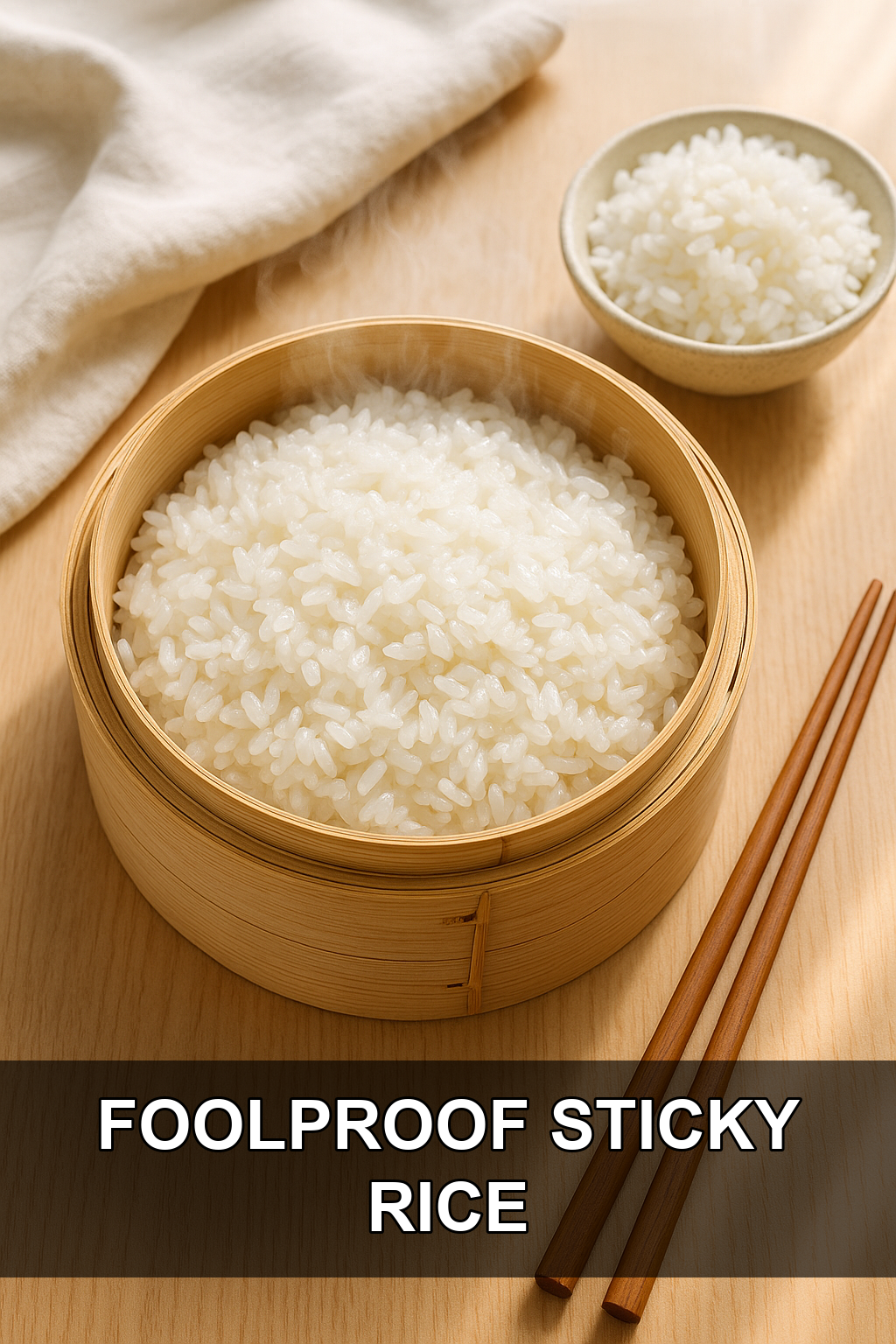
If you’ve ever wondered how restaurants get their sticky rice so perfectly soft, chewy, and never mushy, the secret is simpler than you think. This foolproof method uses just two ingredients and a little patience to deliver restaurant-quality sticky rice every single time.
What Is Sticky Rice?
Sticky rice, also known as sweet rice or glutinous rice, is a short-grain rice variety prized for its chewy, cohesive texture once cooked. Despite the name “sweet,” it isn’t actually sugary at all — the name refers to its slightly sweet aroma and the way the grains stick together, unlike fluffy jasmine or long-grain rice. It’s a staple across Southeast Asian and East Asian cuisines, especially in Thai, Laotian, and Filipino cooking.
Unlike regular white rice, sticky rice is traditionally steamed rather than boiled, which is key to achieving that signature glossy, tender-yet-firm bite without turning it into a gluey mess. Once you learn this simple soak-and-steam technique, you’ll never go back to shortcuts like microwaving or boiling it in a pot.
Tips for Cooking and Prepping
#1: Don’t skip the soak
Soaking the rice for at least 6 hours (up to 24) softens the grains and ensures even cooking during steaming. Skipping this step or shortening it too much will leave you with hard, unevenly cooked rice.
#2: Use plenty of water when soaking
Sticky rice expands significantly as it absorbs water, so make sure the water level sits at least 3 inches above the rice to give it room to grow.
#3: Steam, don’t boil
Steaming allows the rice to cook gently with moist heat while staying separate and chewy, whereas boiling turns glutinous rice starchy and mushy.
#4: Spread the rice evenly on your steamer
Arranging the soaked rice in an even, not-too-thick layer on your steamer plate or bamboo basket helps the steam circulate so every grain cooks at the same rate.
#5: Line your steamer to prevent sticking
Use natural steamer liners, cheesecloth, or parchment paper to keep the rice from sticking to the steamer basket or plate, making cleanup and serving much easier.
#6: Check doneness and adjust time as needed
Every stove and steamer is a little different, so check the rice around the 30-minute mark and continue steaming in 5-minute increments until it’s tender all the way through.
Recipe Variations and Substitutes
While this recipe keeps things classic with just rice and water, you can customize sticky rice once it’s cooked. Try stirring in a splash of coconut milk and sugar for Thai-style sweet sticky rice served with mango, or add a pinch of salt for a savory side dish. Some cooks also like to add pandan leaves to the steaming water for a subtle floral aroma.
Serving Suggestions
Sticky rice is incredibly versatile and can be served alongside grilled meats, curries, or stir-fries, or rolled into small balls for dipping into sauces. For a sweet treat, pair warm sticky rice with fresh mango slices and a drizzle of sweetened coconut milk, or use it as the base for mango sticky rice dessert.
Storing, Make-Ahead, and Freezing Tips
Leftover sticky rice keeps well in an airtight container in the fridge for up to 4 days; simply re-steam or microwave with a damp paper towel to restore its texture. For longer storage, portion cooled sticky rice into freezer bags and freeze for up to 2 months, then thaw and steam to refresh before serving.
FAQs
Do I really need to soak sticky rice before steaming?
Yes, soaking is essential because it softens the tough outer layer of the grains so they cook through evenly during steaming. Without soaking, the outside can turn mushy while the inside stays hard and undercooked.
Can I cook sticky rice without a bamboo steamer?
Absolutely — you can use any heat-proof, rimmed plate set inside a regular pot steamer or metal steamer basket, as long as it’s lined to prevent sticking and allows steam to circulate around the rice.
Why is my sticky rice mushy or gluey?
Mushy sticky rice usually means it was boiled instead of steamed, or too much water was left clinging to the grains before steaming; draining well (without shaking off all moisture) and steaming rather than boiling solves this.
How long can I soak sticky rice?
You can soak sticky rice anywhere from 6 to 24 hours; shorter soaking times yield a firmer bite, while longer soaking produces a softer, more tender texture.
Can I make a bigger batch of sticky rice at once?
Yes, but for larger batches it’s best to steam the rice in two batches or extend the steaming time, since overcrowding the steamer can prevent the rice from cooking evenly.
Foolproof Sticky Rice Recipe
Prep time: 15 min | Cook time: 45 min | Total time: 60 min | Servings: 4
Ingredients
- 2 cups sweet rice/sticky rice/glutinous rice
- Water, for soaking and steaming
Instructions
- Add the sticky rice to a mixing bowl or other deep container. Fill it with water so that the water level is at least 3 inches above the rice, as the rice will expand as it soaks.
- Soak for 6 to 24 hours. Soak it longer if you want your sticky rice to have a softer texture.
- Drain the water (there’s no need to shake off the excess water), and evenly arrange the soaked sticky rice on a heat-proof, rimmed plate or bamboo steamer lined with natural steamer liners or parchment paper.
- Cover and steam for 30 to 45 minutes. If making a larger batch of rice, steam in two batches or increase the steaming time. Check the rice partway through and add more steaming time if needed.
- Keep the sticky rice in the steamer or covered to prevent it from drying out until you’re ready to serve it or use it in a recipe.
For a sweet variation, stir warm cooked sticky rice with a bit of coconut milk and sugar and serve with fresh mango. Leftovers store well in the fridge for up to 4 days or in the freezer for up to 2 months.
Leave a Reply
You must be logged in to post a comment.